




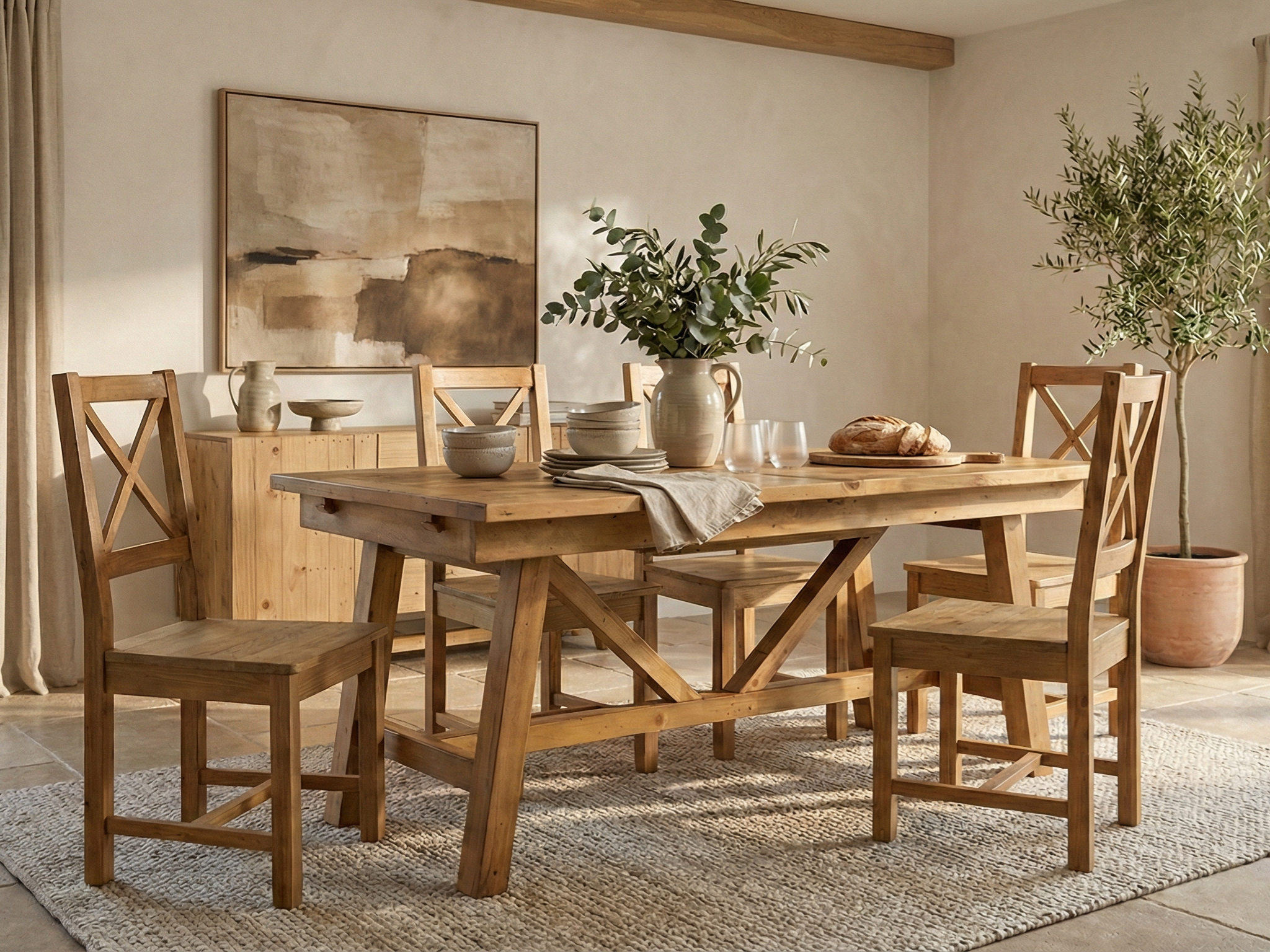

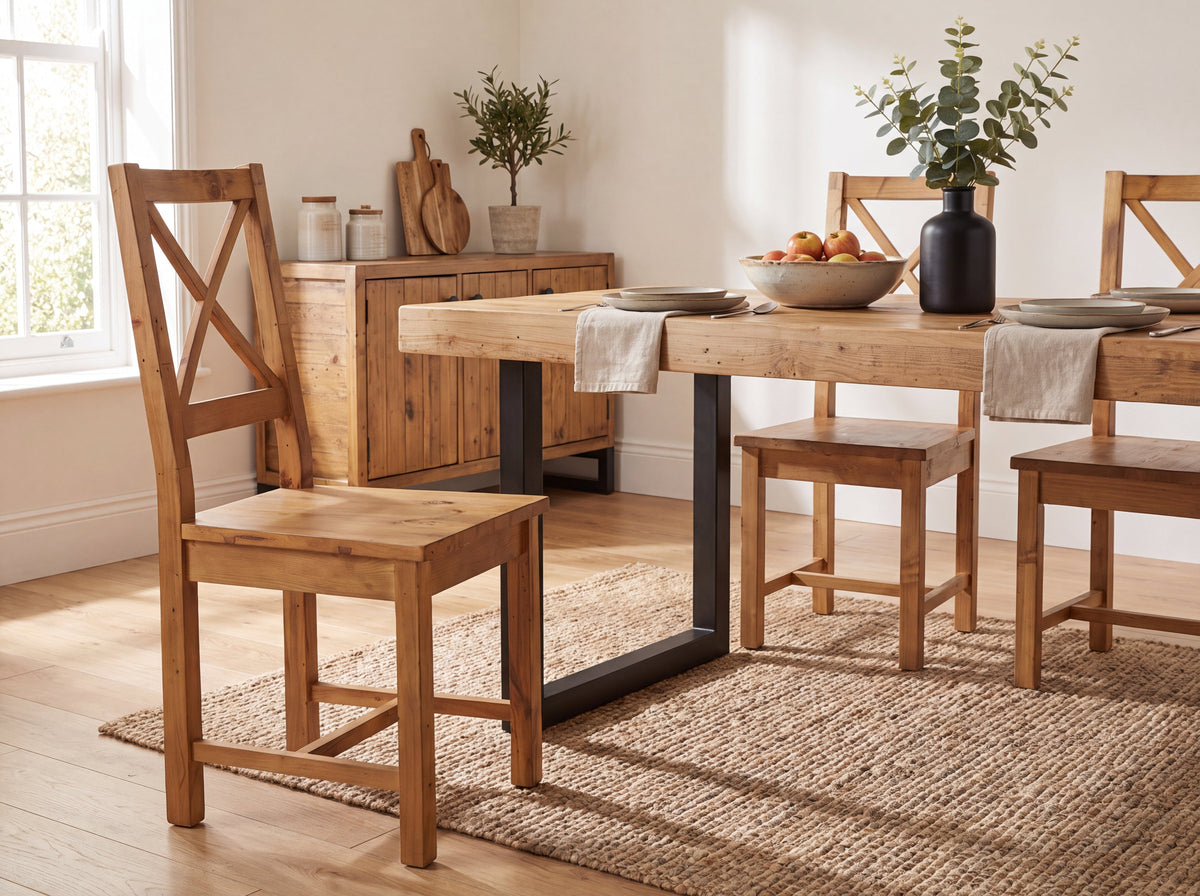
Dining chairs do more daily work than almost anything else in a home. They get pulled out for breakfast, dragged back for homework, sat on through long Sunday lunches, and shuffled around when guests turn up. Yet they're often the last thing people choose, picked in a hurry once the table is sorted. This dining chair guide covers how to choose dining chairs that suit your table, your room and the way you actually eat, taking it in order: how you use the space, then fit, materials, comfort and finally looks.
Start With How You Use Your Dining Space
Before colour or style comes into it, think about what your chairs actually need to cope with. A table used for quick weekday meals asks different things of a chair than one that doubles as a homework desk, a home office or the place everyone lingers for hours on a Saturday night.
If your dining area is used throughout the day, comfort moves to the top of the list. Look for a seat and back that let you sit naturally without feeling restricted. And if the room is on the small side, a simpler chair shape will keep it feeling open in a way that bulky designs won't.
Measure First: Table Height, Seat Height and Space
A chair can be lovely and still wrong for your table. Measure the height of your dining table and the gap beneath the tabletop before you look at anything else. Most dining tables sit between 71cm and 76cm high, and as a general guide, a seat height of roughly 45-48cm leaves 25-30cm between the seat and the underside of the tabletop. Much less and legs feel cramped. Much more and you're perched awkwardly above your plate.
If you only check one thing, check that gap.
Width matters just as much. Around 60cm of table length per person is a useful starting point rather than a hard rule, so see how much room the chairs you like take up side by side. Our Sarah chair is 54cm wide, so it fits inside that figure easily. A wider chair like our 62cm Bogart takes a little more, so allow for that if you're seating a full table. Chairs with arms need extra room too, both at the table and when they're slid underneath.

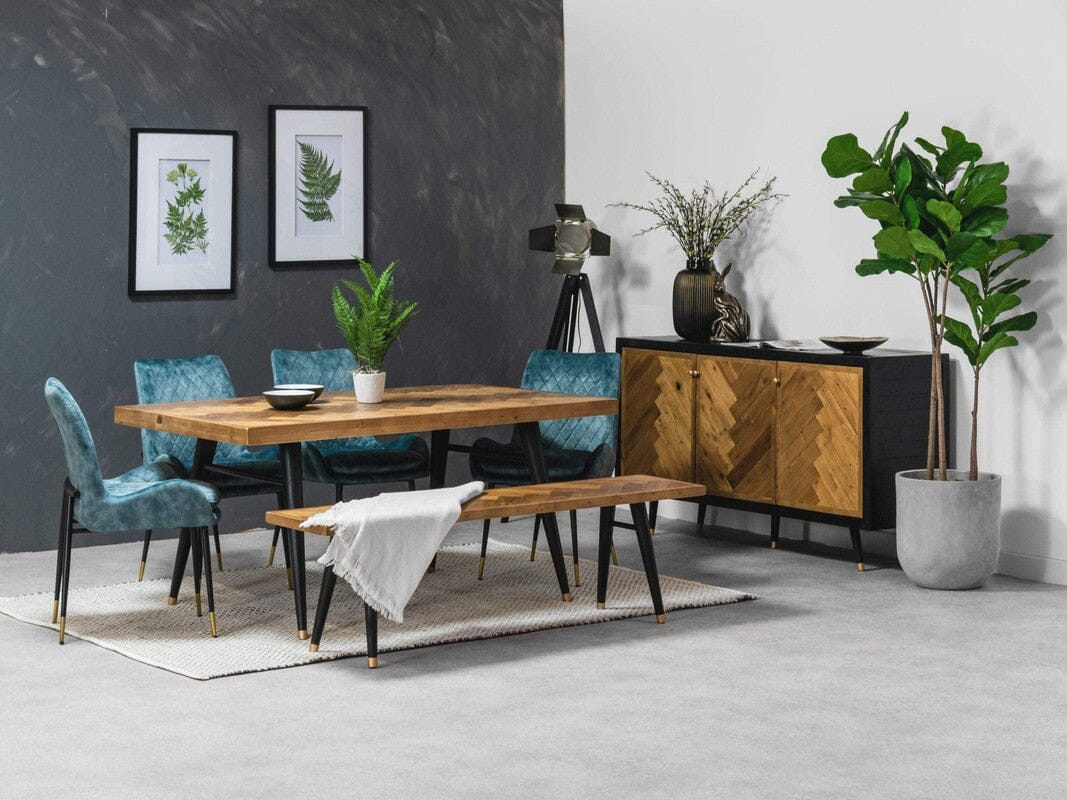
Sarah Tan Dining Chair Set Of 2
Then look at the room around the table. Around 90cm of clear space gives people room to pull a chair out and walk behind it without squeezing past a wall or a sideboard. If your dining area is tight, slimmer-framed chairs will make life easier than chunky ones, however good they look in a photo.
Dining Chair Materials: Solid Wood, Upholstery and Mixed Builds
Dining chair materials usually fall into three camps, and each changes how a chair looks, feels, and ages.
Solid wood chairs are firm, sturdy, and easy to live with. There's no fabric to mark, a wooden surface wipes clean quickly, and the grain and finish do a lot of the visual work.
Upholstered chairs add softness, colour and texture, and tend to be the easier choice for long meals. The fabric needs some thought, though. Tightly woven or textured fabrics usually hide everyday wear better than smooth, pale ones, and with young children it's smart to ask how a fabric cleans before you commit. Not every upholstered chair uses traditional fabric either. Our Sarah chairs, for instance, have a leather-look finish made from recycled synthetics, a quilted high back and slim metal legs.
Mixed builds, usually a wooden frame with an upholstered seat or back, sit somewhere in between: the structure of wood with a little padding where it counts.
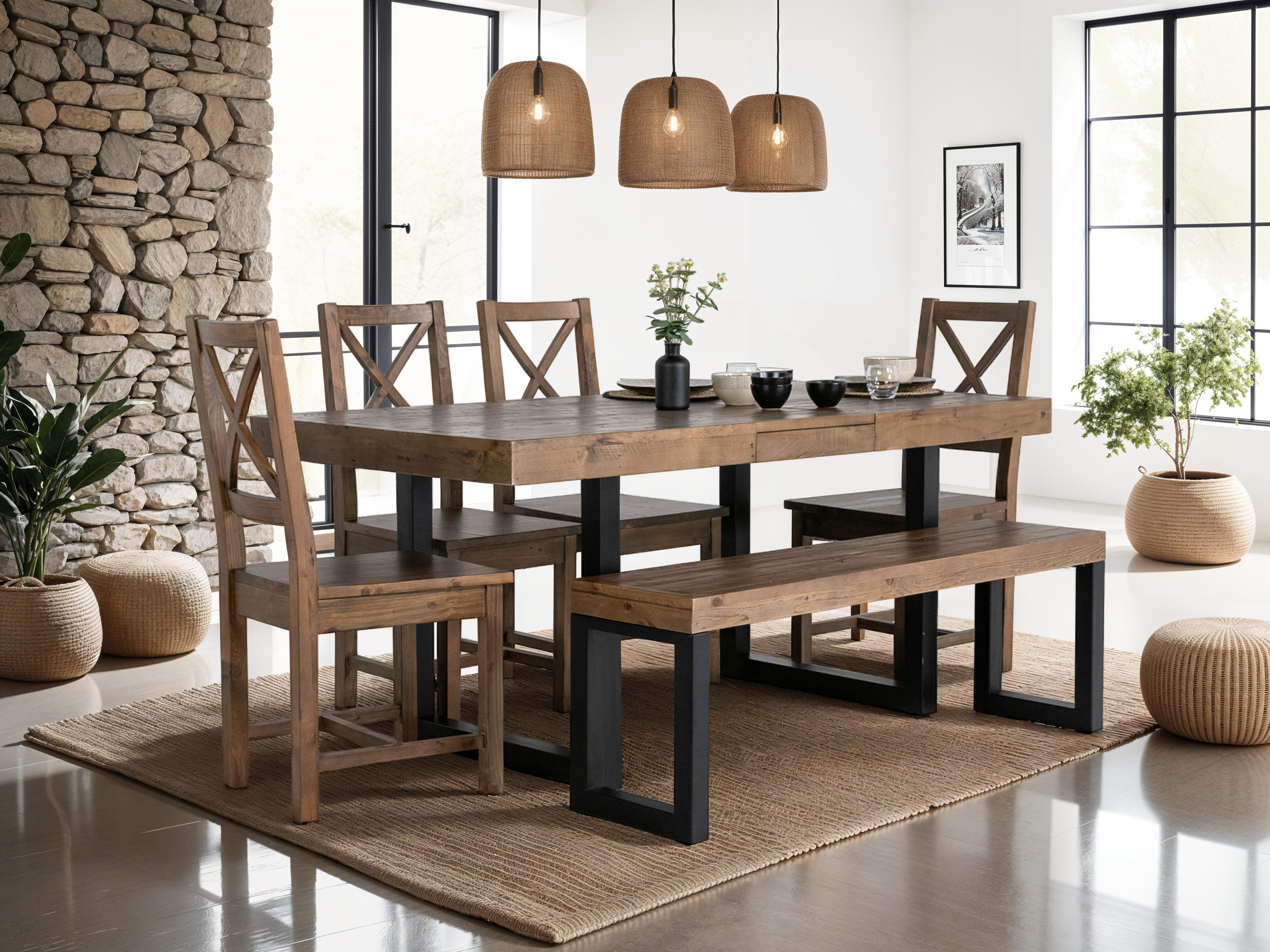
Reclaimed timber adds another layer to the choice. Each piece carries its own grain, colour variation and small marks from a previous life, so no two chairs look exactly alike. At Reclaim Nation, our furniture is built primarily from pine and elm, salvaged from old floorboards, pallets, railway sleepers and manufacturing offcuts, and pine hardens through the reclaiming process, which helps it cope with daily use. Finishes are applied by hand in our Bristol workshop rather than sprayed on, so the grain stays visible. If reclaimed is the direction you're leaning, our guide to choosing reclaimed wood dining chairs goes into the specifics.

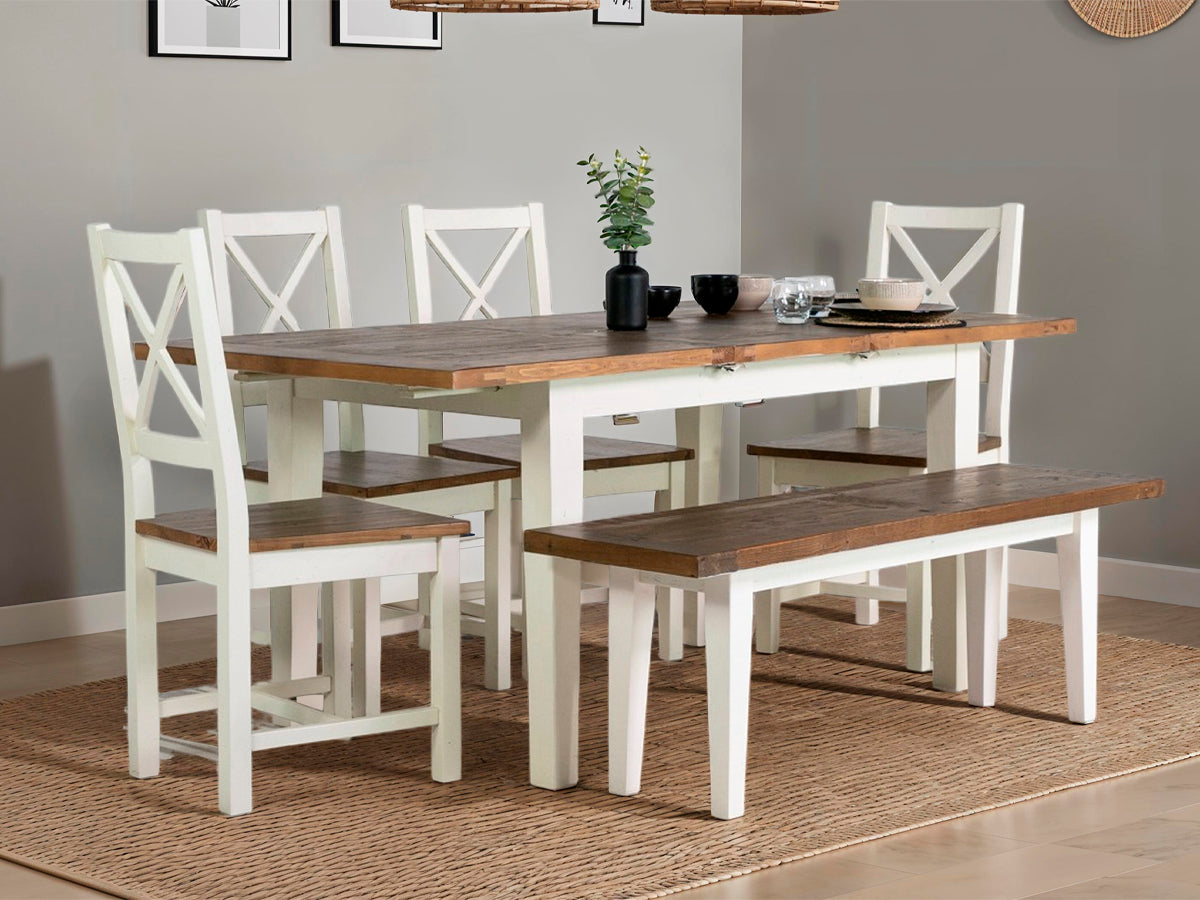
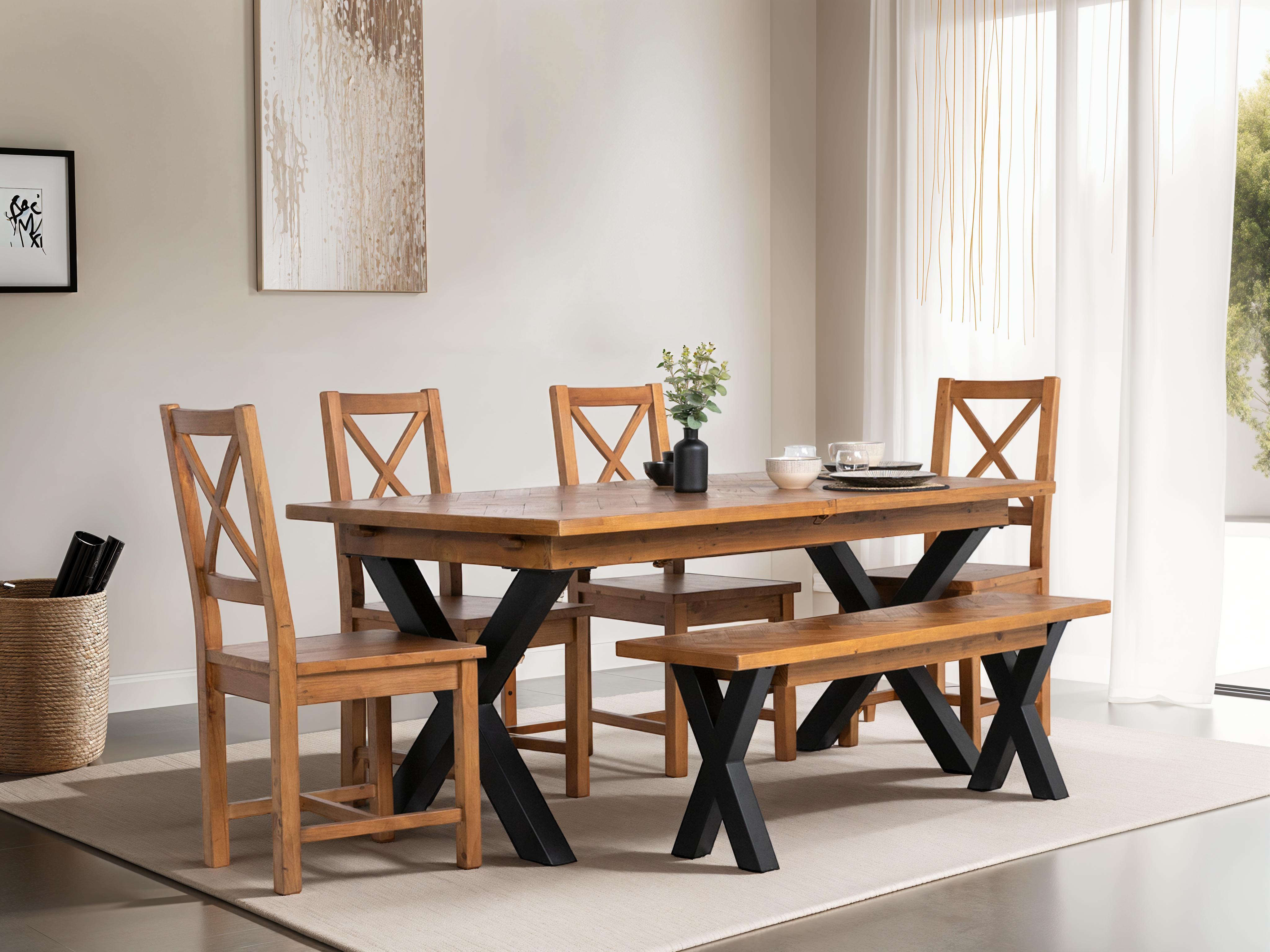
Devon Cross Back Dining Chair (Set of 2)
Comfort, Posture and Back Support
Comfort is the part photos can't show you, and it's the part you'll notice every single day.
Seat depth is a good place to start. A seat that's too deep leaves shorter legs dangling or pushes you to slouch against the back, while one that's too shallow never quite feels supported. Back height and angle matter too. A gently angled back holds you upright through a long dinner, and a gently curved one can feel more supportive still, whereas a more open, slatted design gives a room a lighter look but suits shorter meals better.
Then there's the seat itself. Some people like the firm, steady feel of a solid seat, and others want padding underneath them. Neither is right or wrong. It depends on how long you sit, so a household that lingers over meals or works at the table will probably want more support than one that eats and moves on.
If you can, sit in a chair the way you would at home. Lean back, shift around, stay put for ten minutes. A chair that feels fine for thirty seconds can feel very different by the end of a meal.
Should Your Dining Chairs Have Arms?
Chairs with arms feel generous and relaxed, and they're a popular choice for longer meals. They also work well at the ends of a table, where there's often a little more room to spare.
They do take up more space, though. Check that the arms will slide under the tabletop if you want to push the chairs fully in when they're not being used. In a smaller dining room, armless chairs are easier to move around and give you more flexibility when you rearrange the seating. A mix is also an option: armchairs at each end with armless chairs along the sides.
Choosing Dining Chairs for Extendable, Fixed Top and Round Tables
The table you own, or the one you're planning to buy, narrows the choice more than most people expect.
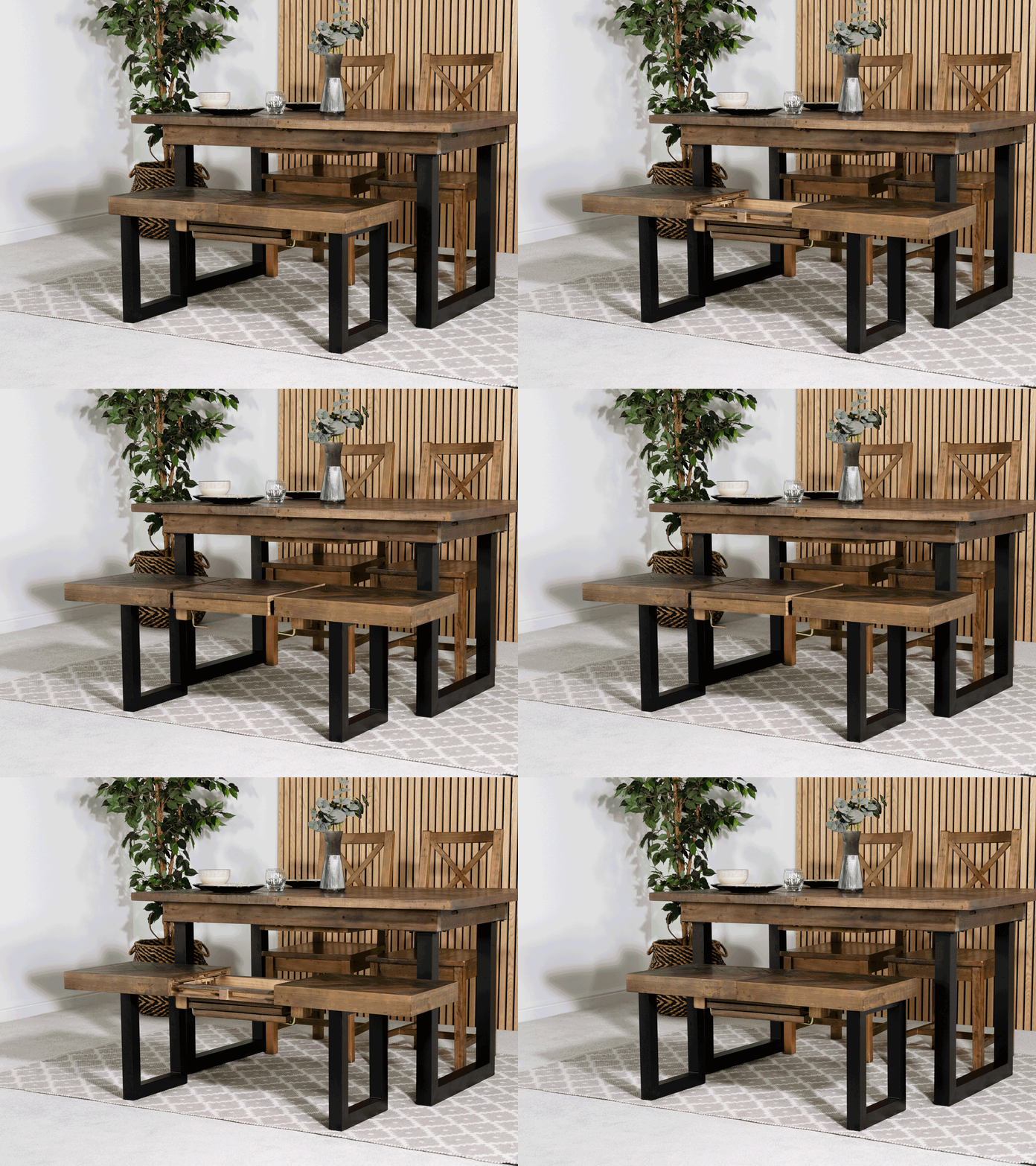
With an extendable table, work out how many chairs you'll need at its full length, and where the spare ones will live when it's closed. Chairs that look good in both settings make life simpler. Our piece on why an extendable table works so well for growing households covers how that flexibility plays out day to day.
A fixed top table gives you a set number of places from the start, which makes chair planning more straightforward. Our fixed top table size guide covers seating, clearances, and the floor space you'll need around it.
Round tables change how chairs sit. Without corners, chairs without wide arms tuck in neatly, and everyone ends up at a similar distance from each other. If space is a concern, our guide to whether a round table suits a smaller room is a good read before you pick chairs to go with it.
Dining Chair Design: Matching Style Without Matching Everything
Once the chairs fit and feel right, design is where you get to enjoy yourself. The main question is whether you want a matched set or something more collected.

Bogart Black Dining Chair Set Of 2
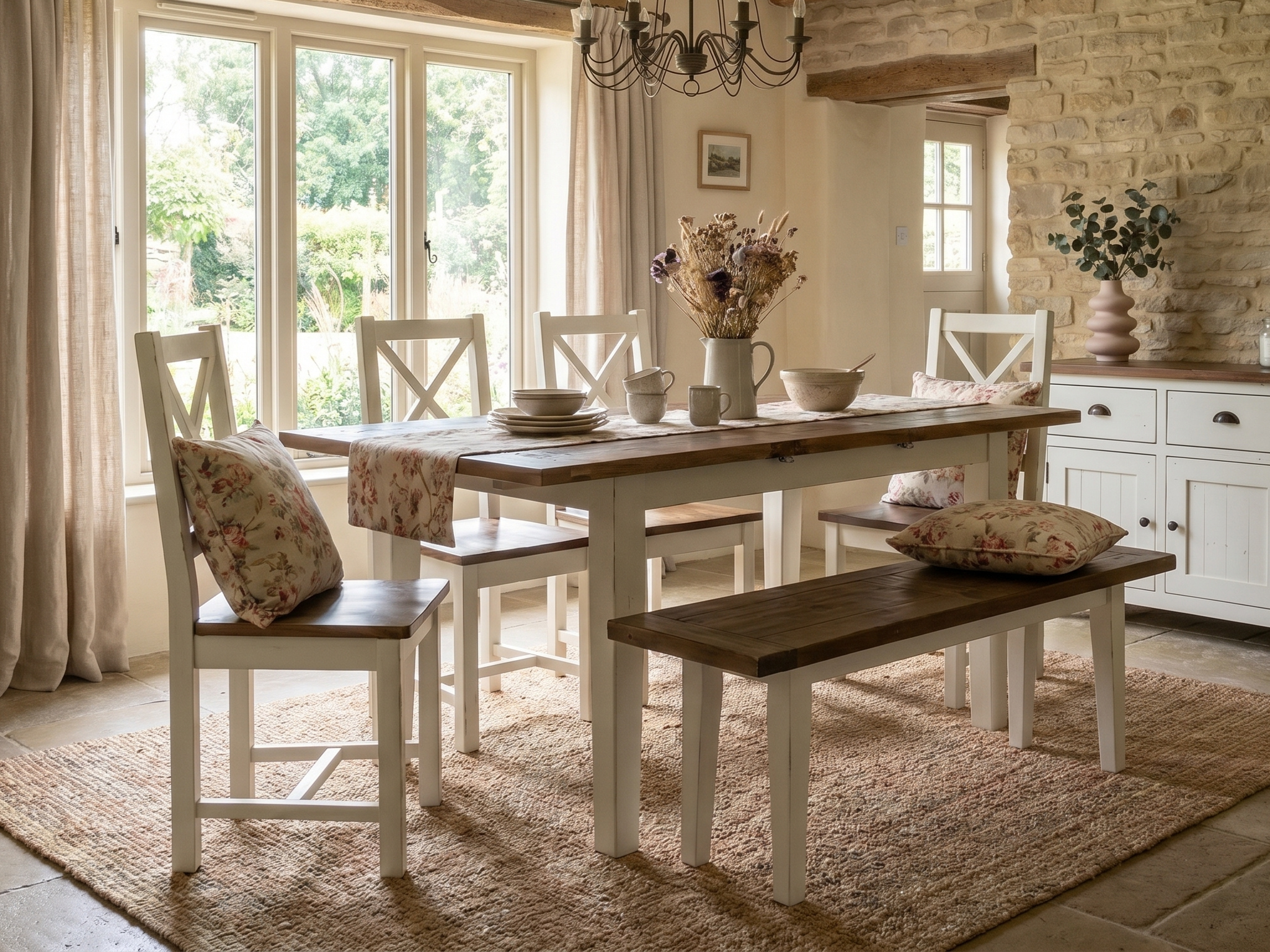
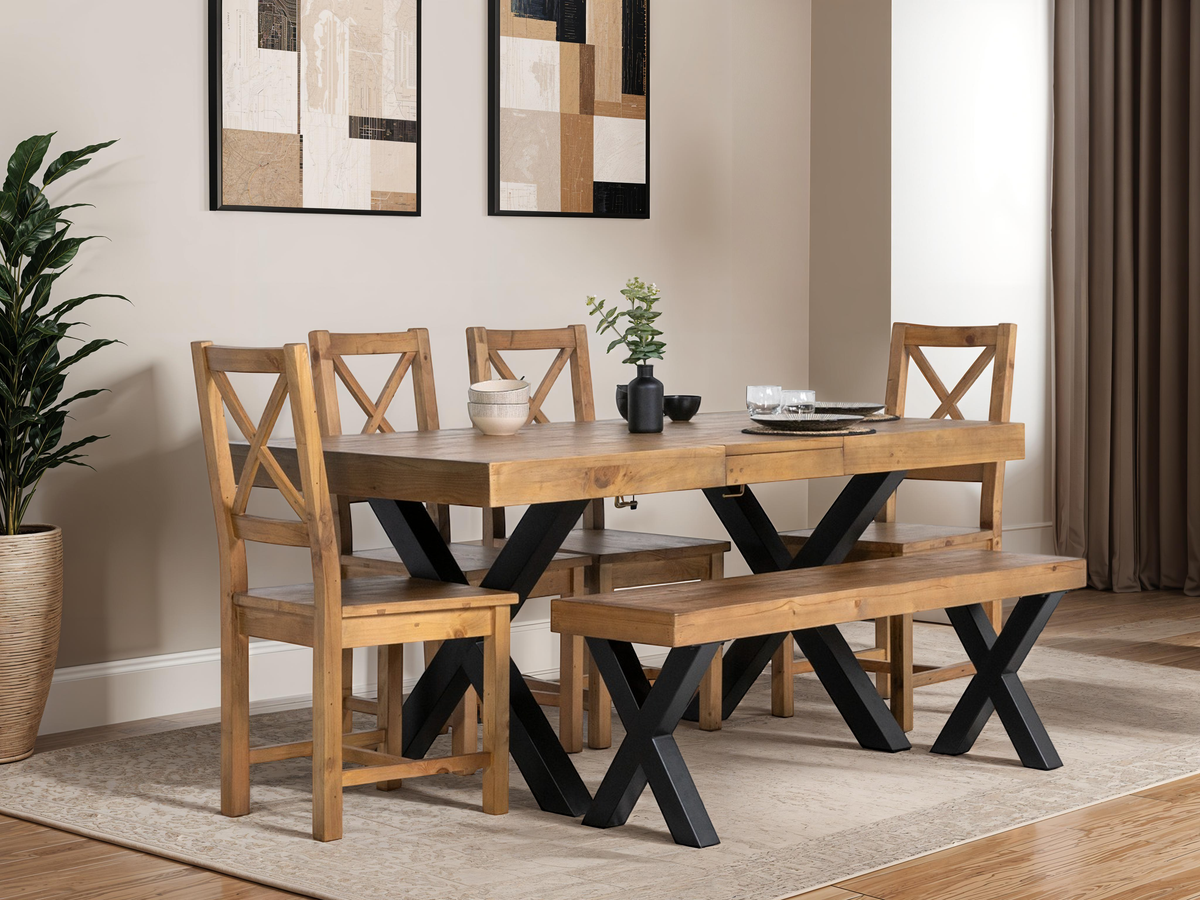
A full set of identical chairs gives a tidy, finished look and works well around a table with strong character, since the chairs stay calm and let the tabletop lead. Mixing designs feels looser and more lived-in. If you go that route, keep one thing consistent, such as the wood tone, the height, or the overall scale, so it reads as a considered choice. A simple wooden chair sits happily beside a substantial reclaimed table, and upholstered seating can soften a room dominated by hard surfaces.
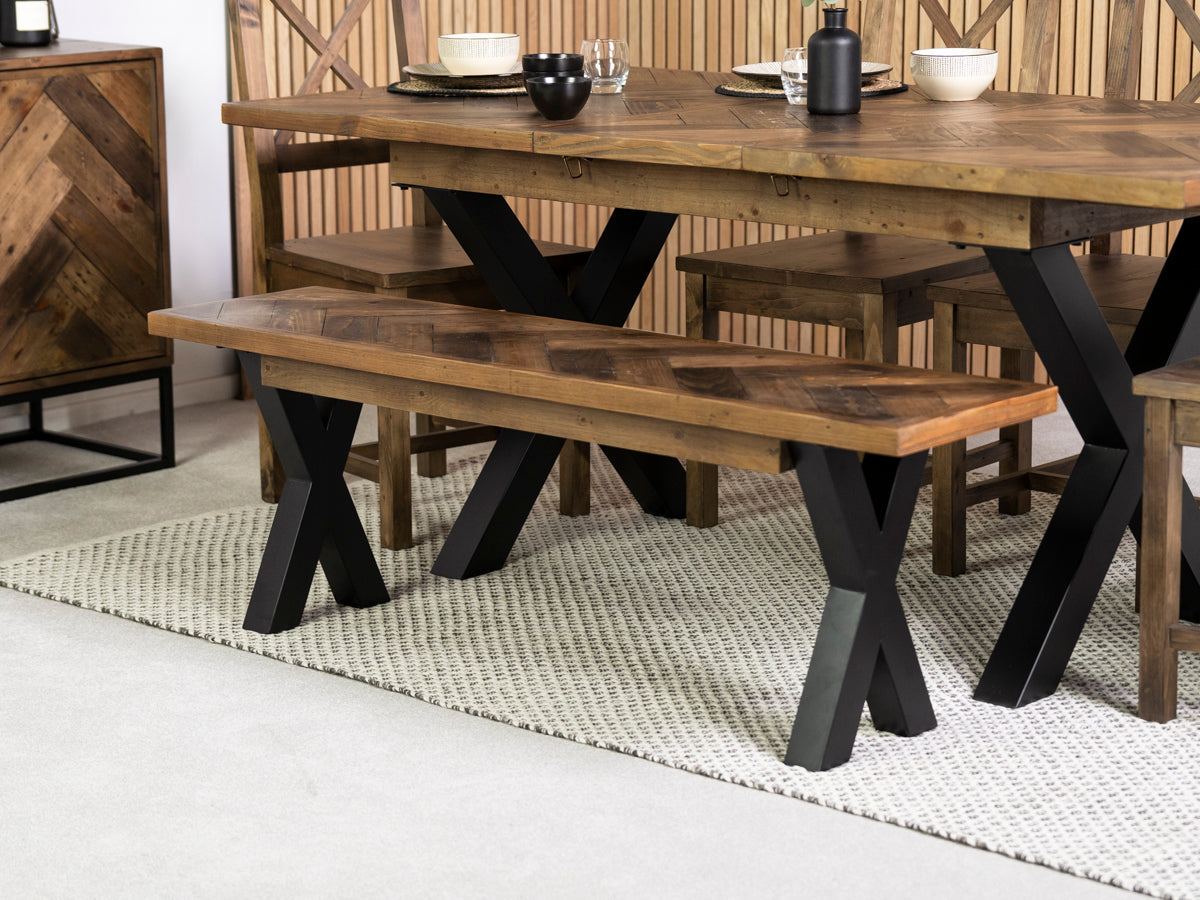
Proportion deserves as much attention as style. Heavy, high-backed chairs can dominate a small dining room, while very light chairs can look lost around a large, chunky table. And if you're considering a bench for one side of the table, our comparison of dining chairs vs benches lays out how the two differ.
Everyday Practicality and a Final Checklist
Think about how easy the chairs are to move, clean, and live with. Do you host often? Do children use the table? Does the room do several jobs? Check the overall dimensions too, not just seat height. Width and depth decide how many chairs fit around the table, and the height of the back changes how the chairs look from across the room.
If you're unsure, mark out each chair's footprint on the floor with masking tape, leave a gap behind it for pulling out and sitting down, and see how the arrangement feels. It's a simple step that shows you more than a tape measure alone.
There's no single list of the best dining chairs, because the best dining chairs are the ones that suit your table, your room, and your routine. Before you buy, check:
- Material: does it suit your dining room and your everyday routine?
- Comfort: do the seat and back give enough support for longer meals?
- Seat height: is there enough clearance between the seat and the tabletop?
- Arms: is there room for armchairs, and will they fit beneath the table?
- Size: will the width and depth work around your table?
- Style: does the shape and finish complement the table without needing to match exactly?
- Build: is the frame sturdy, with no wobble when you lean back?
Chairs take more knocks than most furniture. Solid timber can often be sanded back and refinished if it picks up marks, depending on the finish, so a set can last rather than being replaced. With nearly 30 years of designing and selling furniture, we've seen that the sets that stay in a family's dining room are chosen for fit and comfort first, and looks second.
Frequently Asked Questions on Choosing Dining Chairs
How do I choose dining chairs for my table?
Start with the table's height and the gap under the tabletop, then check chair width, comfort, and style in that order. Measuring first saves most of the common regrets.
How high should a dining chair seat be?
As a general guide, a seat height of around 45- 48 cm suits most standard dining tables, leaving roughly 25- 30 cm between the seat and the underside of the tabletop. Check your own table's height first.
How many dining chairs fit around my table?
Allow around 60cm of table length per person as a starting point, then check the width of the chairs you like. Arms usually need a bit more room.
Are wooden dining chairs comfortable?
Yes, if the seat depth, back angle, and height suit you. Solid seats feel firmer than padded ones, so it comes down to personal preference and how long you usually sit.
Should I choose dining chairs with arms or without?
Arms feel generous for long meals but take up more space and need to fit under the table. Armless chairs are easier to move around and suit smaller rooms. Plenty of people use armchairs at the ends and armless chairs along the sides.
Are upholstered dining chairs hard to keep clean?
Not necessarily. Textured or tightly woven fabrics tend to cope better with everyday wear than smooth, light ones. Check how a fabric is cleaned before you buy.
Do dining chairs have to match the table?
No. A little contrast often looks better. Just keep one thing consistent, like the scale or the wood tone.
What are the best dining chairs for a family?
Sturdy chairs, easy to wipe or clean, and supportive enough for homework and long meals tend to work best. Solid timber frames suit busy households, and a padded seat helps if people tend to sit for a while.
How much space do I need behind dining chairs?
Around 90cm of clear space around the table suits most people, though doorways and other furniture can change what feels right in your room.
Once your chairs are sorted, explore the wider Reclaim Nation range to find tables, benches and storage that sit well alongside them.

Leave a comment
This site is protected by hCaptcha and the hCaptcha Privacy Policy and Terms of Service apply.