




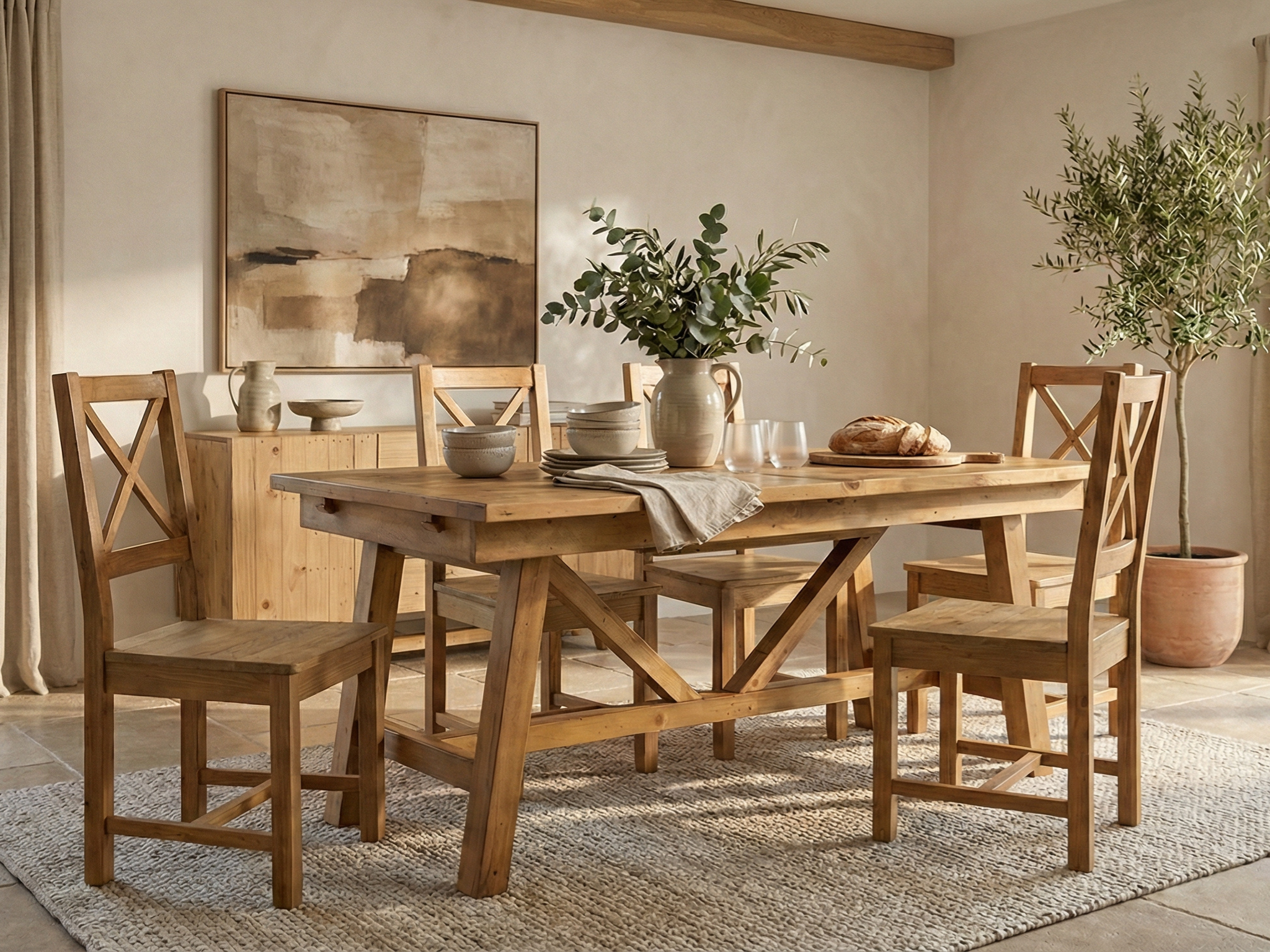

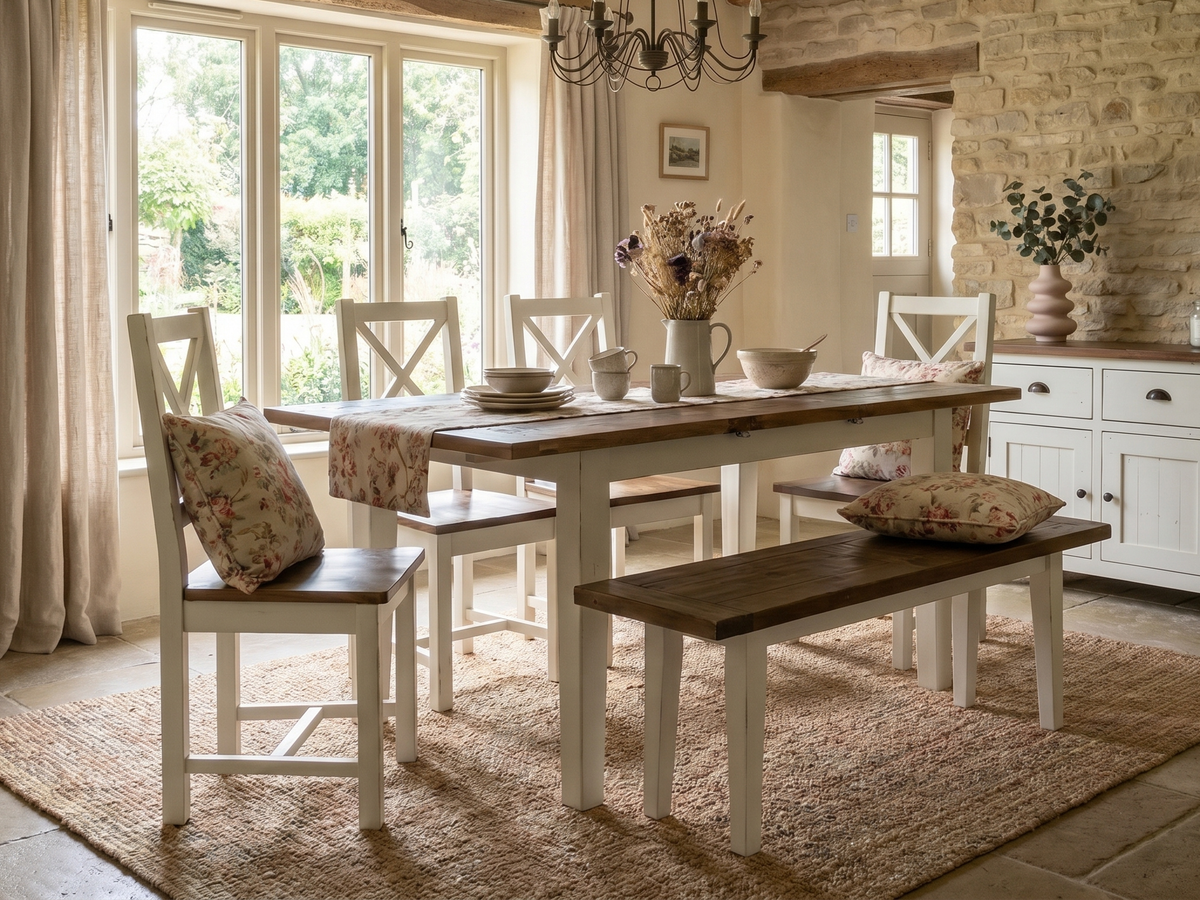
Choosing seating for a dining table is one of those decisions that looks simple until you're actually standing in the room with a tape measure. Chairs are the obvious default, but a bench along one side - or even both - has become a genuinely popular alternative, and for good reason. Each brings something different to how a dining space looks, feels, and functions day to day.
This isn't really a question of one being better than the other. It's about which suits your room, your household, and how you actually use your dining table. Here's how dining chairs and dining benches actually compare.
| Factor | Dining Chairs | Dining Benches |
|---|---|---|
| Seating | An individual seat with a backrest for each person | Shared seating that flexes with how many people show up |
| Comfort | Defined back support, suited to longer meals | Relaxed and informal, no fixed positions |
| Capacity | Fixed number of seats per table | Can flex up or down slightly depending on numbers |
| Space | Each chair keeps its own footprint when pulled out | Pushes fully under the table when not in use |
| Best suited to | Round tables, longer meals, more formal settings | Rectangular tables, everyday casual use, smaller rooms |
Comfort and Everyday Seating
Chairs are built around the individual. Each one gives a defined seat, back support, and a bit of personal space, which matters if your household spends a lot of time lingering at the table - long dinners, homework, working from the kitchen table during the day. For that kind of everyday use, having a proper backrest tends to win out.
Benches offer a different kind of comfort. There's no armrest or backrest to negotiate around, so people can shift closer together, spread out when the table's half empty, or squeeze in an extra guest without pulling up another seat. It's a looser, more relaxed way of sitting, which suits a casual household better than a formal one.
Neither is more comfortable in absolute terms. It depends on whether you're after individual support or flexible, sociable seating.

Sarah Tan Dining Chair Set Of 2
Space and Flexibility
This is where benches tend to have the edge. A bench can be pushed fully under the table when it's not in use, which frees up floor space in a way that six or eight pulled-out dining chairs simply can't. In a smaller dining room, or an open-plan space where the table needs to double as a walkway, that difference is noticeable.
Benches are also more forgiving with seating numbers. Three people can sit comfortably on a bench built for four, and squeezing in a fourth for a bigger gathering is straightforward. Chairs are more fixed - each one takes up a set footprint whether it's being used or not.
Chairs, on the other hand, make it easier to rearrange the room. Individual chairs can be pulled out, turned to face a different direction, or moved to another part of the house entirely if you need extra seating somewhere else. A bench stays where it is.

Seating Capacity
For a household that regularly hosts larger groups, benches often work out more practically simply because they flex. A 180cm bench can comfortably seat three to four adults depending on how snugly people sit, and it copes well with the odd extra guest that a fixed set of chairs can't easily absorb.
If you're planning seating around a specific table size, it's worth working backwards from how many people you actually need to fit - our guide to the 8 seater dining table buying guide covers sizing and spacing in more detail if you're planning for a larger table.
Visual Style and Room Character
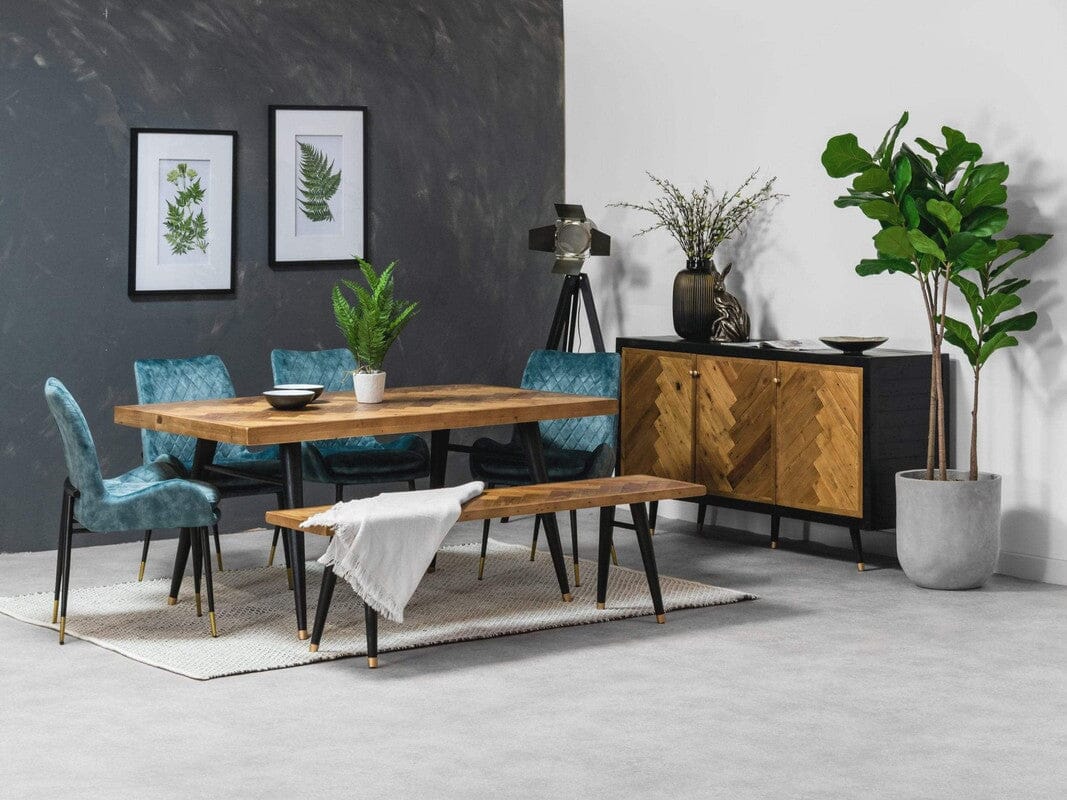
Chairs, especially matched sets, give a dining space a tidier, more finished look. Everything lines up, every seat matches, and the overall effect reads as considered and complete. That works well in a dining room that's meant to feel a little more formal.
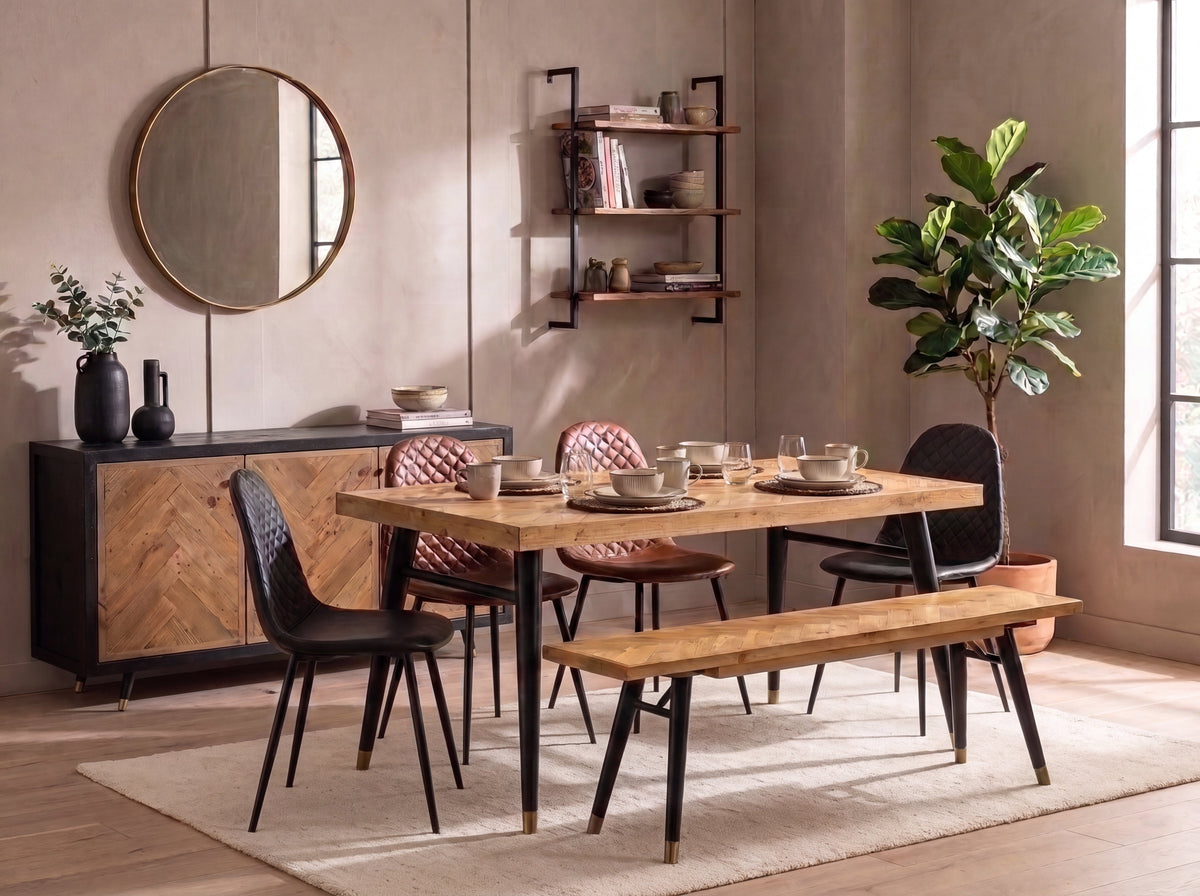
A bench brings something else - a slightly looser, more relaxed character. It reads as less "matched set" and more collected over time, especially when paired with reclaimed wood, where the grain and colour variation already does a lot of the visual work. A solid bench with real texture can become the quieter, more understated anchor of the room, letting other pieces - a statement pendant light, a heavily grained table - carry more of the visual weight.

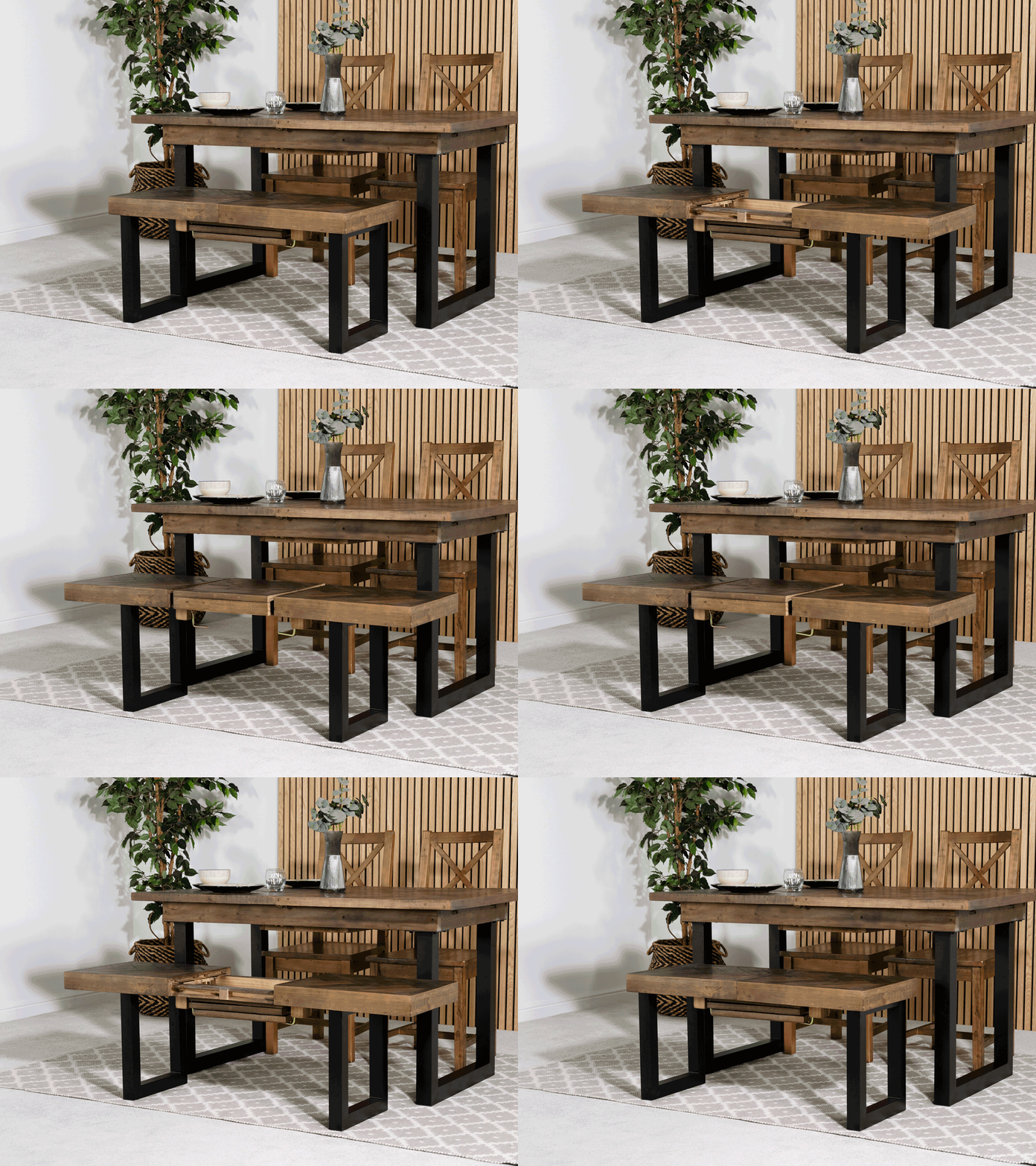
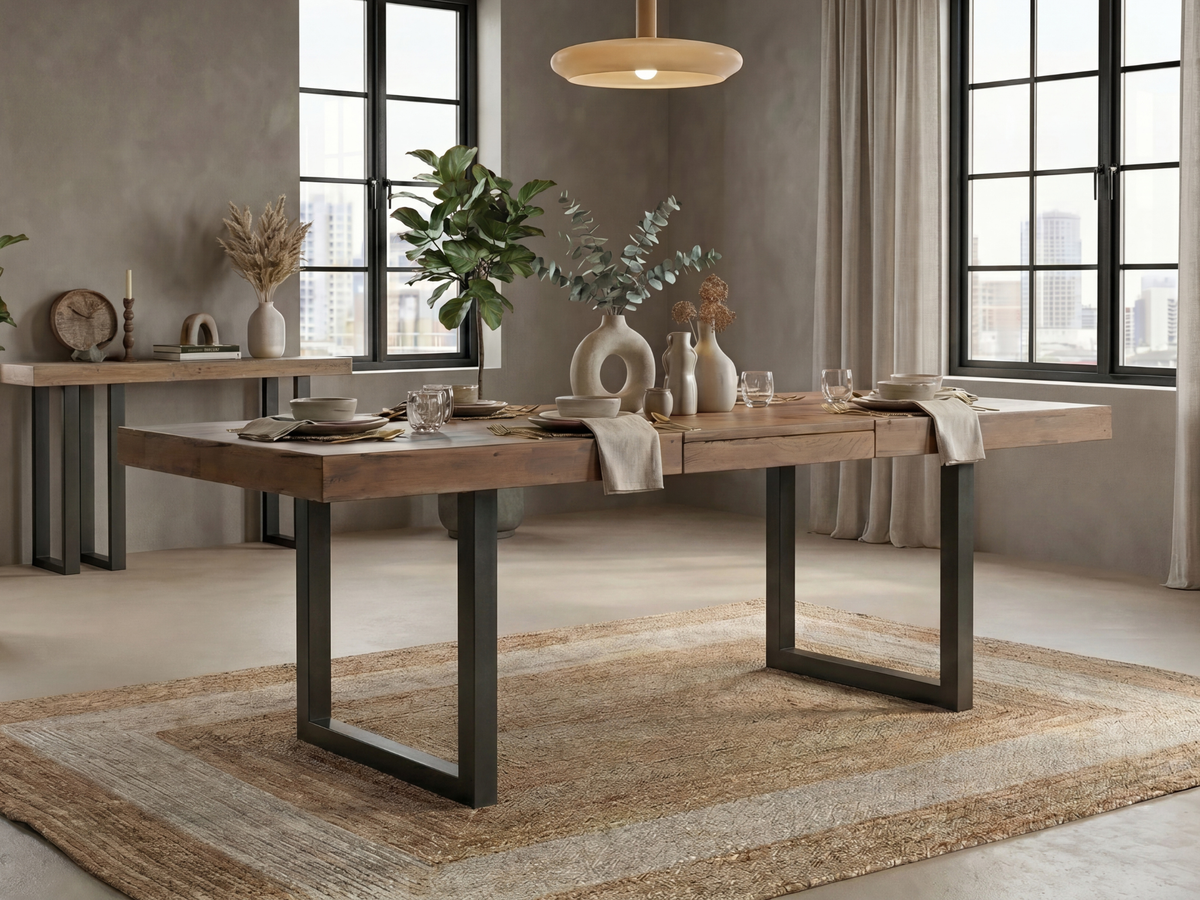
Mode 140-180cm Extendable Dining Table & Bench
Mixing Chairs and Benches
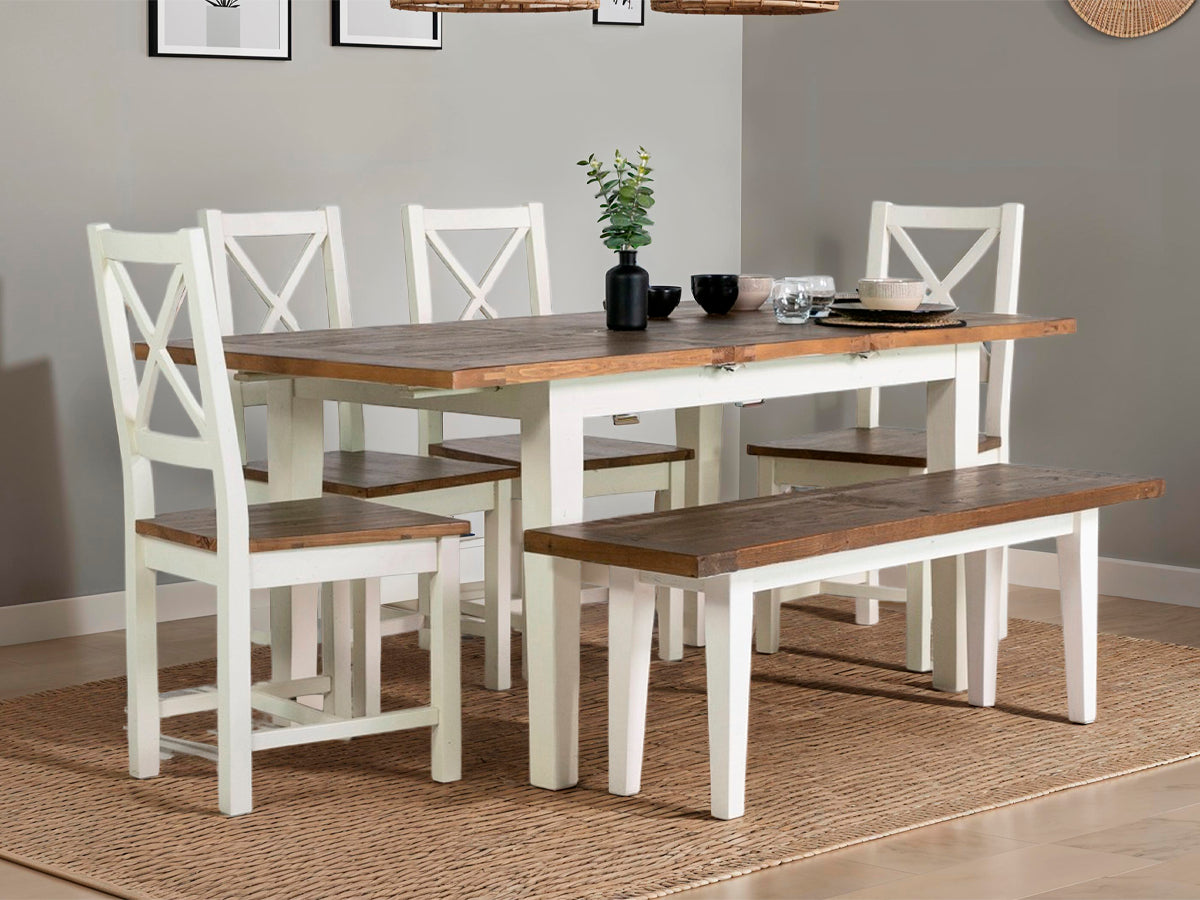
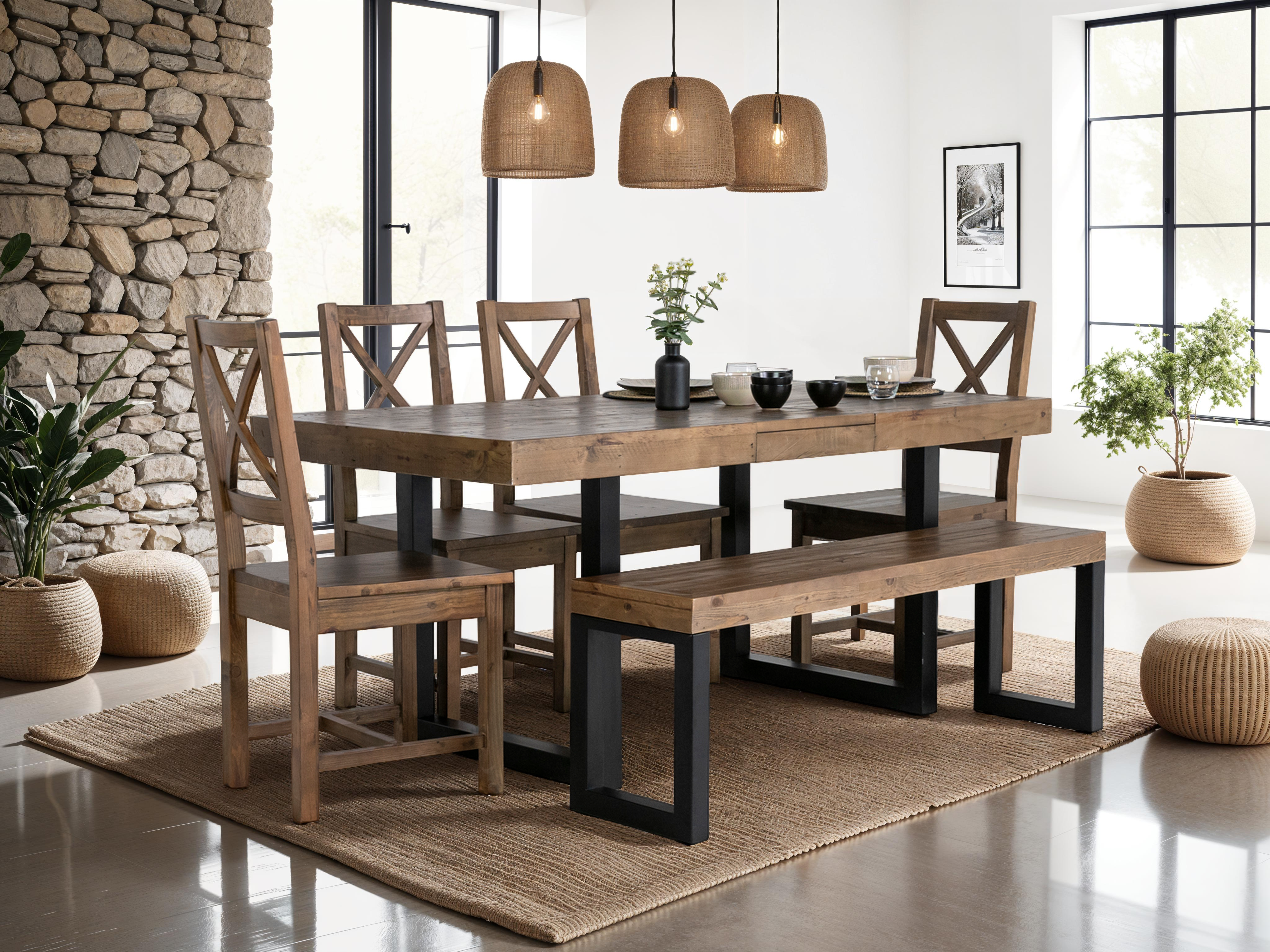
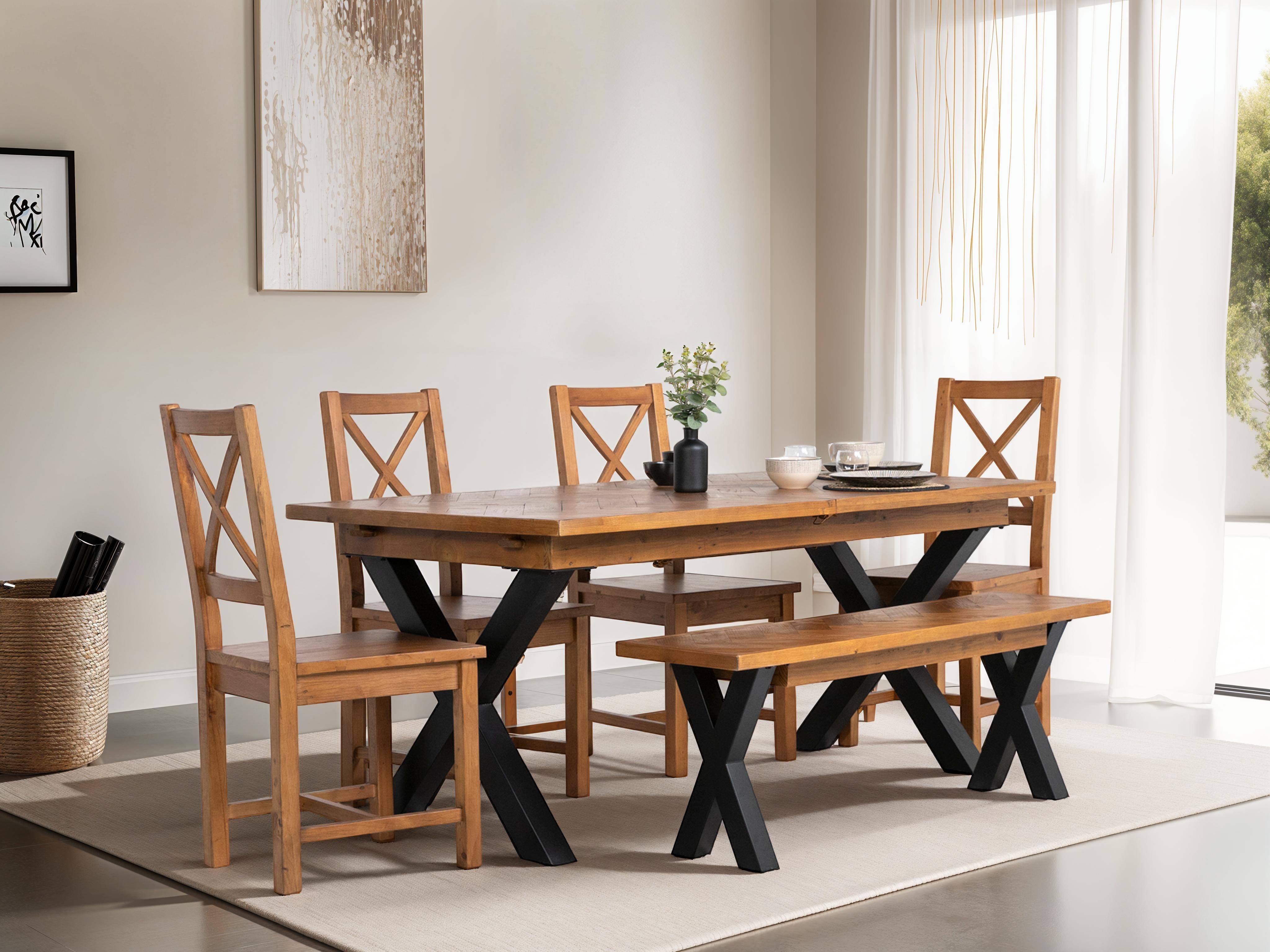
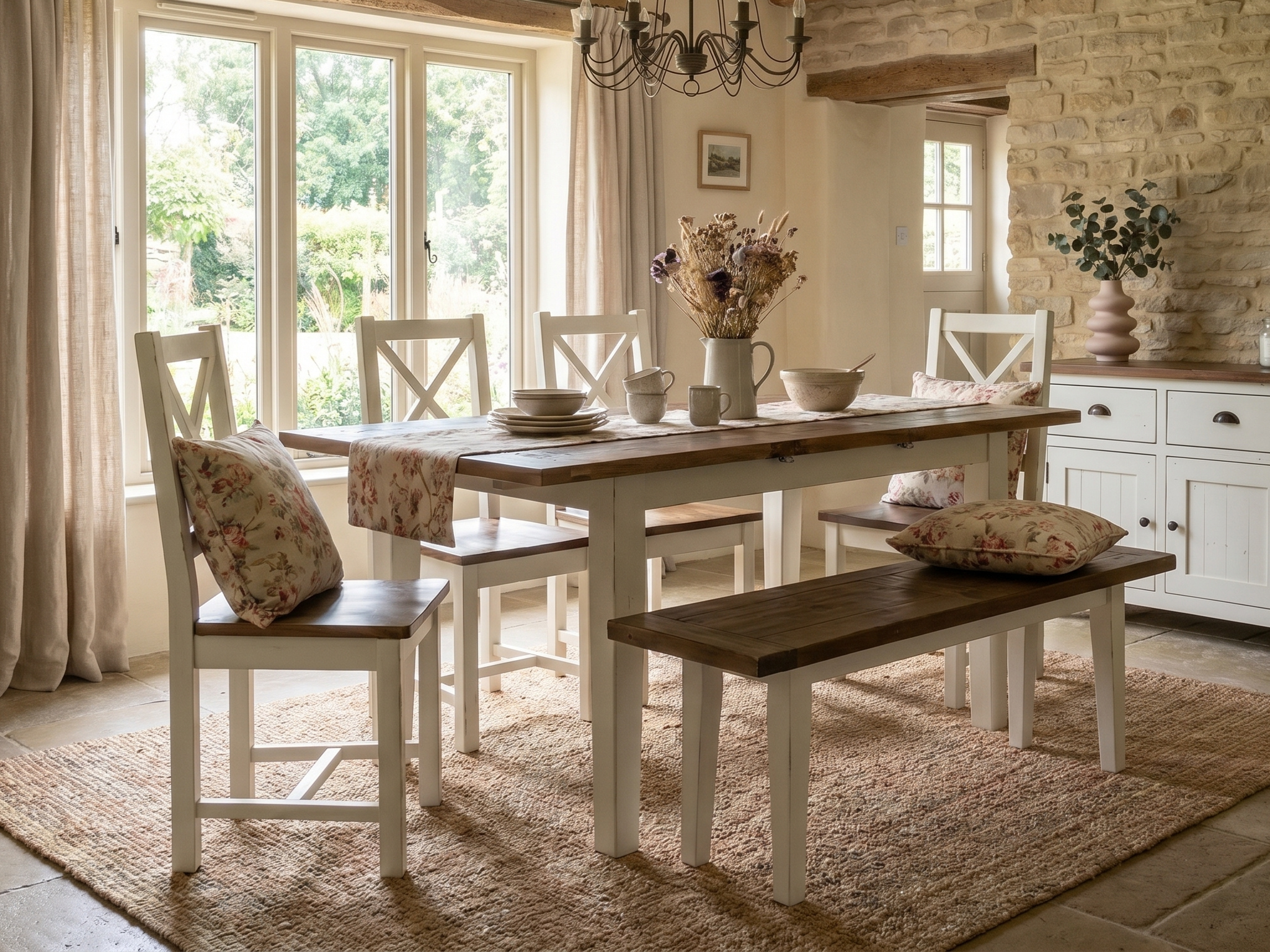
You don't have to choose one exclusively. Pairing a bench along one side of the table with chairs on the other, or at each end, is one of the most popular ways to combine the practicality of a bench with the individual comfort of a chair.
It also solves a common space problem. If one side of your table sits against a wall or in a tighter corner, a bench there saves you from wrestling a chair in and out of a cramped gap, while chairs on the open side keep things easy to get in and out of.
Pairing Seating With Your Table Shape
The table itself often narrows the decision more than people expect. A long rectangular table, particularly one of our extendable dining tables, suits a bench well along one side, since the flexibility of a bench matches the flexibility of a table that changes size for different occasions. For the most seamless pairing, our extendable dining benches are built to extend alongside the table itself, so the proportions stay right whether it's set for a quiet weeknight or opened up for guests. A fixed top dining table, with its set dimensions, often works just as naturally with a full set of matching chairs.

Brooklyn 120cm Round Dining Table
Round tables are a slightly different case. A bench doesn't curve to follow the table's edge, so chairs are usually the more practical fit for a round dining table, though a short bench can still work well pushed against a straight wall nearby. If round tables are on your shortlist, our piece on why round dining tables are making a comeback goes into more detail on how they work in a room.
Choosing What's Right for Your Dining Room
A few honest questions tend to settle this faster than browsing by style alone. How often do people actually linger at your table - if it's regularly, the backrest a chair offers starts to matter more. How much floor space do you have to spare, and does it need to double as a walkway or play space when the table isn't in use. And how many people do you realistically need to seat on an average week versus an occasional big gathering.
Chairs tend to suit you if:
- You want individual back support, especially for longer meals
- You have a round dining table
- You like being able to move or turn a single seat independently
- You want a more traditional, structured look around the table
A bench tends to suit you if:
- You're working with limited floor space
- You want seating that can be pushed fully out of the way
- You need a bit of give in numbers for children or extra guests
- You have a rectangular or extendable table
Both suit you if:
- You want the comfort of a backrest without losing the flexibility of a bench
- You'd rather a slightly mixed, collected look than a fully matched set
- You have a rectangular or extendable table with room to pair the two
At Reclaim Nation, both our chairs and benches are built from the same solid reclaimed pine and elm as the rest of the range, salvaged from old floorboards, pallets, railway sleepers and manufacturing offcuts. Finishes are applied by hand in our Bristol workshop, so the grain stays visible rather than sitting under a flat coating - which is part of why a bench or a set of chairs bought today should still look right alongside a table you've had for years, not just the one you buy them with.
Frequently Asked Questions on Dining Chairs vs Benches
Are dining benches more comfortable than dining chairs?
It depends on what you're comparing them for. Chairs offer individual back support, which suits longer meals or regular everyday use. Benches offer more relaxed, flexible seating without a fixed backrest, which suits a more casual household or shorter, sociable meals.
Can I mix dining chairs and benches at the same table?
Yes, and it's a genuinely popular approach. A bench along one side with chairs on the other, or at each end, combines the space-saving flexibility of a bench with the individual comfort of a chair.
Do benches save more space than chairs?
Generally, yes. A bench can be pushed fully under the table when not in use, which frees up more floor space than a full set of chairs, particularly in a smaller dining room.
Which seats more people, benches or chairs?
A bench tends to be more forgiving with numbers, since people can sit closer together or spread out depending on how many are at the table. Chairs give each person a fixed, defined seat, so capacity is more exact but less flexible.
Does Reclaim Nation sell benches that extend with the table?
Yes. Our extendable bench range is designed to grow alongside our extendable dining tables, so a bench stays in proportion whether the table is at its everyday size or stretched out for a full house.
Do reclaimed wood benches and chairs need different care?
No. Both benefit from the same basic care as any solid reclaimed wood piece - avoiding excess moisture and direct heat, with an occasional wax treatment to keep the finish nourished. Our care guide covers the full routine in more detail.
What table shape works best with a bench?
Rectangular tables, including extendable designs, tend to suit a bench well along one side. Round tables generally work better with chairs, since a straight bench doesn't follow a curved edge, though a short bench can still work if it's pushed against a nearby wall.
Whichever way you lean, both options are handmade from solid reclaimed pine and elm in our Bristol workshop, so it comes down to what suits your room rather than any difference in quality or craftsmanship.

Leave a comment
This site is protected by hCaptcha and the hCaptcha Privacy Policy and Terms of Service apply.