
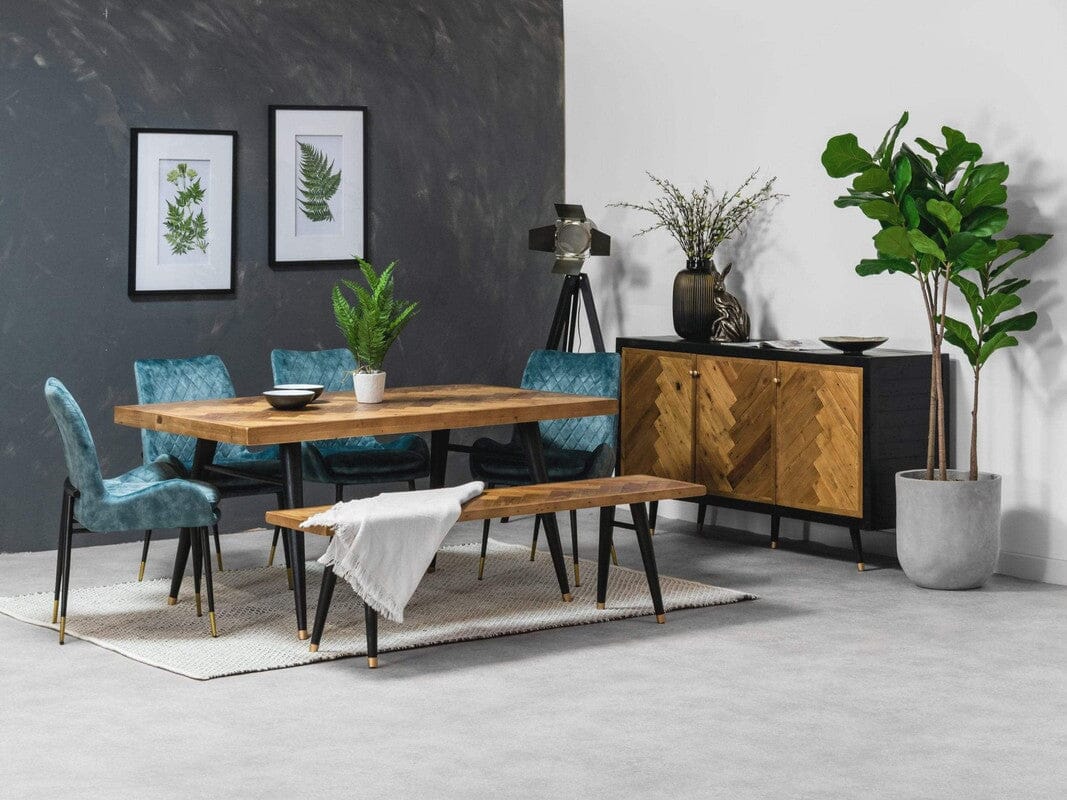
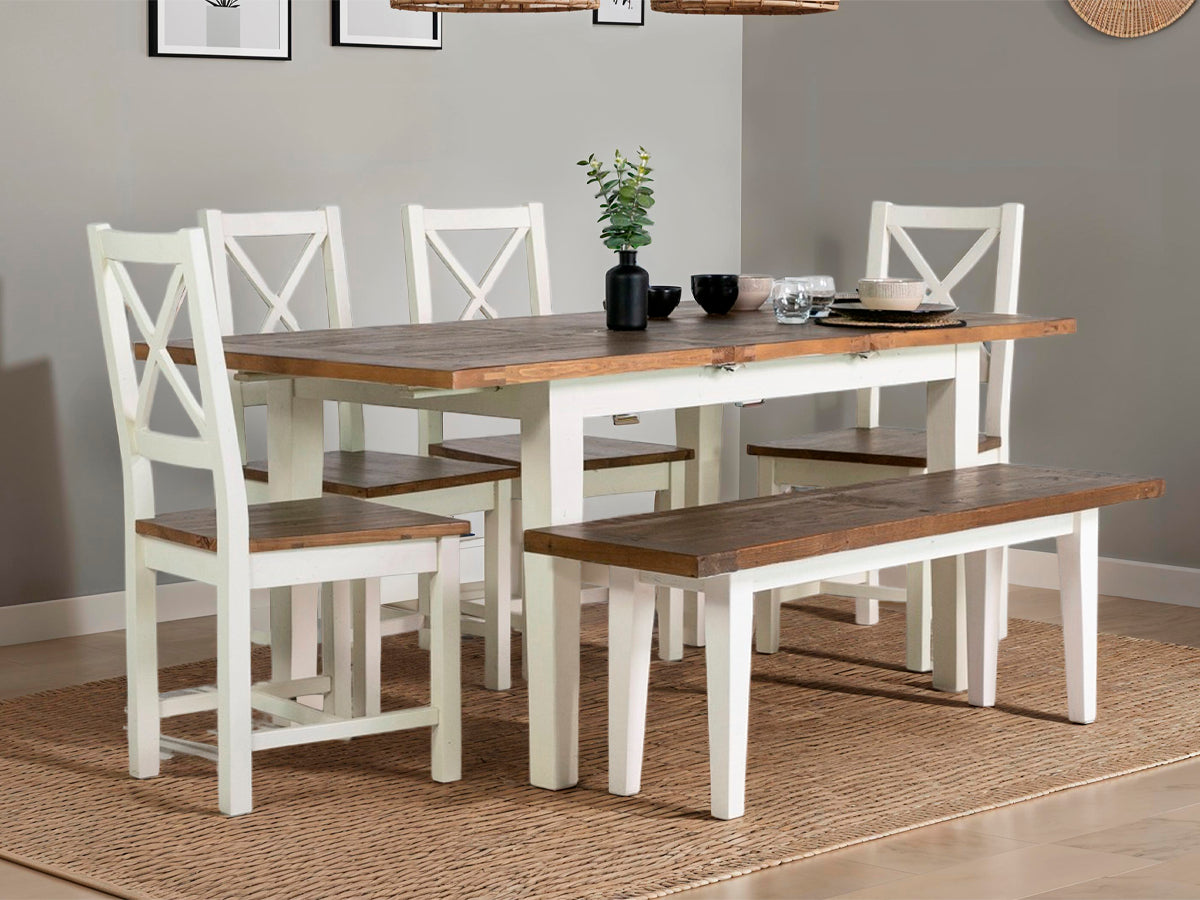
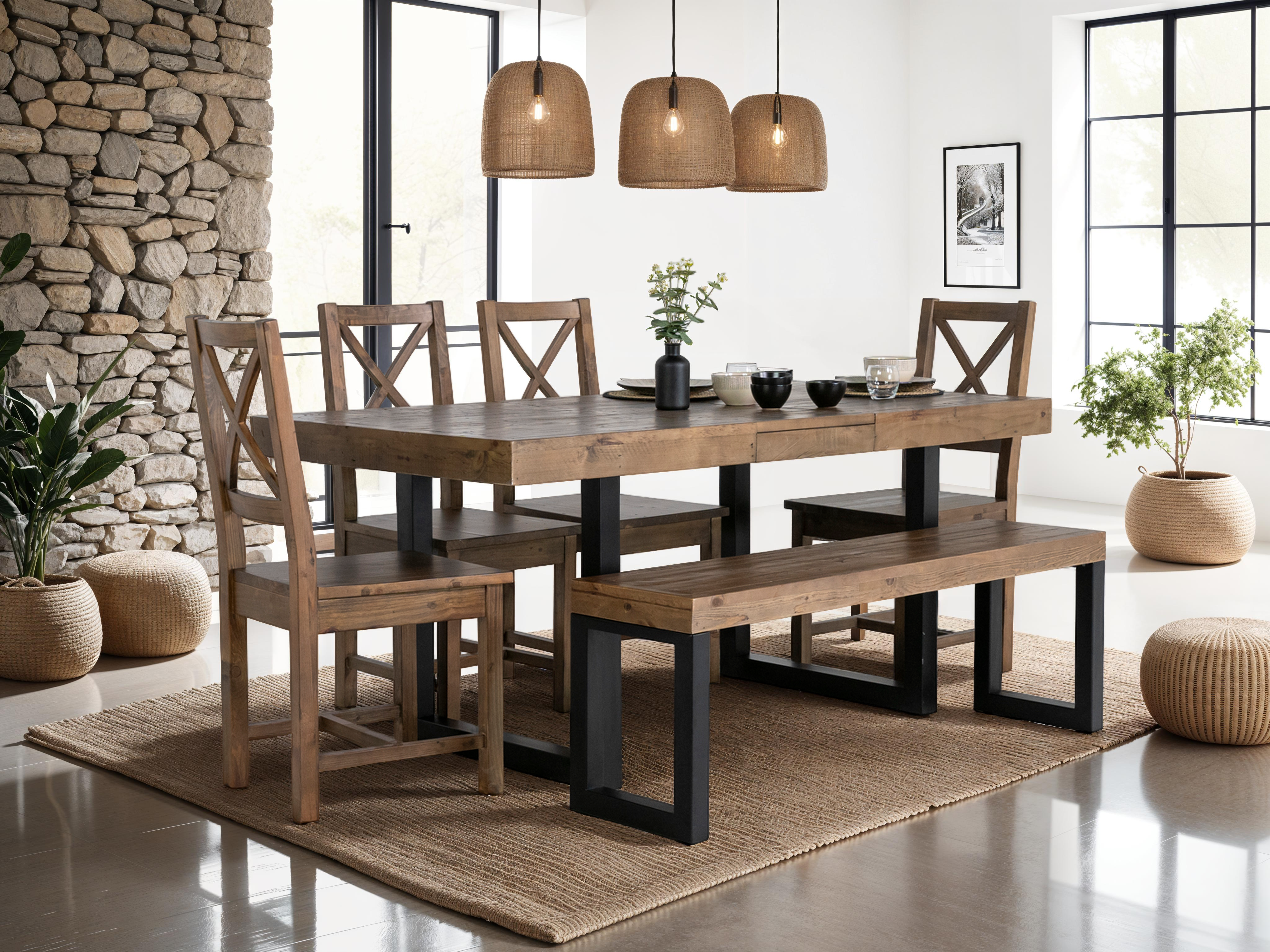
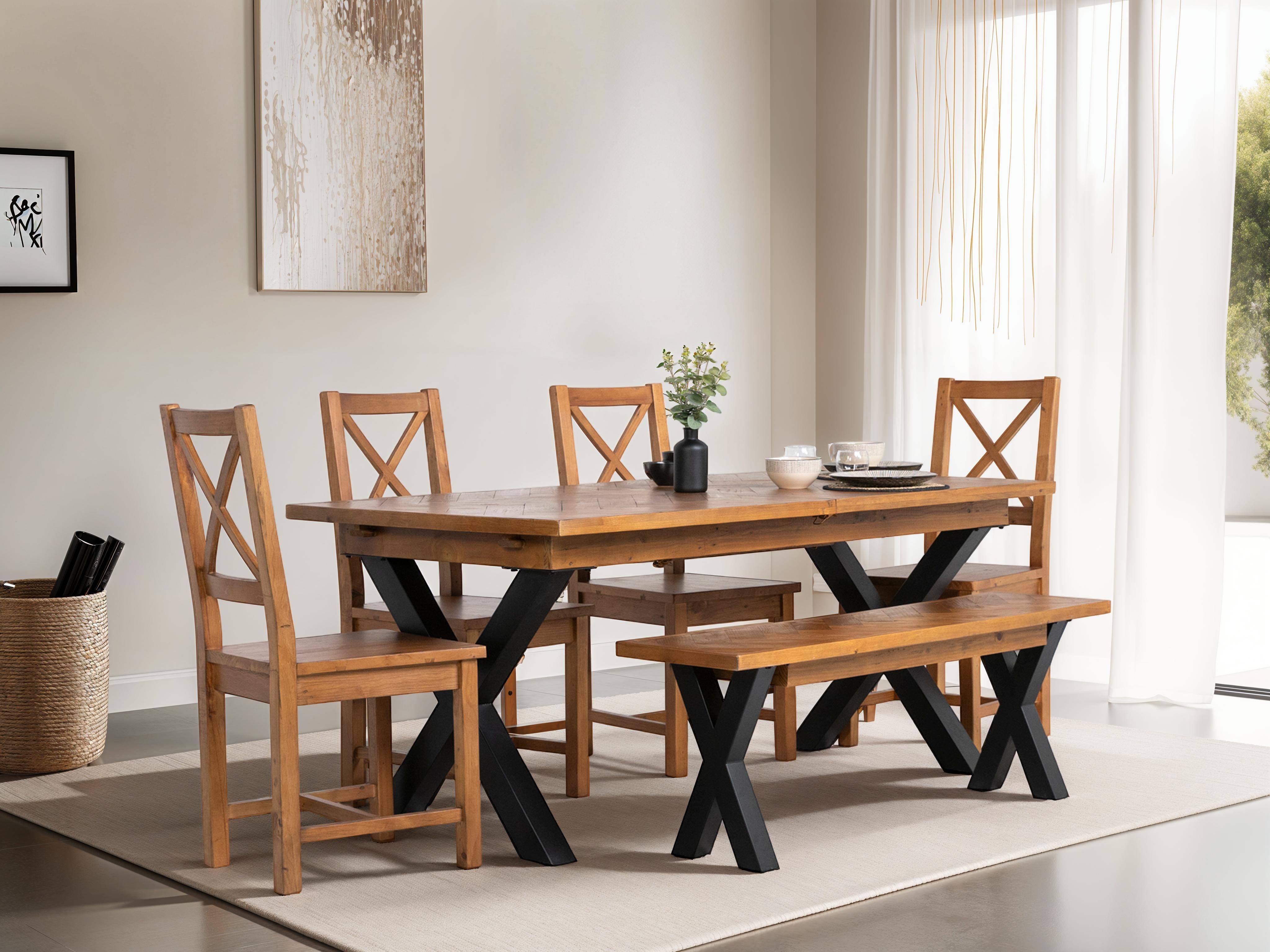
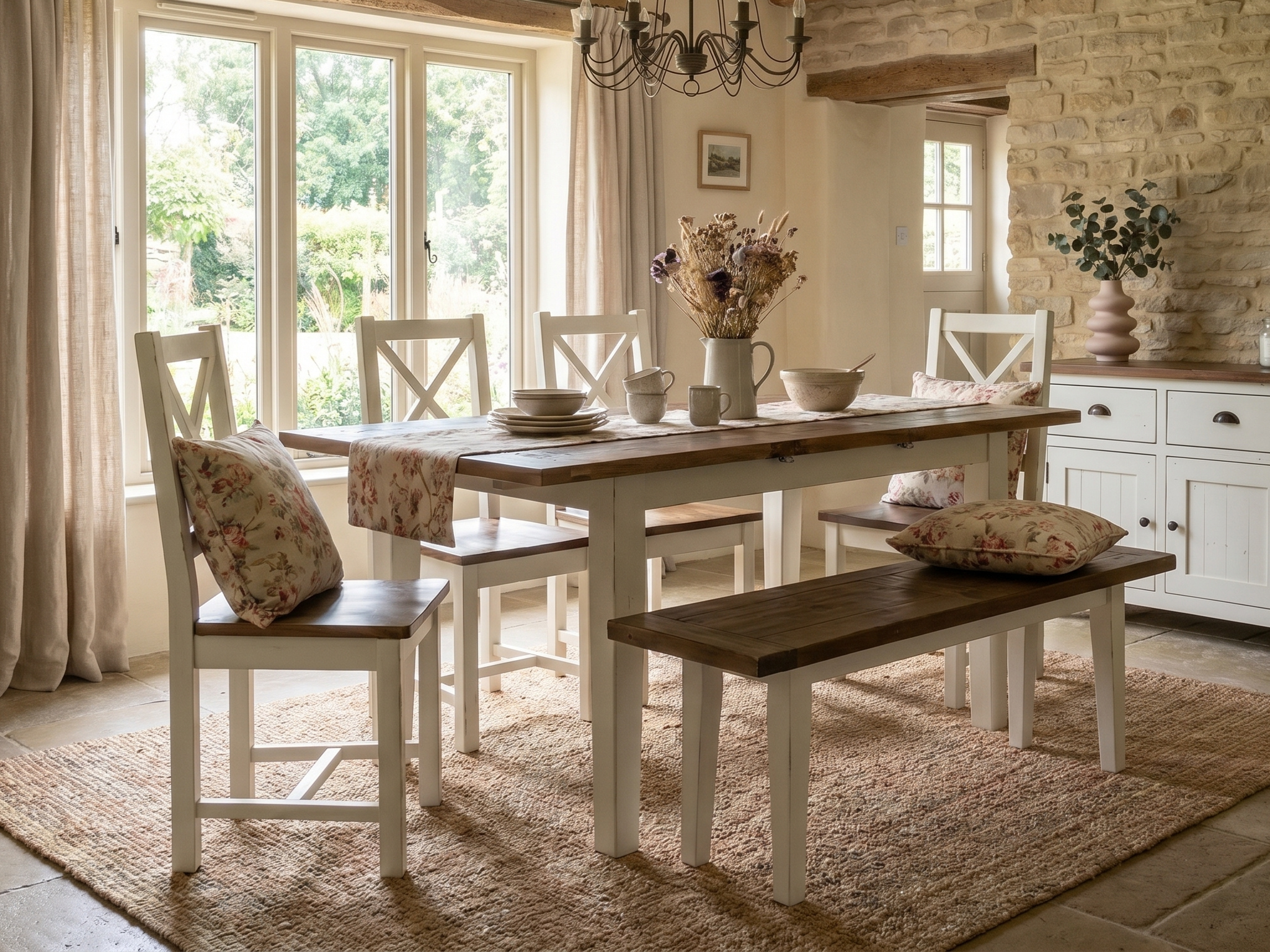




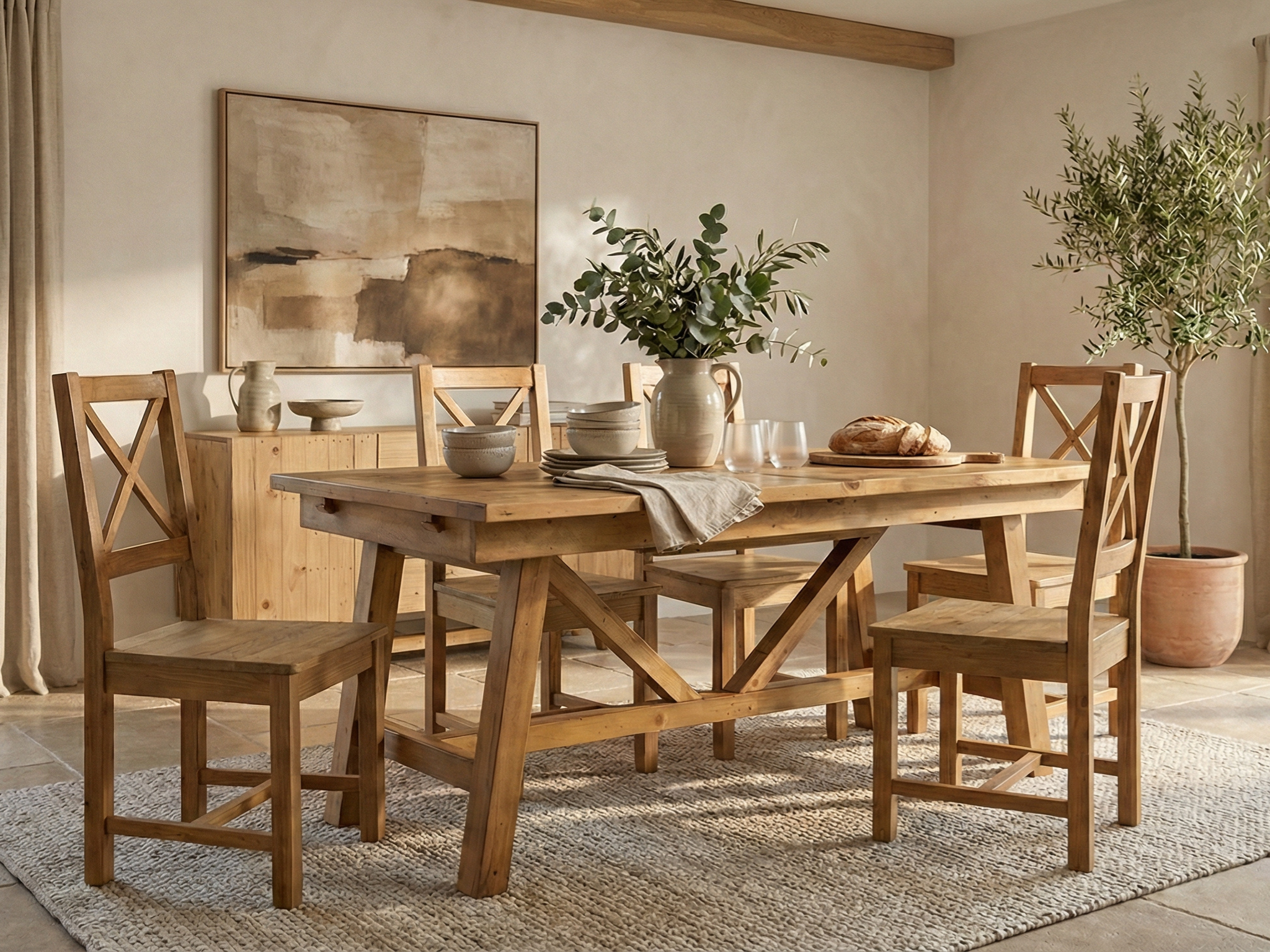

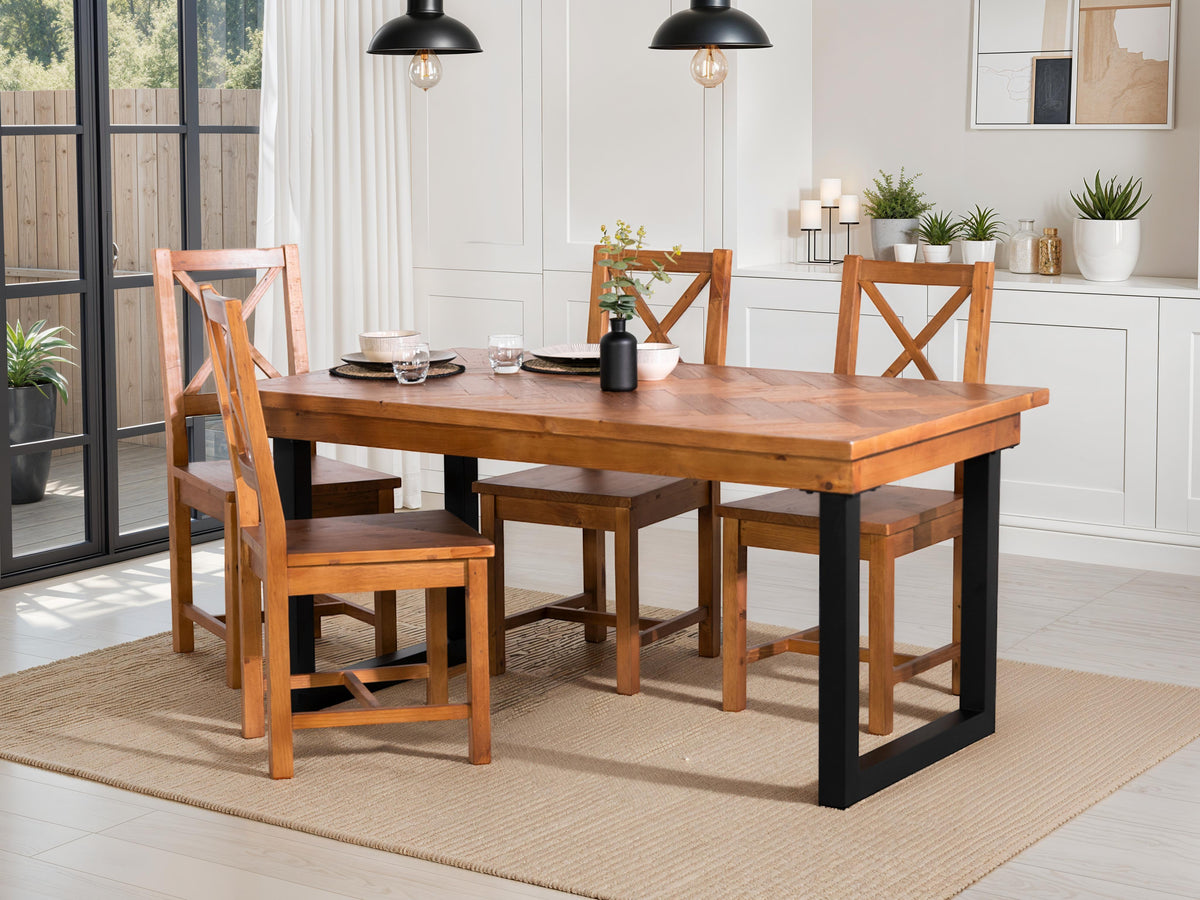
A fixed top dining table has a settled, permanent feel to it, since the size you choose is the size it stays. There's real appeal in that - no leaves to store, no mechanism running through the middle of the top, just one solid table that's always ready to go, Christmas included. It does mean the dining table dimensions are worth getting right before you buy, so the sizing groundwork pays off for years rather than needing a rethink later.
This guide walks through how to size a fixed top dining table properly - by seat count, by the space around it, and by how much room your chairs actually need to pull out and be used comfortably.
Fixed Top Dining Table Sizes by Seat Count
Table length is the main driver of seating capacity, though width and leg placement both play a part too. As a general dining table seating guide, here's roughly what to expect:
| Table length | Approximate seating | Suits |
|---|---|---|
| 120-140cm | 4 people | Smaller dining spaces, everyday meals |
| 150-180cm | 6 people | Families and compact kitchen-diners |
| 180-200cm | 8 people | Family dining and regular entertaining |
| 220cm+ | 10+ people | Larger dining rooms, frequent hosting |
These are starting points, not fixed rules. A narrower table can still seat the number above if the length is generous, and a wider tabletop gives more room for serving dishes without needing extra length. Width tends to get less attention than length, but it's worth thinking about too - 80-100cm is a comfortable range for most rectangular tables, giving room for place settings without leaving the centre of the table unusably wide. A narrower table suits a tighter room well, provided you're happy with less space for serving dishes in the middle.
If you're specifically after an 8-seater, our 8 seater dining table buying guide goes into that size in more depth, including shape comparisons and chair pairing. Height is fairly standard across most fixed-top tables, usually around 75cm, so it's rarely the deciding factor.


Room Space and Circulation for a Fixed Top Table
With an extendable table, the footprint can flex a little with day-to-day needs. A fixed top table keeps one consistent footprint instead, which is part of its settled appeal - it also means circulation space is worth planning properly from the start, rather than something to adjust for later.
As a general planning guide, aim for around 90cm of clear space between the table edge and the nearest wall or piece of furniture, on every side. That's enough room for someone to sit down, push their chair back, and stand up without bumping into a wall, sideboard, or doorway. Room shape changes how far that guideline stretches:
Long, narrow rooms. Rectangular fixed tables follow the shape of the room naturally, but resist the urge to choose the longest table that will physically fit. Leave comfortable circulation at both ends, not just along the sides.
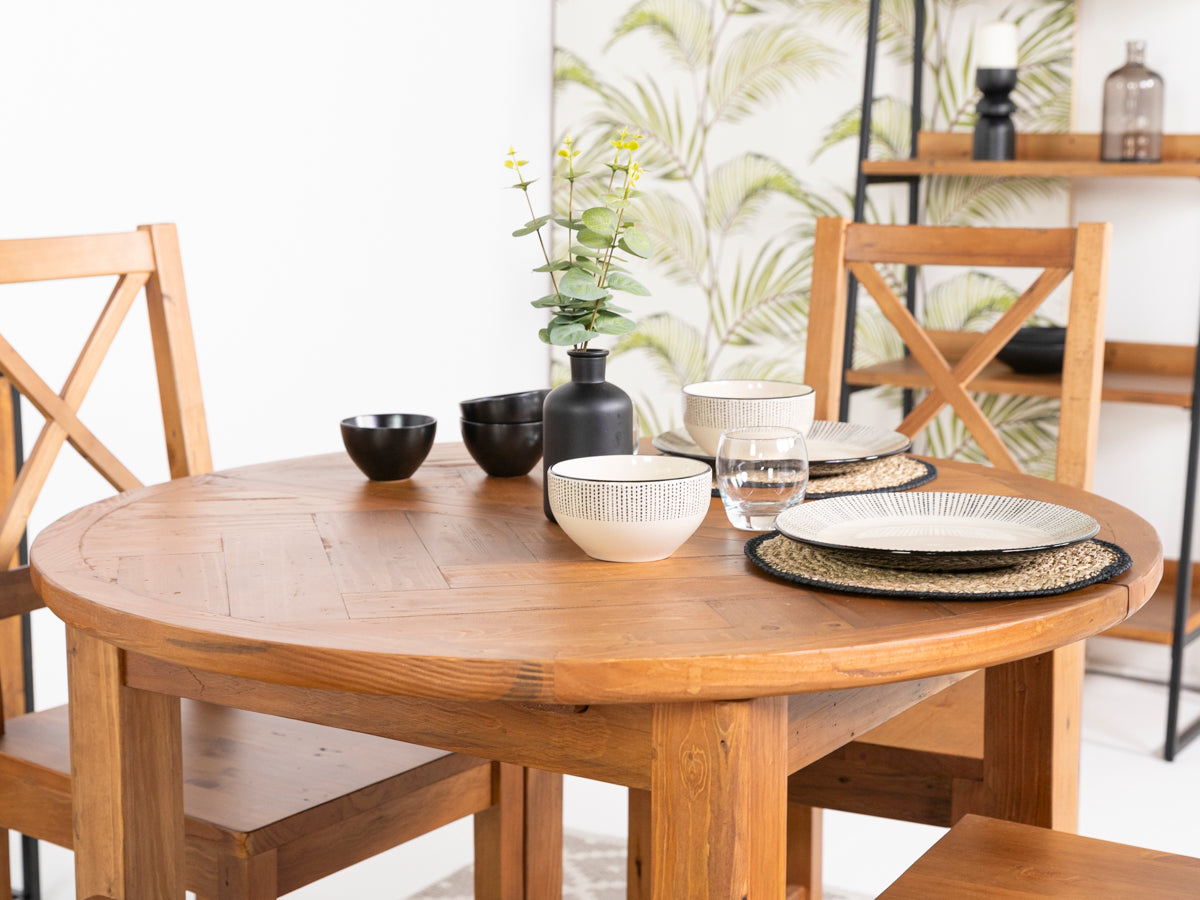
Square rooms. These give more flexibility. A rectangular table can still work well, especially positioned centrally, but a round dining table often makes movement around it easier since there are no corners to navigate.
Open-plan spaces. Think about the routes people actually take through the room, not just the floor area on paper. A table that fits the measurements can still block the main walkway between kitchen and living space if chairs are pulled out at the wrong moment. Leave extra clearance on whichever side connects the two.
Dining Chair Clearance and Spacing Per Person
Seating capacity on paper doesn't always match how comfortable a table actually feels in use. A few figures worth checking before you buy:
Width per person. Allow roughly 60-70cm of table edge per seat as a comfortable starting point, though the exact amount depends on chair width and how people are positioned around the table. Anything tighter and elbows start competing for space, particularly with wider or upholstered dining chairs.
Legroom underneath. As a guide, look for around 10-12 inches (25- 30 cm) of clearance between the seat and the underside of the tabletop for comfortable legroom. Tables with a thick apron or a central leg support can reduce this more than a simple four-leg design, so it's worth checking the specific table's dimensions before you order rather than after.
Chair pull-out distance. Beyond the 90cm general room clearance above, allow roughly 45- 50 cm just for the chair to be pulled back far enough for someone to stand up comfortably. This overlaps with the room clearance figure rather than stacking on top of it, so 90cm total is usually enough rather than something you need to add together.


Brooklyn 160cm Fixed Top Cross Leg Dining Table
Measuring Your Room Before You Buy
The most reliable way to size a fixed top table is also the simplest. Measure the room, then mark the table's actual footprint on the floor using masking tape before you order anything.
Walk around the taped outline as if chairs were already in place. Pull an imaginary chair back at each seat and check there's still room to stand comfortably. If the room also has a sideboard or other furniture along one wall, account for that too rather than measuring the room as if it were empty.
Doorway swing and any thoroughfare through the room deserve a second look. A table can measure perfectly on paper and still feel wrong in practice if a door catches a chair back, or if the only route to the kitchen cuts straight through where someone's sitting.
Fixed Top vs Extendable - Which Suits Your Space
A fixed top table generally has a more substantial, settled feel than an extendable equivalent, since there's no mechanism, leaf storage, or joint line running through the middle of the top. For a room with a consistent number of diners and enough space to spare, that solidity is usually the appeal.
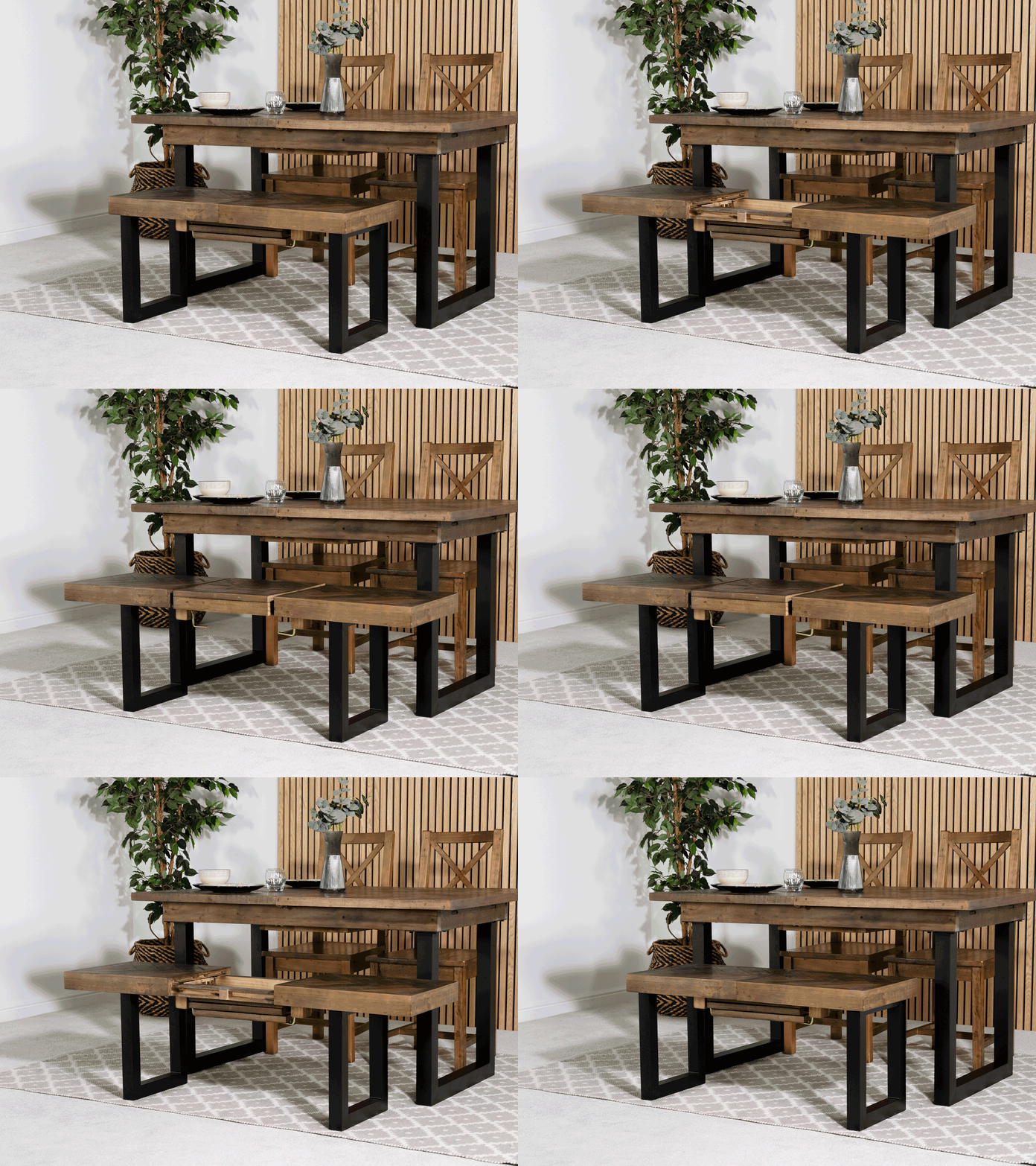
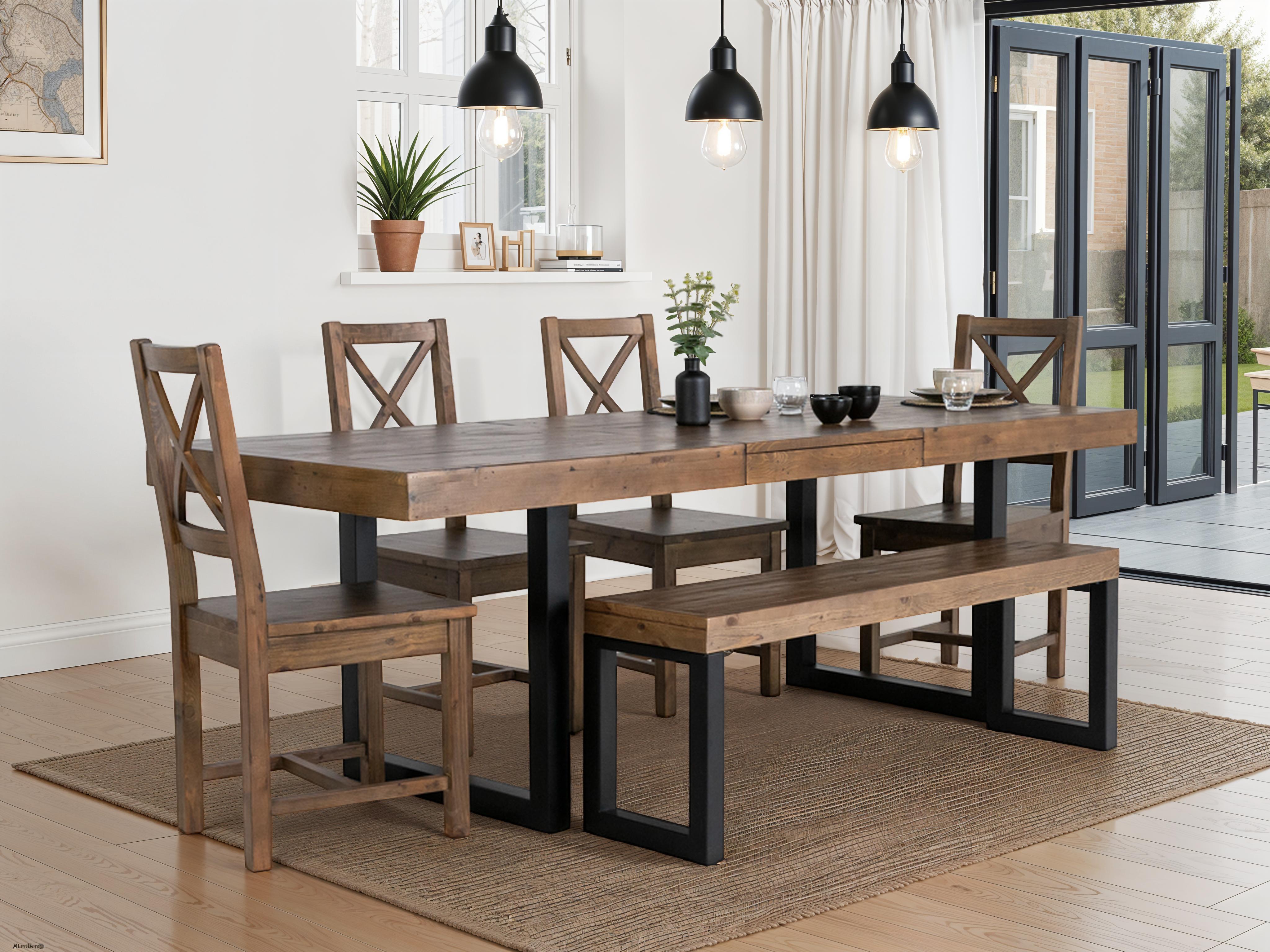
Where a household's needs shift, an extendable dining table gives you a smaller everyday footprint with the option to open up for guests, which is worth considering if your seating needs genuinely change through the year rather than staying constant. A bench along one side of a fixed top table is another way to flex seating slightly without changing the table itself, and it tucks away neatly underneath when it isn't needed.
Whichever you choose, Reclaim Nation's fixed top tables are built primarily from pine and elm, reclaimed from old floorboards, pallets, railway sleepers and manufacturing offcuts rather than freshly felled timber, and finished by hand in our Bristol workshop. With nearly 30 years of designing and selling furniture, the sizing advice above reflects what actually holds up in real UK dining rooms, not just showroom measurements.
A Quick Sizing Checklist Before Buying a Dining Table
Before choosing a table, it's worth running through a few questions rather than shopping on length alone:
- How many people need to sit down on an ordinary day, not just when hosting?
- Have you allowed roughly 90cm of clearance on every side, and more on any walkway through the room?
- Does the leg position affect where chairs can actually go?
- Will your existing chairs fit comfortably beneath the tabletop, arms included?
- Would a bench along one side make better use of the space?
- Would an extendable table suit a household whose seating needs change through the year?
Frequently Asked Questions on Fixed Top Dining Table Sizing
What size fixed top dining table do I need?
It depends on how many people you're regularly seating and how much room space you have. As a starting point, allow roughly 60- 70 cm of table edge per person, then check that against the table's overall dimensions, leg placement, and around 90cm of clear space around the table itself.
What size dining table seats 4 people?
A table around 120-140cm long generally works for four, though the exact capacity also depends on the width and where the legs sit.
What size dining table seats 6 people?
A fixed top table around 150-180cm long typically suits six people comfortably, with the higher end of that range giving a bit more breathing room per seat.
What size dining table seats 8 people?
Look for a table around 180-200cm long as a starting point, then check the width, leg placement, and your chair dimensions before assuming it will comfortably seat eight. Our 8 seater dining table guide covers this size specifically.
How much space should I leave around a fixed top dining table?
Aim for around 90cm on every side, and closer to 100-120cm on any side that also functions as a walkway through the room. This covers both chair pull-out distance and space to stand and move comfortably.
Should I choose a fixed top or extendable dining table?
A fixed top table tends to suit a household with a consistent number of diners and enough spare room space. An extendable table makes more sense if your seating needs genuinely change through the year, since it lets you keep a smaller everyday footprint with the option to open up when needed.
Explore Reclaim Nation's dining collection, which includes chairs, benches, fixed and extendable dining tables, and more, each one handmade from solid reclaimed pine and elm.

Leave a comment
This site is protected by hCaptcha and the hCaptcha Privacy Policy and Terms of Service apply.