
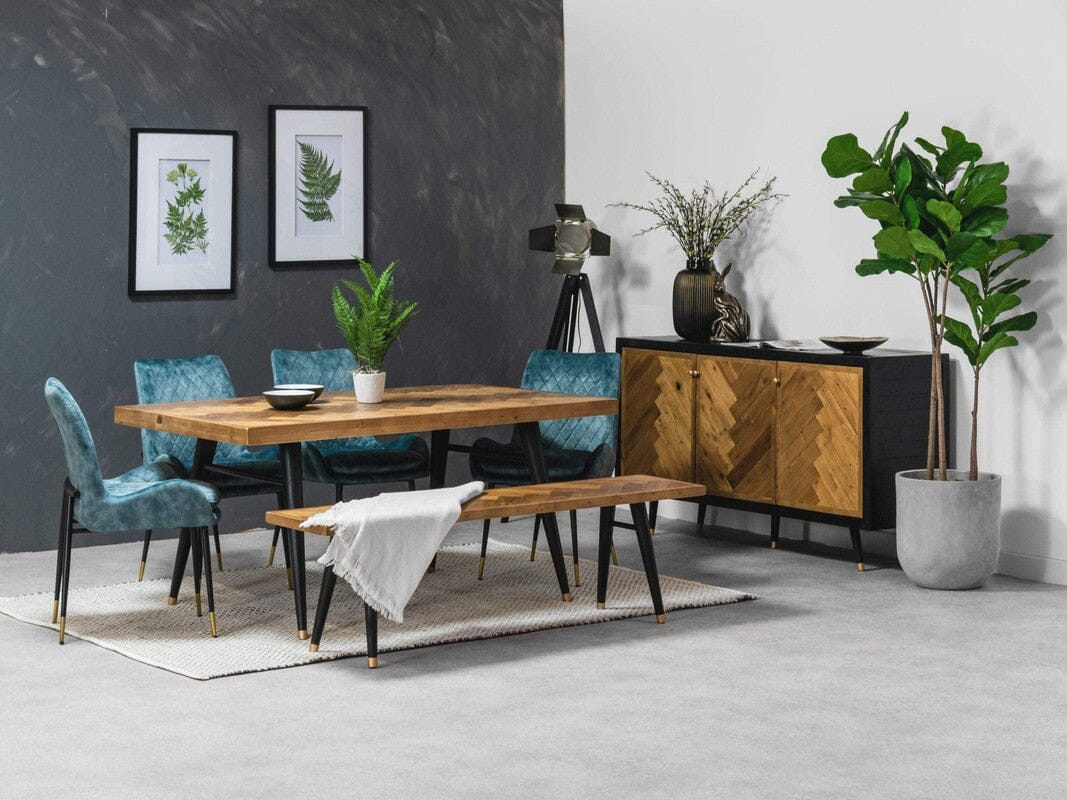
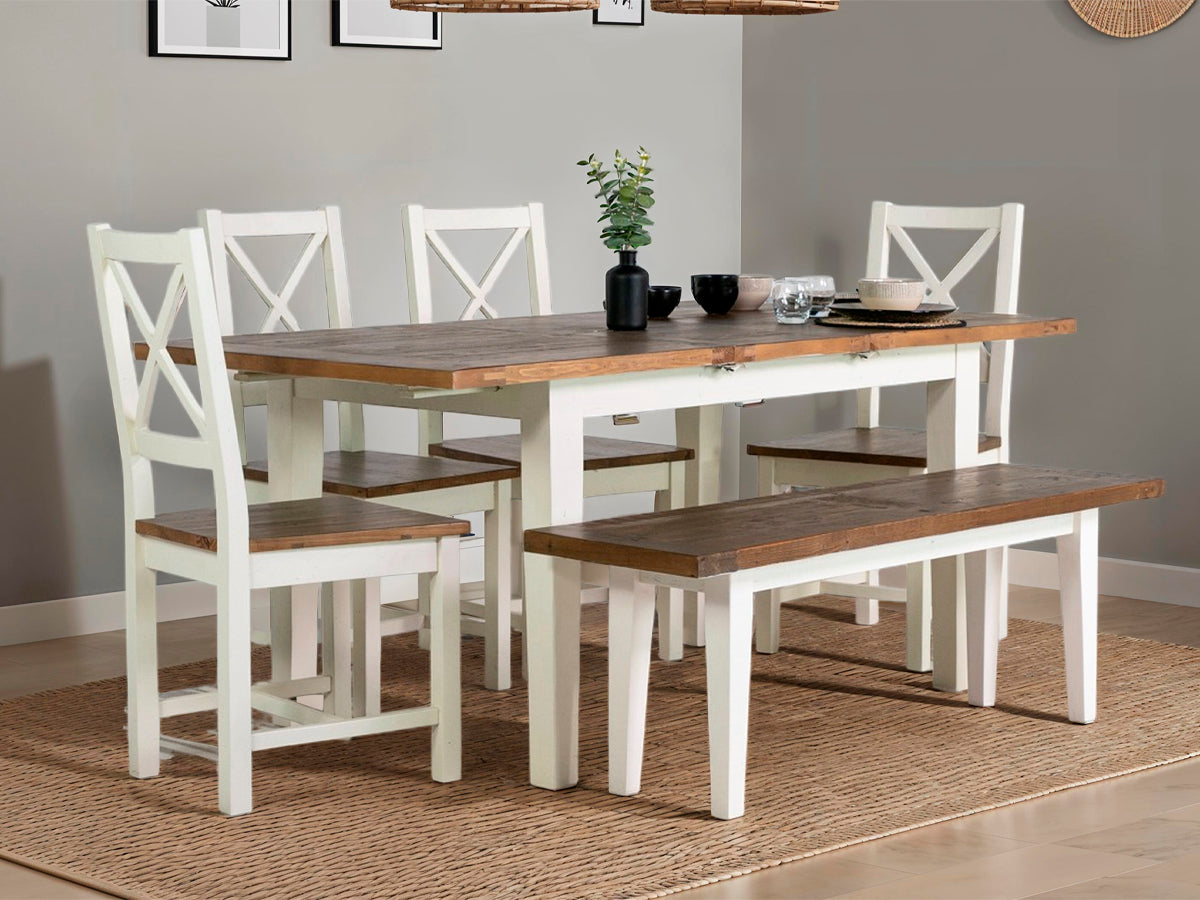
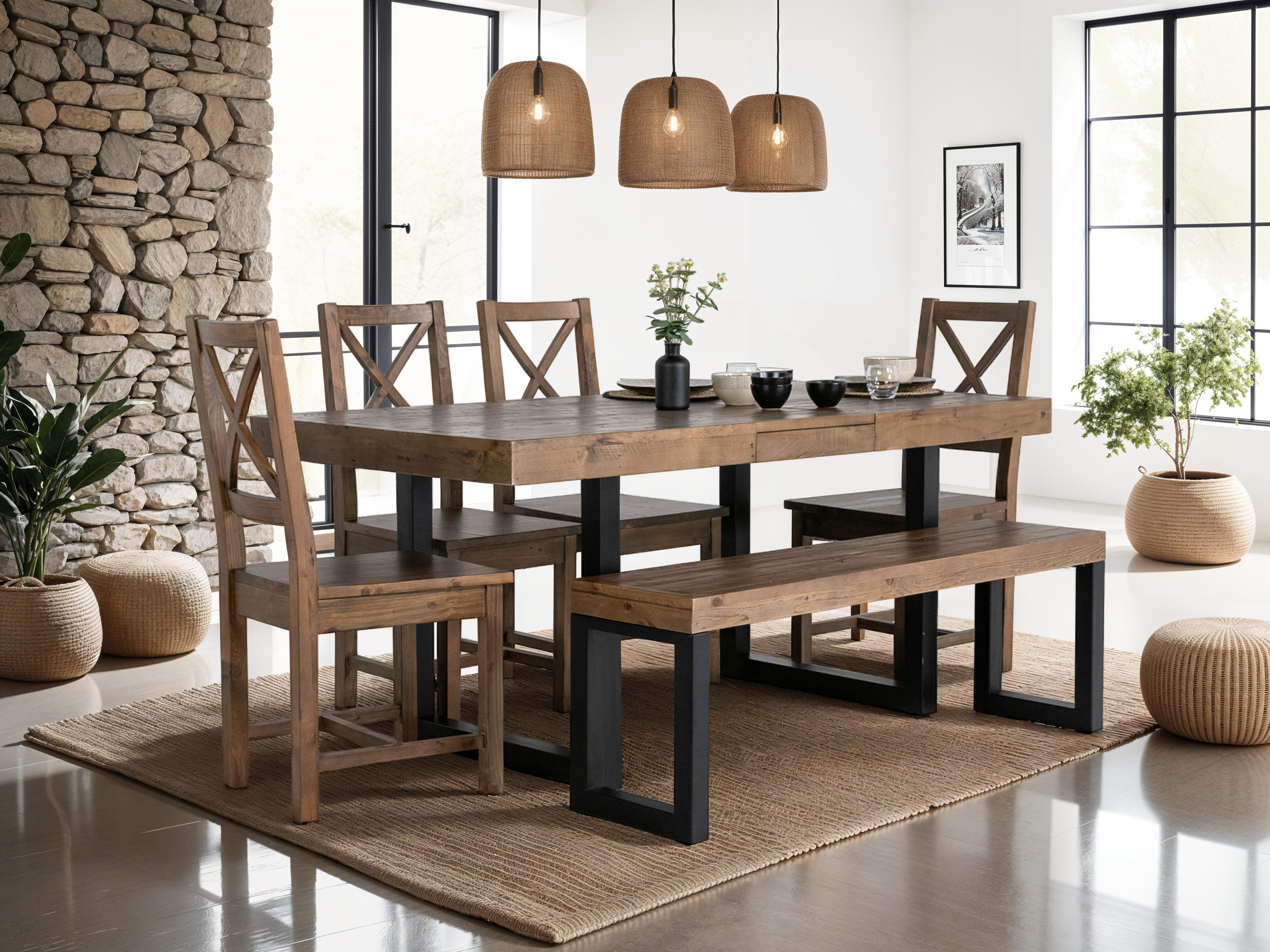
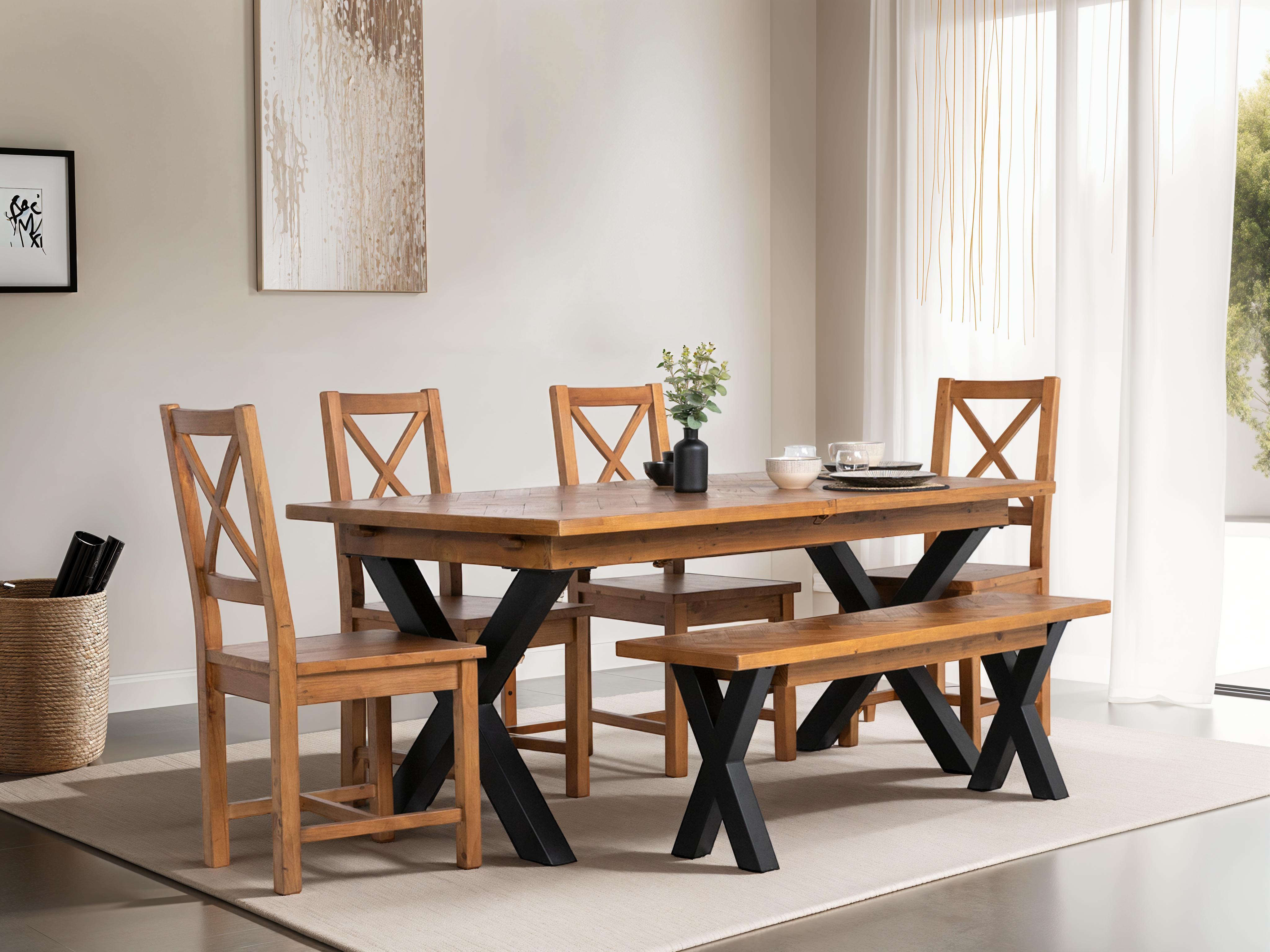
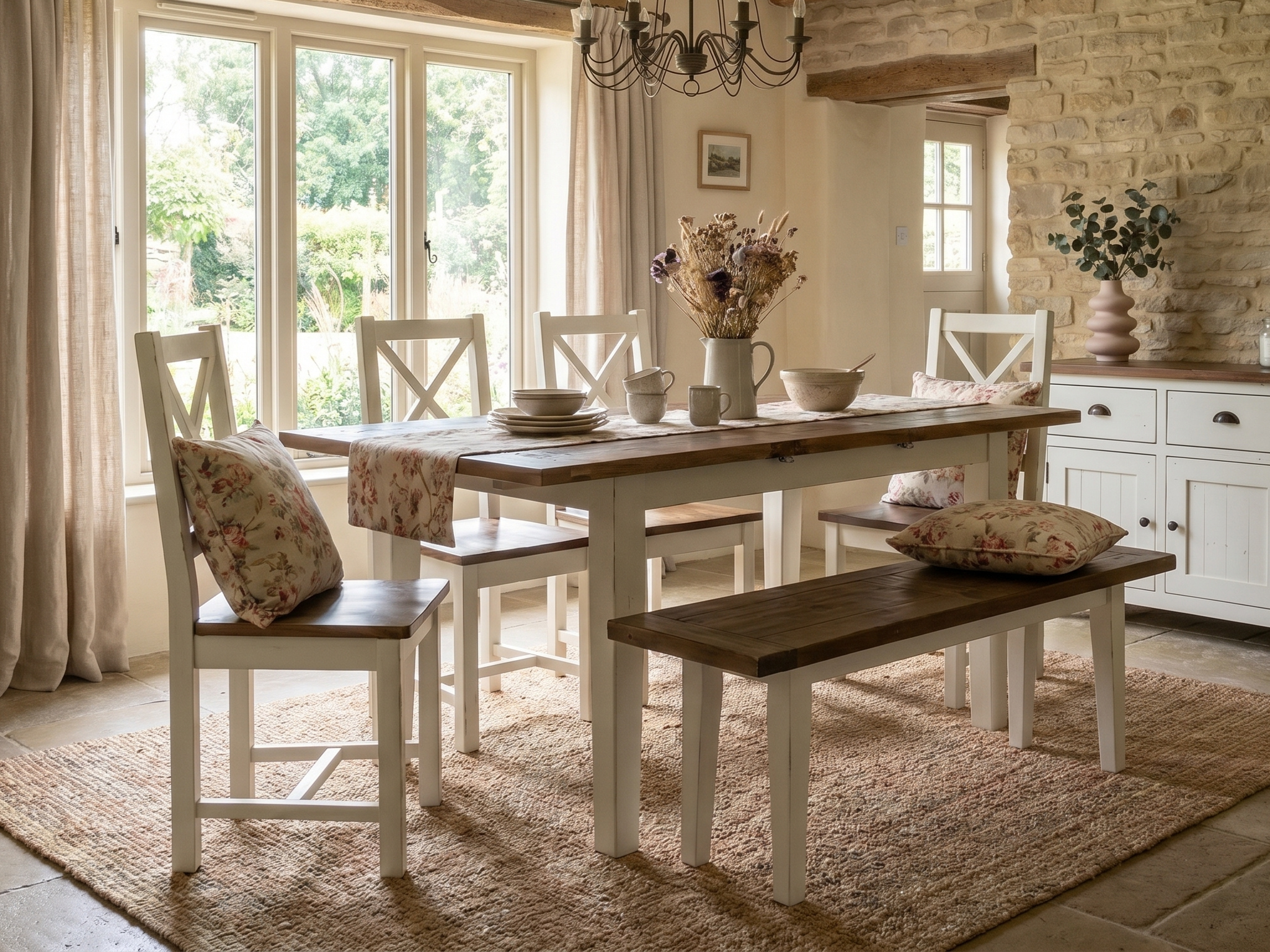




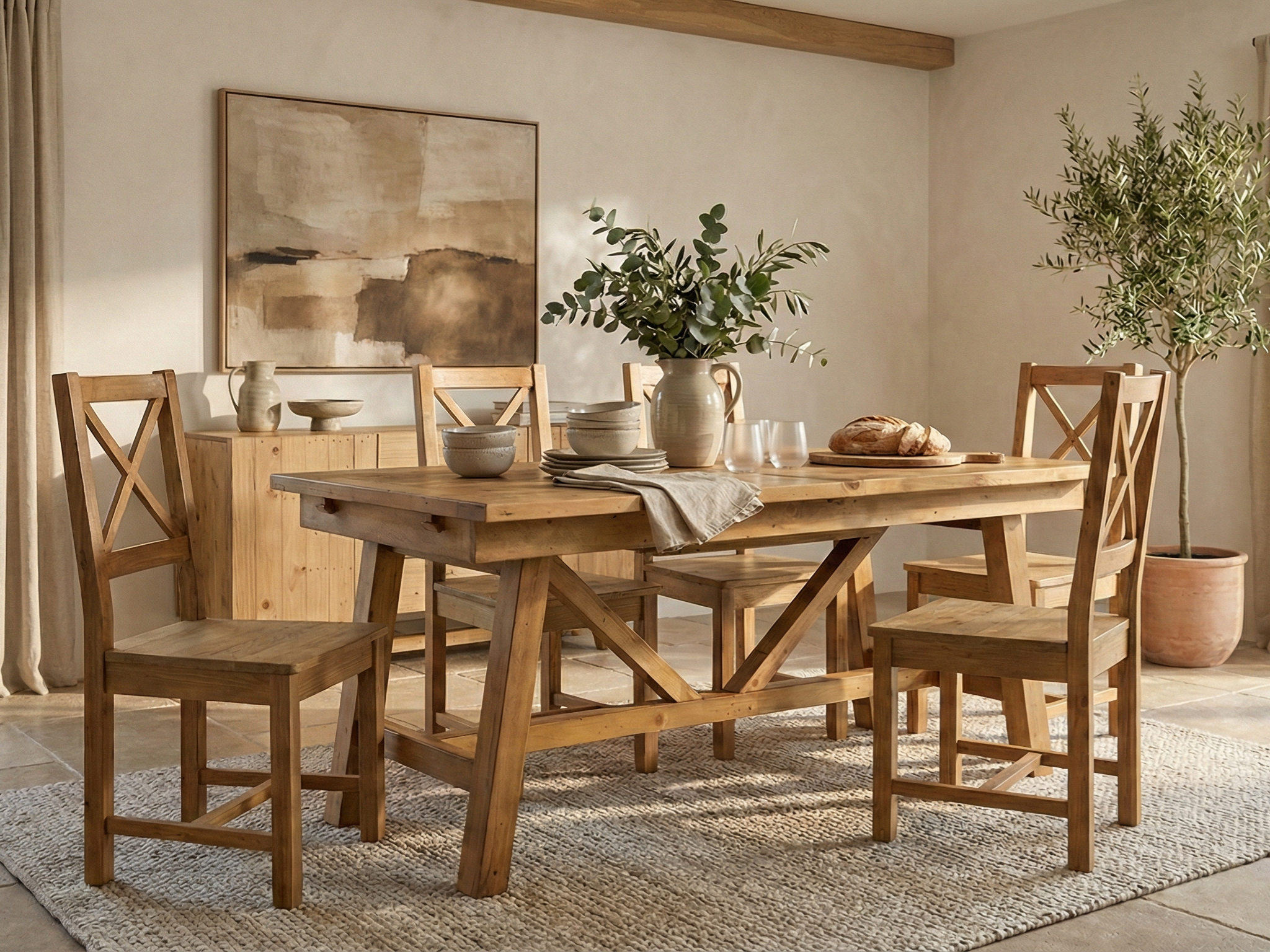


A bench that looks right in a product photo can feel wrong at your own table. It's too long to tuck in, too short to seat the people you need, or too high to leave any legroom. Getting the size right takes a few measurements and a little thought about how you actually eat at your table, and this dining bench size guide walks through them.
If you're still deciding whether a bench is the right choice at all, our piece on dining chairs vs benches covers that question. This guide assumes you've decided on a bench and want to get the dimensions right.
How Long Should a Dining Bench Be?
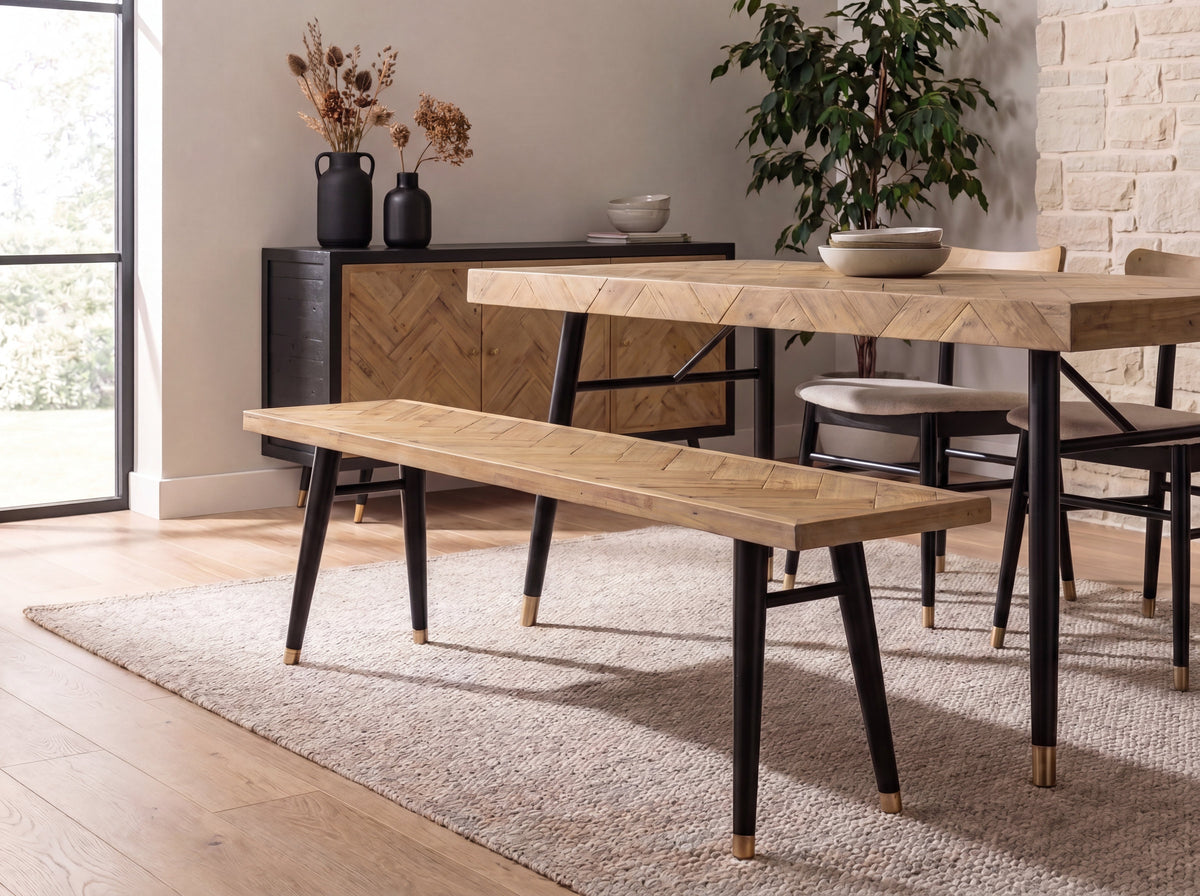
The simplest rule is that a bench should be a little shorter than the table it sits beside. If it runs the full length of the tabletop, it's awkward to get in and out of at the ends and can clash with the table legs. A bench around 20-30cm shorter than the table, which leaves 10-15cm at each end, tends to look more relaxed and is easier to move.
So for a 180cm table, a bench of around 140-160cm is a comfortable fit. For a 140cm table, look at 110-120cm. These are rules of thumb rather than hard limits.
Measure the usable space between the table legs, not just the tabletop. A bench can be the right length on paper and still catch on a leg, particularly on traditional tables where the supports sit further in from the edge. If you plan to tuck the bench under the table, that gap between the legs is the number that matters.
Many people pair a bench with chairs on the opposite side. In that case, the bench simply takes one side of the table, so its length depends on the table rather than the number of seats you want. Our dining bench ideas post looks at how that mixed setup works in practice.

How Many People Does a Dining Bench Seat?
As a planning guide, allow around 50- 60 cm of bench length per adult. Less than that and people end up pressed together, which is fine for a casual family meal but tight for a long dinner.
| Bench length | Comfortably seats | Typically pairs with |
|---|---|---|
| 100-120cm | 2 adults | Smaller tables and breakfast nooks |
| 130-160cm | 2-3 adults | Tables around 140-180cm |
| 170-180cm | 3 adults | Tables around 180-200cm |
| 200cm and over | 4 adults or more | Larger family tables |
Treat these as starting points. The design of the bench matters too. Chunky frames, arms, and wide legs all take up room, so the usable seat can be shorter than the overall length. Children need far less space than adults, which is part of why benches suit family dining so well, but for adults sitting down to a long meal, a little extra elbow room makes a noticeable difference.
One real advantage of a bench is that it flexes. A bench that seats three comfortably can usually take a fourth for a bigger meal, which a fixed run of chairs can't do. It's still worth planning around your everyday numbers first and treating the extra space as a bonus.
Dining Bench Dimensions: Height, Depth and Legroom
Length gets most of the attention, but height decides whether a bench is comfortable. Standard dining tables sit at around 74- 76 cm. A dining bench seat height of roughly 45- 48 cm is a useful general guide, which leaves around 25- 30 cm between the seat and the underside of the tabletop. That gap is your legroom.
If the gap is much smaller, knees get cramped. If it's much larger, the table feels too high for the person sitting at it. A few things can quietly reduce it:
Table apron. A deep frame under the tabletop eats into the vertical space a bench has to work with.
Seat thickness. A chunky bench seat takes up room that legs would otherwise use.
Leg position. The more people on the bench, the more likely someone is sitting where a table leg is.
Bench depth matters too. Somewhere around 35-40cm is common, which is enough to sit on comfortably without taking up too much floor space. A deeper bench feels more generous but is harder to tuck under a table.

Space Around the Bench and Tucking It Under
A bench needs room to be pulled out, sat on, and moved around. As a general planning guide, aim for around 90cm of clear space behind the bench, measured from the table edge to the nearest wall or piece of furniture. That leaves room to sit down and for someone to walk behind.
If the bench will sit against a wall, you only need enough room to pull it out and slide in, which is why a bench works so well in a narrow dining room or a breakfast nook. Mark the table and bench footprint on the floor with masking tape before you buy, and sit on the tape to test it.
Being able to tuck a bench fully under the table keeps a room tidy and easier to move through, but only if it fits. Before you buy, check:
The gap between the table legs is wider than the bench.
The height under the tabletop clears the bench seat.
The bench legs won't line up with or hit the table legs.
The bench can still be pulled out comfortably in your room.
If you're planning seating around a larger table, our 8 seater dining table buying guide goes into more detail on room dimensions and clearance.
Matching a Bench to Your Table Type
The right bench length also depends on the table type and size. A compact two-seater bench keeps a smaller table feeling open, a two- or three-seater suits a medium rectangular table with chairs on the other side, and a longer bench offers flexible family seating at a larger one.
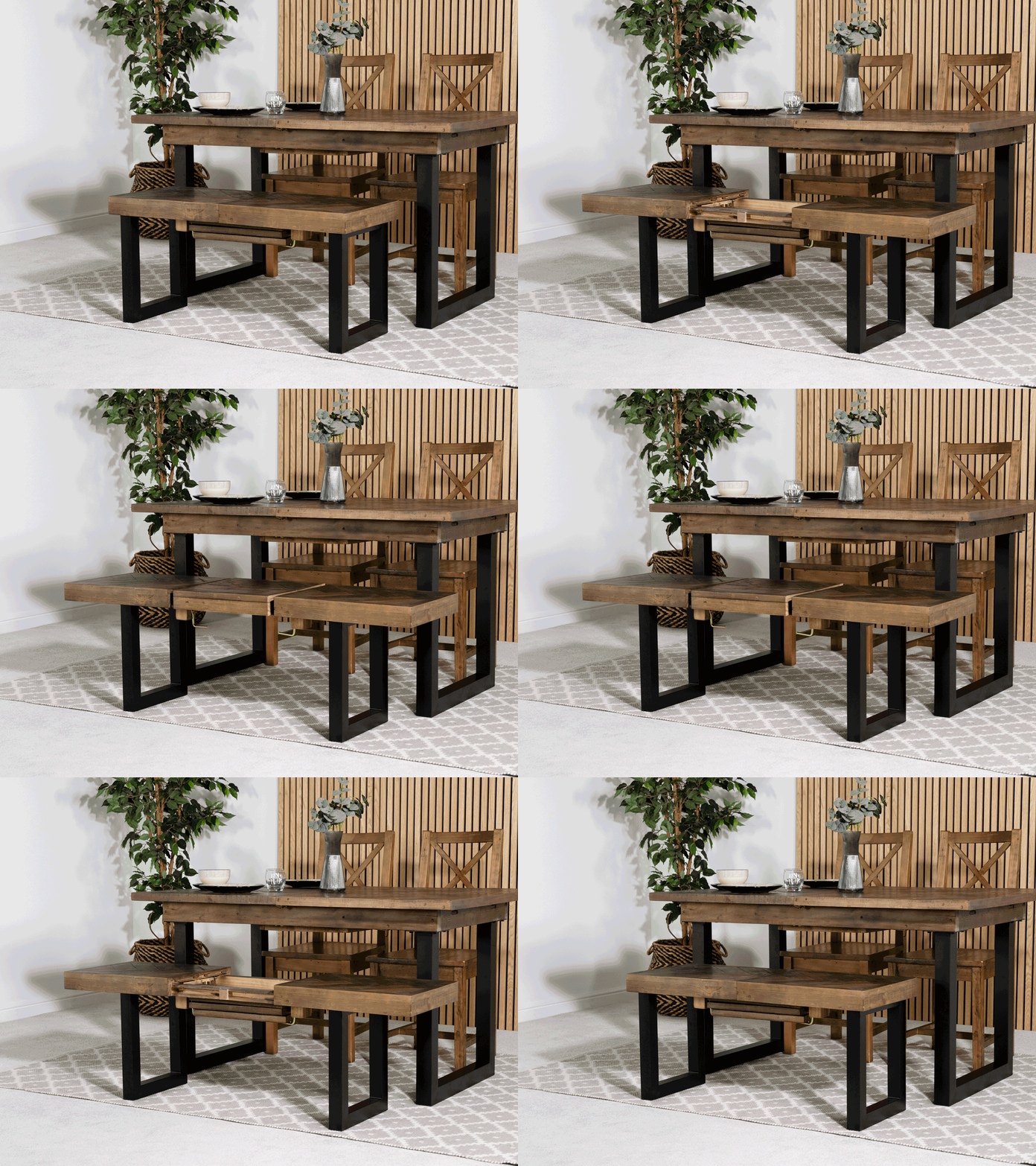
Extendable tables. An extendable dining table changes length, so a fixed bench is sized for the closed table and stays put as the tabletop grows. If you want the bench to grow with it, our extendable dining benches are built to extend alongside the table.

Brooklyn Light Extending Bench
Fixed top tables. A fixed top dining table has one set length, which makes sizing simple. Measure the space between the legs, then choose a bench that tucks fully underneath without catching.
Round tables. A straight bench doesn't follow a curved edge, so a round dining table needs more care. A bench works best on one side, with chairs filling the rest. Choose one noticeably shorter than the table's diameter so the ends don't poke out, and check it tucks in where the curve begins.
Quick Size Reference Before You Buy
If you just want the short version, these are the numbers to keep in mind:
For two people: around 100- 120 cm of bench length.
For three people: around 150- 180 cm.
For four people: 200cm or more, depending on the design and the space available.
Height and legroom: seat height of roughly 45- 48 cm, with around 25- 30 cm below the tabletop.
Clearance: around 90cm behind the bench, or enough to pull it out if it's against a wall.
The aim isn't to find the longest bench that will fit. It's a dining set-up where everyone has room to sit comfortably and move around the table easily.
Once you have your measurements, browse our dining benches and compare them against your own numbers. At Reclaim Nation, our benches are built primarily from reclaimed pine and elm, salvaged from old floorboards, pallets, railway sleepers and manufacturing offcuts, and finished by hand in our Bristol workshop. With nearly 30 years of designing and selling furniture, we'd always suggest measuring twice and buying once, because a well-sized bench is one you won't need to replace.
Frequently Asked Questions on Dining Bench Sizes
How long should a dining bench be for a 180cm table?
Around 150-160cm is a comfortable fit, leaving roughly 10-15cm at each end. Check the position of the table legs as well, since they can affect how much length you can actually use.
How many people can sit on a 180cm bench?
Three adults sit comfortably, and a fourth can usually squeeze in for a casual meal. Allowing 50-60cm per person is a useful starting point.
What height should a dining bench be?
Most dining benches have a seat height of around 45-48cm, which works with a standard table height of roughly 74-76cm. Aim for around 25-30cm between the seat and the underside of the tabletop.
Should a dining bench be the same length as the table?
Not usually. A bench that's a little shorter than the table is easier to get in and out of and tends to look more relaxed. Running it the full length can make the ends awkward to use.
How much space do I need behind a dining bench?
Around 90cm is a good planning figure if people need to walk behind it. If the bench sits against a wall, you only need enough room to pull it out and sit down.
Can you use a bench with any dining table?
Not necessarily. Check the table's height, leg position and the clearance underneath before choosing a bench. Tables with a straight edge are the easiest to pair with one, while round tables need a shorter bench on one side with chairs around the rest.
A bench is one of the simpler pieces of furniture to get right once you have the measurements. Explore the full Reclaim Nation collection to find pieces that fit your space, each one handmade from solid reclaimed timber.

Leave a comment
This site is protected by hCaptcha and the hCaptcha Privacy Policy and Terms of Service apply.