






There's no single "best" shape for a dining table - the right one depends on your room, your household, and how you actually use the space. If you're weighing up a round dining table against a rectangular one, there are genuine round dining table benefits, but they aren't universal. Here's how to work out whether round is genuinely the right choice for your home, not just the more stylish one.
How a Round Table Changes the Way You Use the Space
A round table changes two things immediately: how people talk to each other, and how they move around it. With no head of the table and no defined end seat, everyone sits at a similar distance from everyone else, which tends to keep a meal as one shared conversation rather than splitting into separate ones at either end. Removing the corners also makes circulation easier, particularly in a room people walk through several times a day.
These are genuinely useful benefits, and if you want the fuller picture - what's actually driving the renewed popularity of round tables and how they hold up in everyday family life - our piece on why round dining tables are making a comeback covers that in more depth. Round tables also tend to suit smaller and open-plan rooms particularly well, which our guide on round tables for small spaces looks at specifically. Here, the focus is narrower: what should actually tip your decision one way or the other.
Choosing Round as a Design Decision
Beyond the practical case, there's a design reason to choose a round table, and it often gets less attention than conversation or space-saving.
A round table naturally reads as a focal point. Without the long horizontal lines of a rectangular table, it doesn't anchor a room the same way - it centres it instead, particularly under a single pendant light positioned directly above. In a room already built from straight edges - kitchen units, doorways, cabinetry, windows - a round table introduces a different shape into the mix, which tends to soften the space rather than add to its structure.
That effect comes through even more clearly in solid reclaimed wood, where grain and colour variation are visible across the whole tabletop rather than running in one direction. At Reclaim Nation, our tables are made primarily from reclaimed pine and elm and finished by hand in our Bristol workshop, which keeps that natural character visible rather than sitting under a flat, uniform coating.


Brooklyn 120cm Round Dining Table
Round Tables Give You More Flexible Seating
Seating is one of the more overlooked reasons people choose round over rectangular. There's no assigned side or end, so chairs aren't locked into a formal arrangement the way they often are around a rectangular table. That makes it easier to add an extra chair for an unexpected guest, or mix chair styles without the arrangement looking uneven.
The base matters more here than people expect. A central pedestal can make chair placement more flexible, since there are fewer legs beneath the tabletop to work around. A four-leg base can restrict certain seating positions depending on the table's diameter, so it's worth checking the base design as carefully as the top before buying, particularly if you plan to seat more people occasionally than you do day to day.
Round vs Rectangular Dining Table: What Should You Choose?
There's no universal answer, but a few criteria tend to make the decision clearer.
Choose round if you want a more informal, shared style of seating, value a table that reads as a visual centre rather than a long feature, want flexible chair positioning, or your room is square, compact or open-plan.
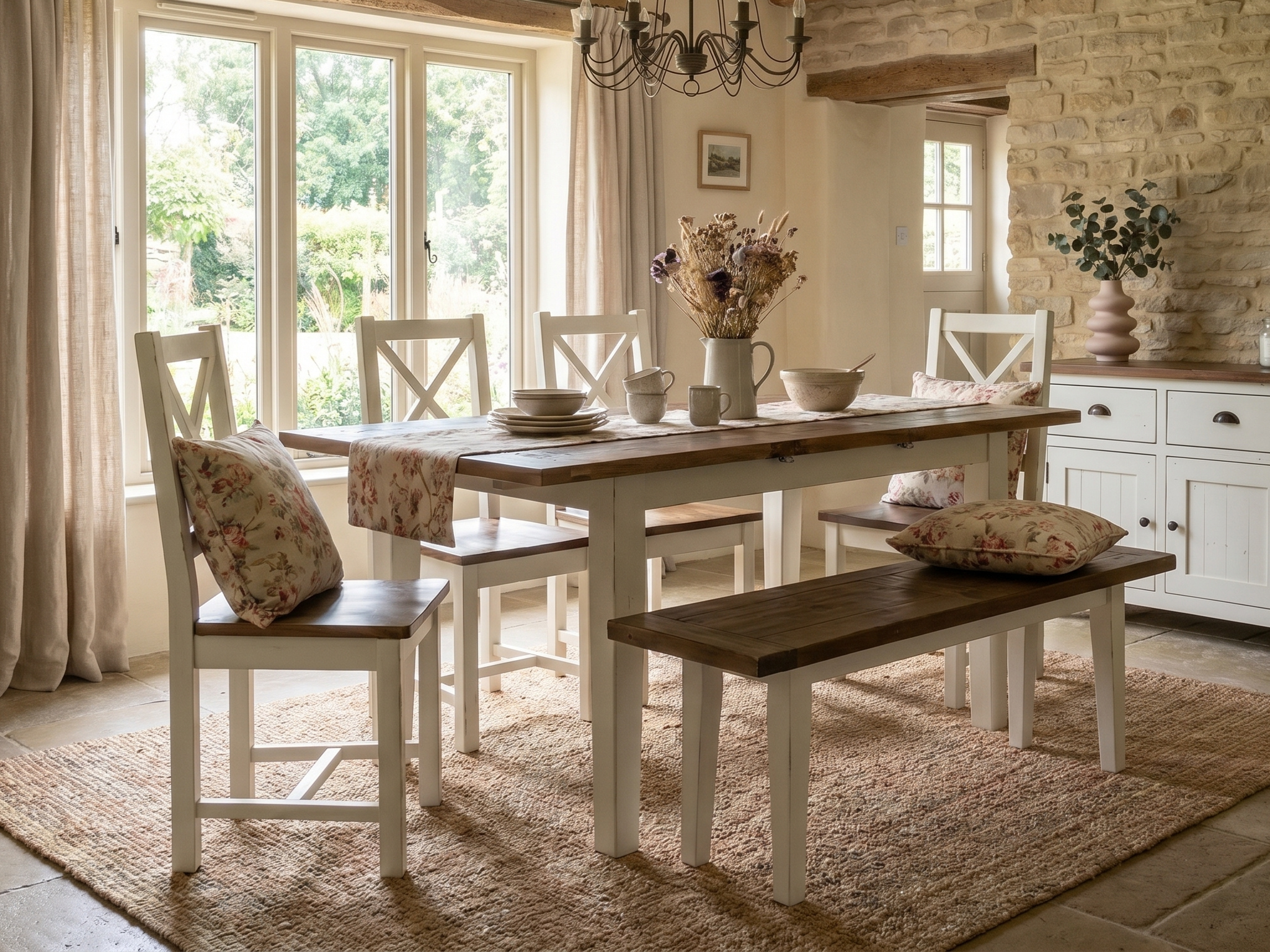
Choose rectangular if your room is long and narrow, you regularly need to seat a larger group along a defined length, you need to position one side flush against a wall, or fitting the maximum number of people per metre of table matters more to you than shape. A rectangular or fixed top table also gives you the option of pairing it with a bench along one side, since a bench follows a straight edge more naturally than a curve. If seating a larger group is the deciding factor, our 8 seater dining table buying guide goes into more detail on how round and rectangular shapes compare at that size.
Worth being honest about the rectangular case in particular. A round table needs roughly equal clearance on every side rather than just at the ends, so in a long, narrow or galley-shaped room it can end up using more usable floor space than a rectangular equivalent would, not less. Most households lean clearly one way once they think through how the table actually gets used, rather than how it looks in isolation - and if several of the rectangular points above describe your room, that's probably the more practical choice, whatever the rest of this article has made the case for.
Fixed or Extendable: Choosing the Right Round Table
Once round is the right shape, the next question is whether you need a fixed or extendable design.
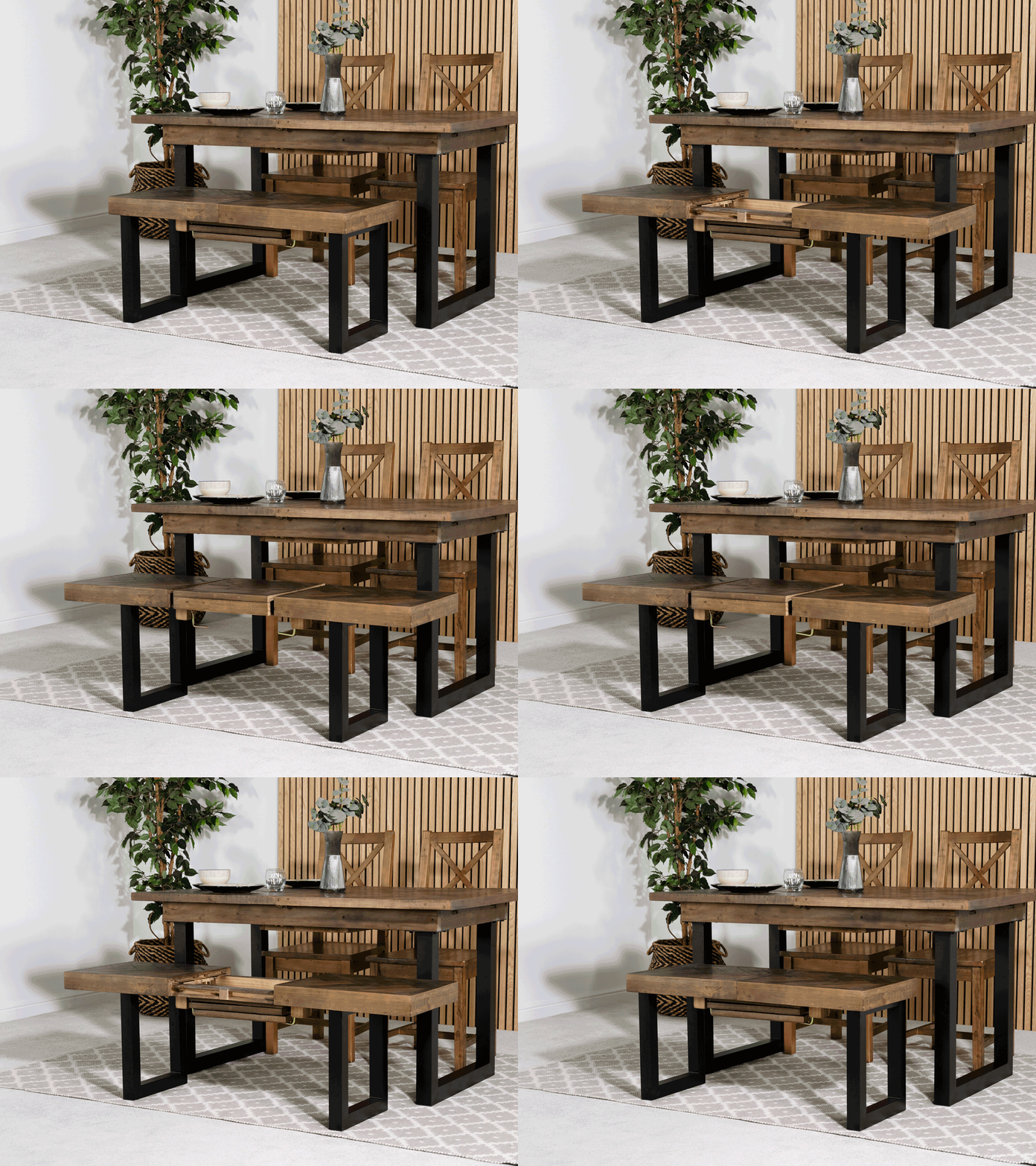
A round table that stays one size - our fixed top dining tables range includes round designs alongside other shapes - suits a household with a consistent number of diners and no regular need for extra seating, and tends to feel more solid since there's no mechanism built into the top. If your everyday numbers and your hosting numbers don't really match, an extendable dining table, including round options within the range, gives you a smaller everyday footprint with room to open out for guests. If your everyday household is four but you regularly host six, that flexibility earns its keep without a permanently larger table taking up space the rest of the time.


Brooklyn Light Round Extendable Dining Table
Measure the whole area, not just the tabletop. Include the room needed to pull chairs out and walk around the table - a diameter that fits on paper can still feel cramped once chairs are in use.
Think about your everyday numbers, not just occasional gatherings. Size the table around who you seat most nights, and lean on an extendable design for the rest rather than buying permanently larger than you need.
Consider how the table will sit alongside the rest of your furniture. A round table can provide a useful contrast in a room that's otherwise built from straight lines - sideboards, kitchen units, doorways.
Think about how the table gets used day to day. Meals are only part of it - homework, working from the table, coffee with the paper. Choose a shape and size that suits the everyday use, not just how it looks set for a dinner party.
If round is the right answer, our round dining tables come in fixed and extendable reclaimed wood designs.
Frequently Asked Questions on Round Dining Tables
How do I decide between a round and a rectangular dining table?
Start with your room shape and how you actually use the table. Round tends to suit square, compact or open-plan rooms and a more informal, conversation-led way of eating. Rectangular tends to suit long, narrow rooms and households that regularly seat larger groups along a defined length.
Do round dining tables really seat fewer people than rectangular ones?
Not necessarily. It depends on the table's dimensions, how much space each diner has, and the base design. A rectangular table can make efficient use of a defined length, while a round table can offer more flexible positioning around its circumference. Neither shape has a fixed advantage on numbers alone.
Should I buy a fixed or extendable round table?
If your everyday seating needs match your hosting needs, a fixed table is simpler and often feels more solid. If the two numbers are different, an extendable round table gives you flexibility without a permanently larger table taking up space day to day.
Does the table base affect how many chairs I can fit around a round table?
Yes. A central pedestal base generally allows more flexibility in chair placement, while a four-leg base can restrict certain positions depending on the table's diameter. Worth checking before you buy, especially if you plan to seat more people than usual on occasion.
Is a round table still a good choice for a larger dining room?
It can be, particularly if the room is square or open-plan. In a long, narrow dining room, a rectangular table usually makes better use of the space and can seat a larger group more efficiently along its length.

Leave a comment
This site is protected by hCaptcha and the hCaptcha Privacy Policy and Terms of Service apply.