




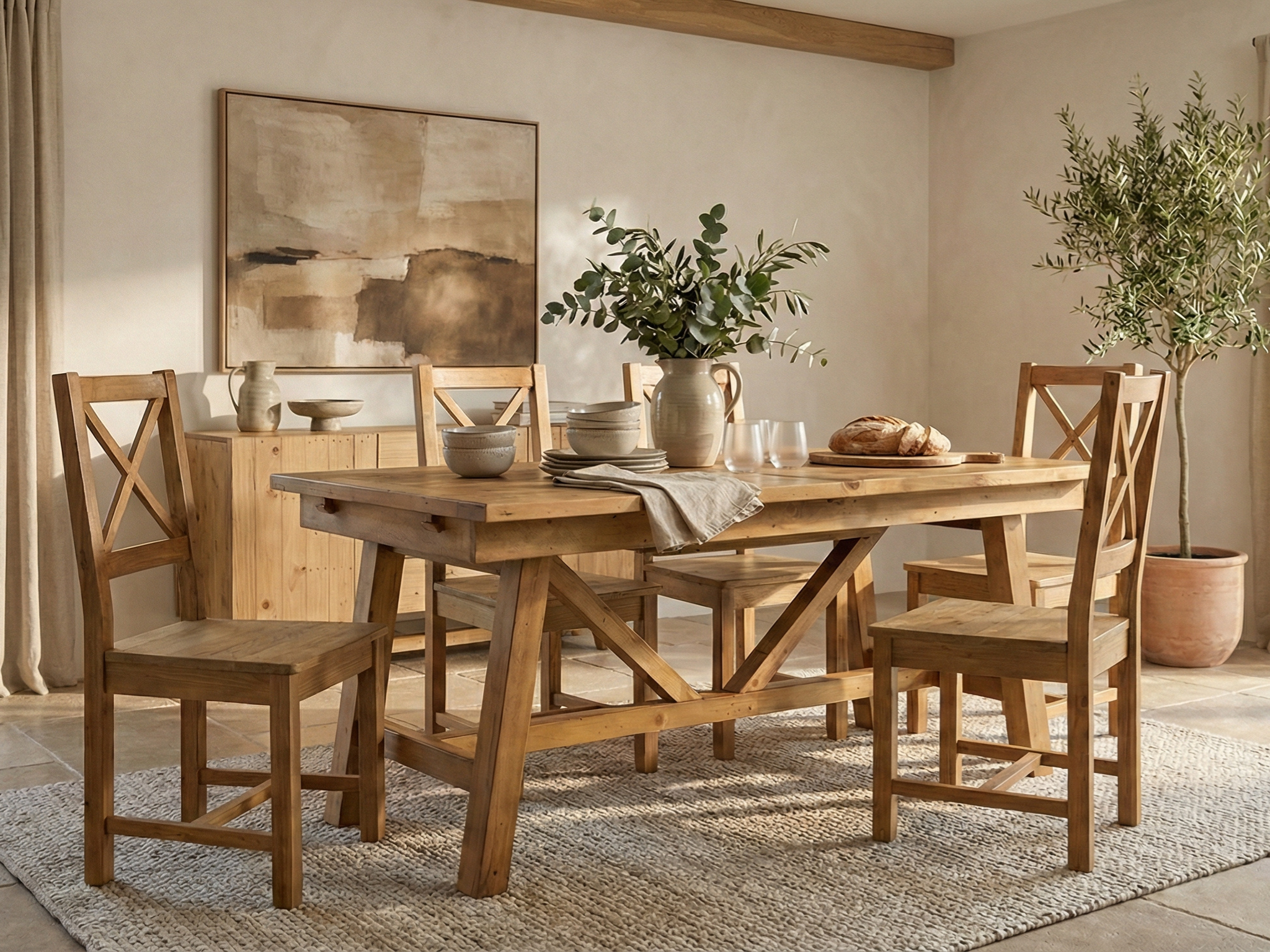

If you have been shopping for a dining table recently, you have probably noticed one thing: round dining tables are everywhere. It is not simply because they look different.
More people are living in open-plan homes, entertaining in smaller groups, and looking for furniture that feels timeless rather than trend-driven. A well-made round dining table answers all of those needs. It creates better conversation, fits naturally into compact spaces, and, when crafted from reclaimed wood, becomes a piece that can stay in the home for decades rather than seasons.
If you are wondering whether a round table is the right choice for your dining room, here is why they are making a comeback - and what to consider before choosing one.

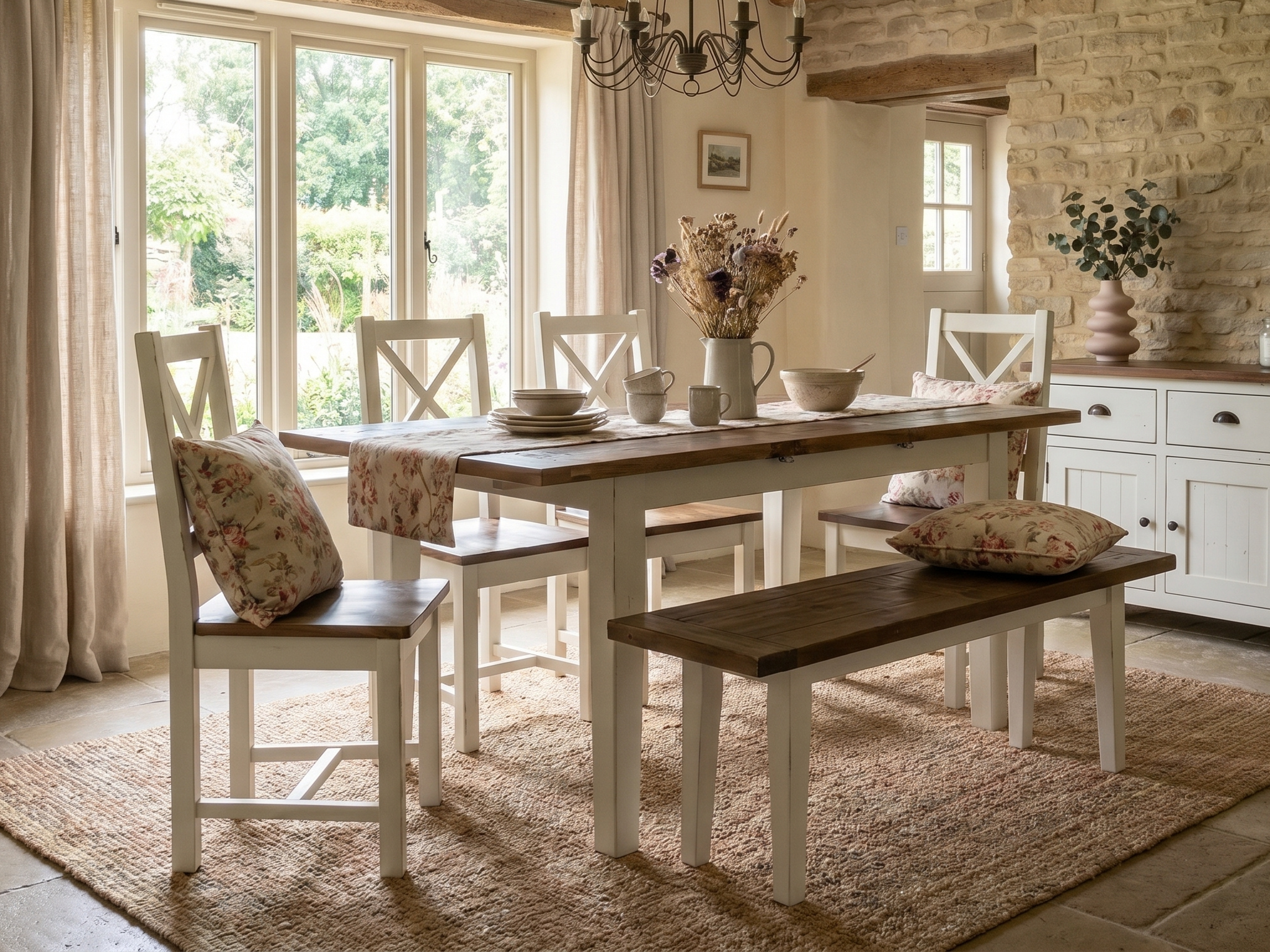
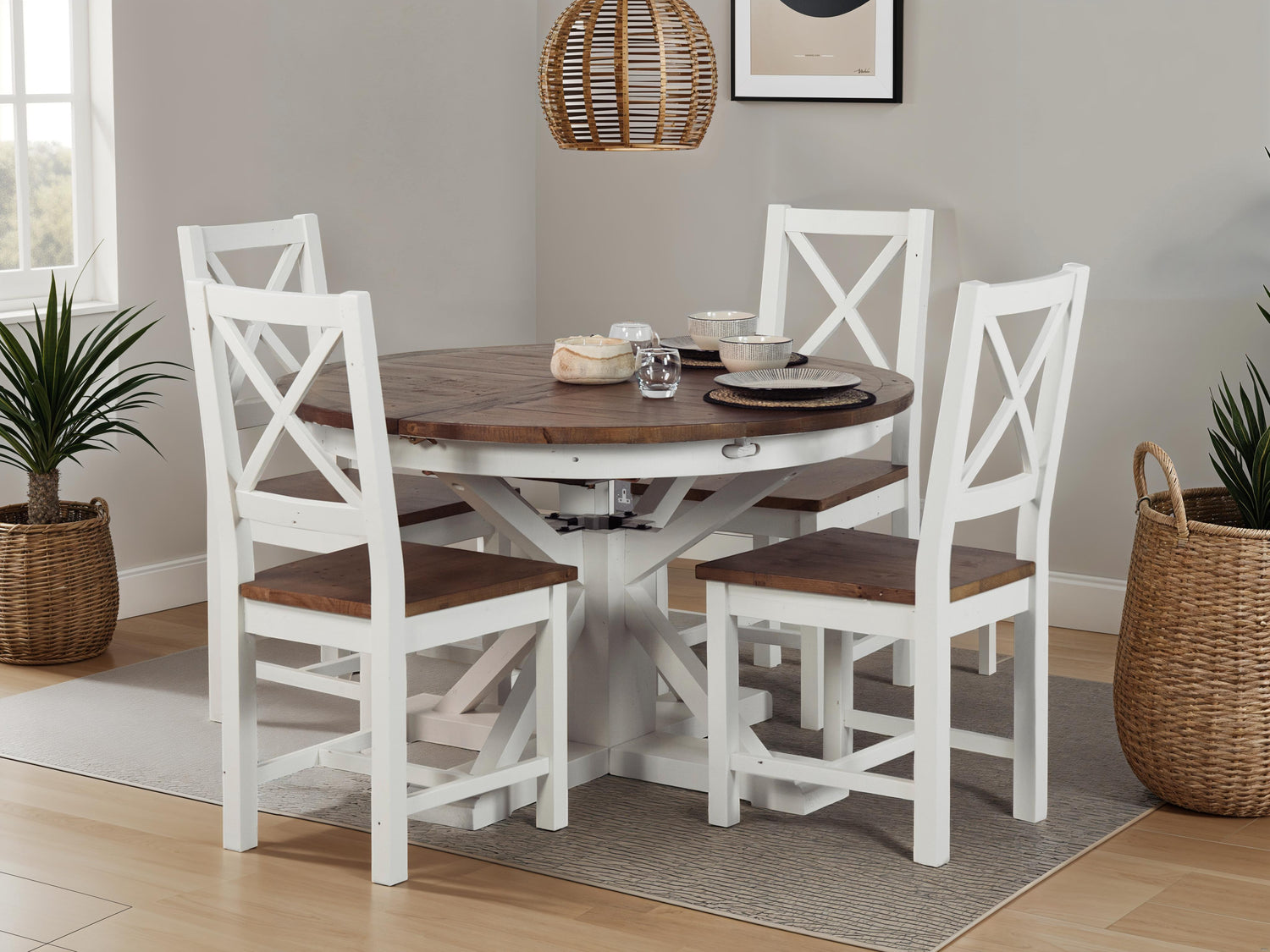
Brooklyn 120cm Round Dining Table
The Shift Towards Round Dining Tables
The rectangular table became the default, partly because it suited a particular kind of dining room: a dedicated space, with a fixed number of seats, used mainly for formal meals. That description fits fewer homes than it used to.
Open-plan kitchens have changed how dining areas work. Smaller households mean fewer people around the table on most nights.
Round tables have always encouraged a more relaxed way of dining, but it took modern homes catching up before that really showed. A general shift toward furniture that earns its place, rather than filling a room by default, is doing the rest.
Why Homeowners Are Choosing Them
The practical case for round tables is stronger than most people expect before they actually try one. With no head of the table, everyone faces everyone else. There is no awkward end seat, no one straining to be part of a conversation happening at the other end of the room. It changes how a meal feels, even on an ordinary Tuesday evening with just two of you.
There is a practical side too, especially in a family home. No sharp corners mean one less thing to think about with young children moving around the room. And because a round table has no fixed orientation, there is no single awkward angle where chairs end up blocking a doorway or crowding the kitchen - people simply move around it more naturally than they would a long rectangular table.
Visually, a round table also carries itself differently. A long rectangular table tends to anchor a room heavily, whereas a round wooden dining table takes up a similar footprint but reads as far less dominant - something that matters most in open-plan spaces where the dining area is sharing room with a kitchen or living space.

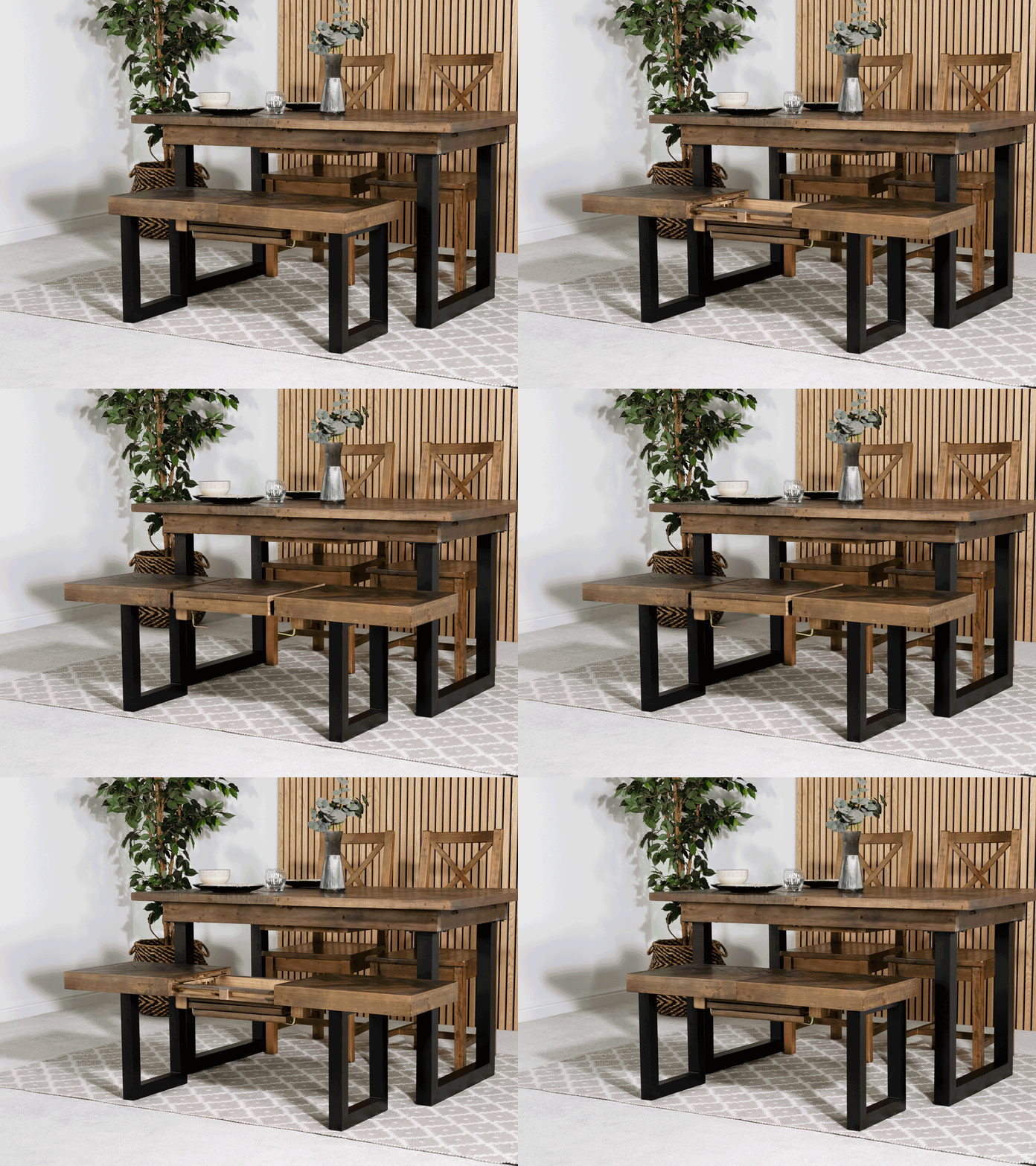
Tulsa Round Extendable Dining Table
Choosing the Right Size Round Table
Getting the diameter right is the most important practical decision. Too small and meals feel cramped; too large and the table dominates the room. Here is a simple guide to use as a starting point:
| Diameter | Seats | Best suited for |
|---|---|---|
| 90cm | 2-4 | Small kitchens, breakfast nooks, compact flats |
| 120cm | 4 | Everyday family dining, open-plan kitchen-diners |
| 150cm | 6 | Regular hosting, larger kitchen-diners |
| 180cm | 8 | Generous dining rooms, frequent large gatherings |
One thing worth measuring before you buy: the clearance around the table once chairs are pulled out. A good rule of thumb is at least 90cm between the edge of the table and the nearest wall or piece of furniture. This gives people room to sit down and stand up comfortably without feeling hemmed in.
Round or Rectangular - Which Should You Choose?
The benefits above make a strong case for round tables, but they are not the right fit for every room. A few practical differences are worth weighing before you decide:
| Round Dining Table | Rectangular Dining Table |
|---|---|
| Seats fewer people per metre of table edge | Seats more people for the same floor length |
| Works best with breathing room on all sides | Can sit flush against a wall without losing function |
| No natural fit for a very long, narrow room | Makes efficient use of long, narrow spaces |
| Chairs and styling can be mixed more freely | Chair arrangement is more fixed and formal |
If your dining area is roughly square, open to the rest of the room, or built around everyday family meals rather than large formal gatherings, round is usually the better fit. If your room is long and narrow, or you regularly need to seat a large group in a smaller footprint, a rectangular table may still make more practical sense.
Fixed or Round Extendable Dining Table - Which Is Right for You?
This is the question most buyers settle on fairly quickly once they think honestly about how they live.
A fixed round table makes sense if your household size is consistent and you rarely host significantly more people than you seat on a normal night. It is simpler, often more solid in construction, and tends to have a cleaner silhouette without the extension mechanism.
A round extendable dining table suits households whose everyday needs and hosting needs do not really match. Our Devon Extendable Round Dining Table, for example, works beautifully at 120cm for everyday family meals - compact enough to move around comfortably - and extends to 160cm when guests arrive, adding seats without permanently taking up extra space in the room. If you host a few times a year but do not want a permanently large table taking over the room the rest of the time, that flexibility earns its keep.
The Brooklyn and Tulsa round extendable options follow the same principle across different aesthetic styles, so the mechanism is available whether you prefer a cleaner contemporary look or something more industrial.

Brooklyn Round Extendable Dining Table
Why Reclaimed Wood Works So Well for Round Tables
Over nearly three decades of designing and making reclaimed furniture, we have seen which materials hold up and which do not. One thing that has never changed is how well reclaimed timber performs in a dining table - and in a round format especially, there are specific reasons why.
Unlike newly milled timber, reclaimed wood has already spent years adapting to changing temperatures and humidity, giving it a stability that is difficult to replicate with freshly cut wood. Every knot, saw mark, and colour variation reflects the timber's previous life, giving each table a character that simply cannot be reproduced with newly milled wood. On a round table, your eye moves around the surface rather than along a straight edge, so those natural details tend to get more attention - and more appreciation - than they might on a long rectangular run.
The timber we work with - primarily pine and elm, salvaged from old floorboards, pallets, railway sleepers and manufacturing offcuts - is quality-checked at every stage before being shaped by skilled furniture makers using traditional carpentry methods. Finishes are applied by hand, part of why no two tables ever look the same even within the same collection.
And there is a straightforward environmental point underneath all of this: no new trees are felled. The wood already exists. Giving it a second life as a table you will keep for decades is, in practical terms, one of the more meaningful choices you can make when furnishing a home.
Styling a Round Dining Table
Round tables are more forgiving of style than people expect going in. A few things that tend to work well:
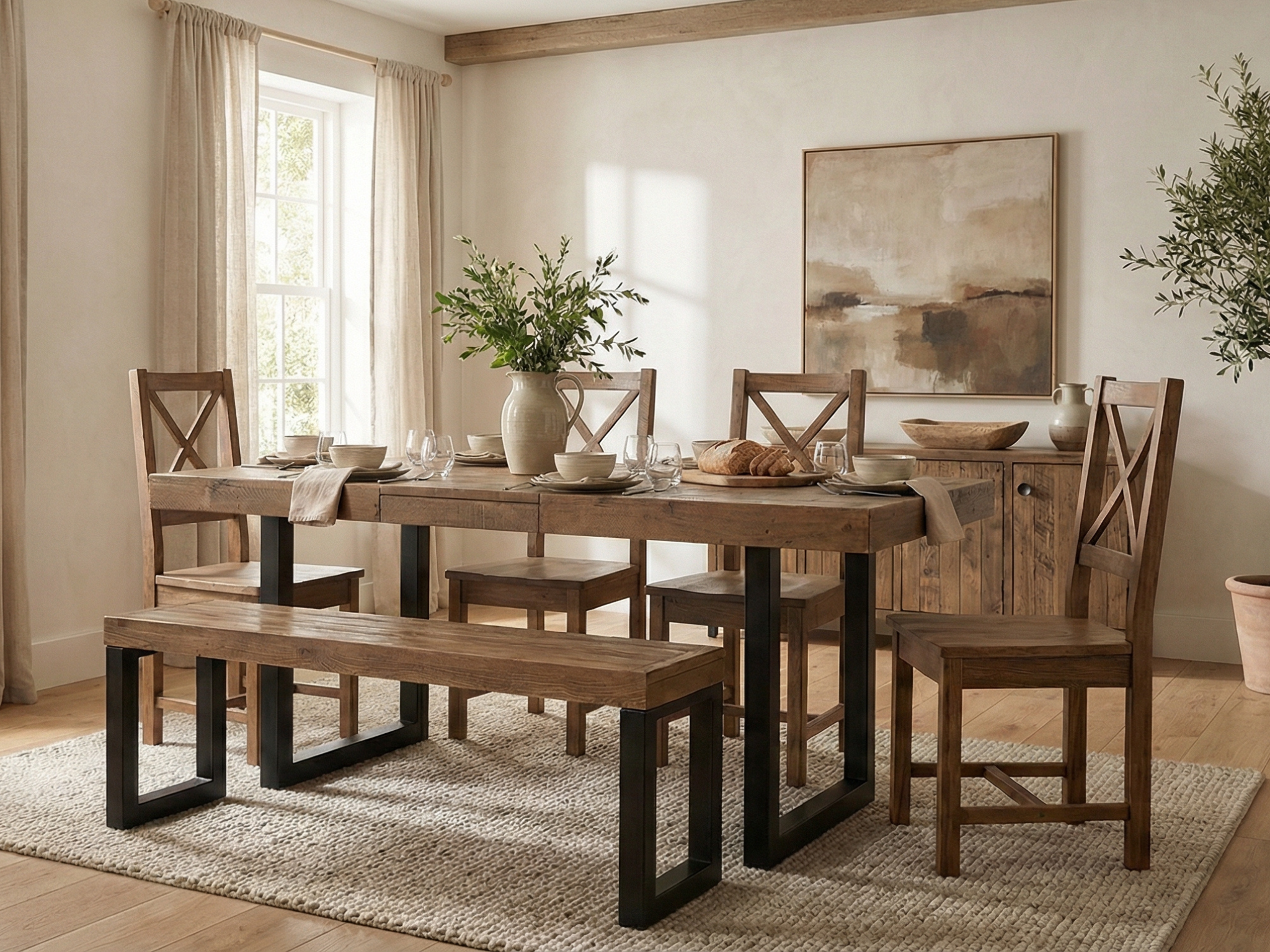
Mixing chairs - because there are no corners, chairs can be mixed more freely around a round table without the arrangement looking unbalanced. Pairing a couple of upholstered dining chairs alongside simpler wooden ones tends to look considered rather than mismatched. A round table also works well with a bench on one side for a more relaxed, family-friendly setup.
Lighting - a single round or drum-shaped pendant centred directly above the table almost always looks more deliberate than a row of pendants designed for a long rectangular run. It reinforces the natural sense of everyone gathering in one place.
Rugs - a circular rug underneath a round table works better than most people initially think, and tends to anchor the dining area within an open-plan space more cleanly than a rectangular rug would.

Common Mistakes When Buying a Round Dining Table
Buying without measuring the chair clearance
The table diameter alone does not tell the full story. Measure from the wall to where the chair edge will sit when someone is seated, not just where the table edge falls. Getting this wrong in a compact room is the most common mistake - and the most avoidable one.
Assuming round always means small
An 180 cm round table seats eight people comfortably. Round tables come in a full range of sizes and are not limited to compact or informal settings. The assumption that round equals small catches a lot of buyers off guard.
Choosing veneer over solid wood
Many budget round tables use a reclaimed wood veneer over a composite core, which looks similar in a showroom but behaves very differently over time. Solid reclaimed timber can be sanded, re-oiled, and restored if it gets marked over the years. Composite board cannot. For a piece you will use every day for decades, the difference matters.
Overlooking the base design
The base matters more on a round table than a rectangular one because it is more visible from every angle. A pedestal base allows more chair placement flexibility; a four-leg base can restrict where chairs sit at certain diameters. Check the base design as carefully as the top.
Caring for Your Reclaimed Round Table
Reclaimed timber is resilient by nature - it has already been through one life, which means it is well-seasoned and stable. The main habits worth building are using coasters for hot or wet items and wiping spills promptly, particularly around any visible knots or grain lines.
For a full breakdown of daily cleaning, seasonal care, and how to keep the wood looking its best for years, our complete guide to caring for reclaimed wood furniture covers everything in detail.
A Piece Worth Investing In
Whether you are furnishing a compact dining nook, a busy family kitchen-diner, or a room that needs to work harder than it looks, a reclaimed round dining table offers something few other pieces can: real flexibility, natural character, and a material that improves with age rather than needing to be replaced.
Over nearly three decades of making furniture, we have found that dining tables are the pieces people keep the longest. They are where everyday meals happen, where birthdays get celebrated, where conversations run late. Choosing one is not simply about filling a room - it is about investing in something you will use almost every day.
Explore our collection of handcrafted round dining table and chairs options, available in both fixed and extendable designs, and find a piece built to become part of your family's story for decades to come.
Frequently Asked Questions on Round Dining Tables
Are round dining tables better than rectangular tables for small rooms?
Generally, yes. A round table seating the same number of people typically needs a smaller floor footprint and has no fixed front or back, so it tends to fit more naturally into compact or awkwardly proportioned rooms. The lack of corners also makes movement around the table easier.
Are round dining tables suitable for families?
Yes - and in some ways they suit families particularly well. No sharp corners is an obvious practical benefit with young children. The natural intimacy of a round table also means everyone is part of the conversation, which suits everyday family meals better than a long table where people can end up at opposite ends.
Do round tables save space?
Not always dramatically, but they feel like it. Similar footprint to a rectangular table seating the same number, just less visually dominant in the room.
What size round dining table do I need?
As a general guide: 90cm diameter seats 2-4, 120cm seats 4, 150cm seats 6, and 180cm seats 8. Always measure chair clearance as well as table diameter - you need at least 90cm between the table edge and the nearest wall or furniture for comfortable movement.
Is a round extendable dining table worth it?
If your everyday needs and hosting needs do not really match, yes. Our Devon round table extends from 120cm to 160cm, which suits most households that host occasionally. If you rarely have more than four people over, a fixed table is probably simpler.
How do I care for a reclaimed wood round dining table?
The basics are coasters for hot or wet items, prompt spill cleanup, and keeping the table out of direct sunlight. For the full care routine, including seasonal tips, our dedicated care guide covers everything in detail.

Leave a comment
This site is protected by hCaptcha and the hCaptcha Privacy Policy and Terms of Service apply.