
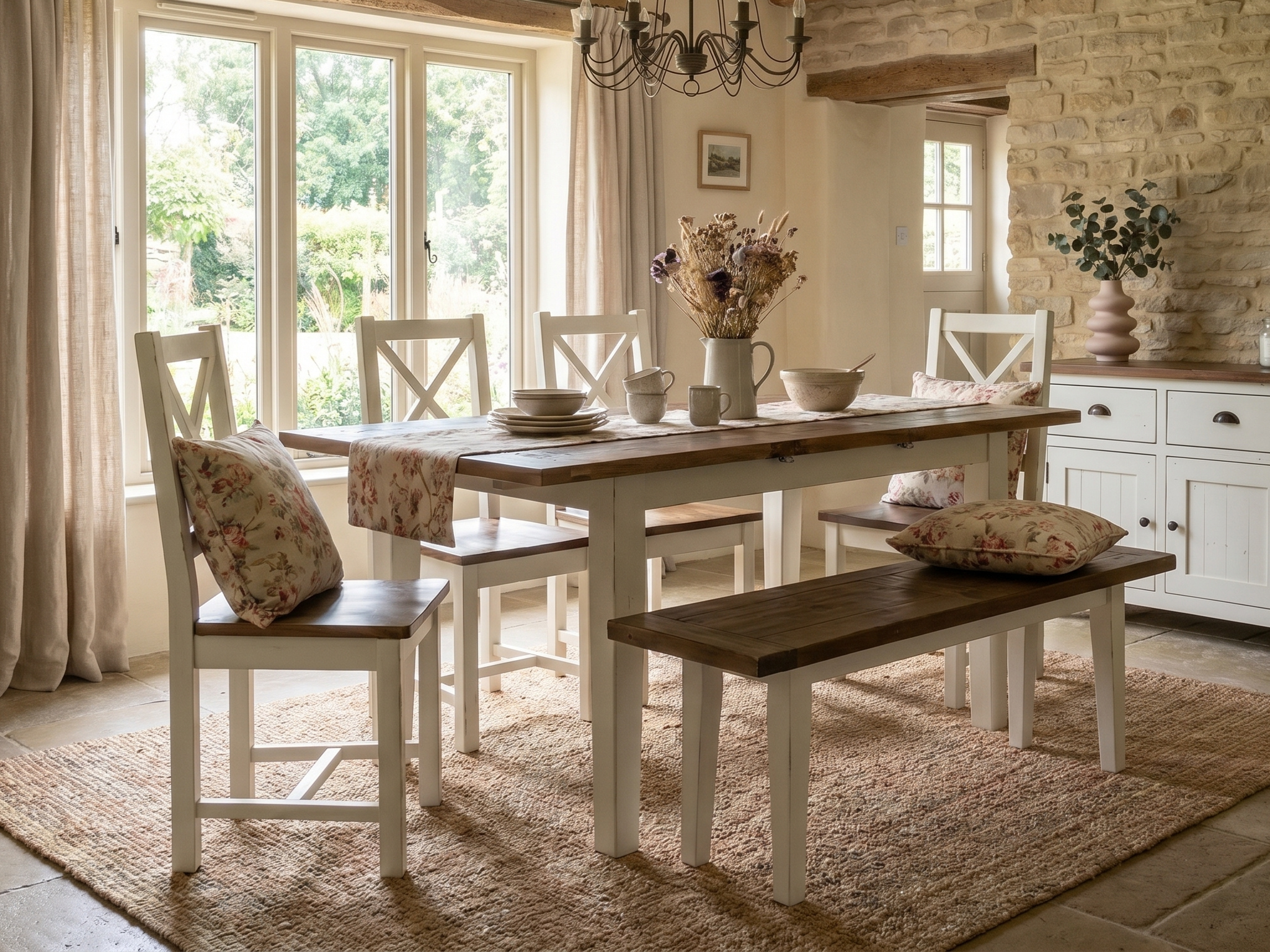




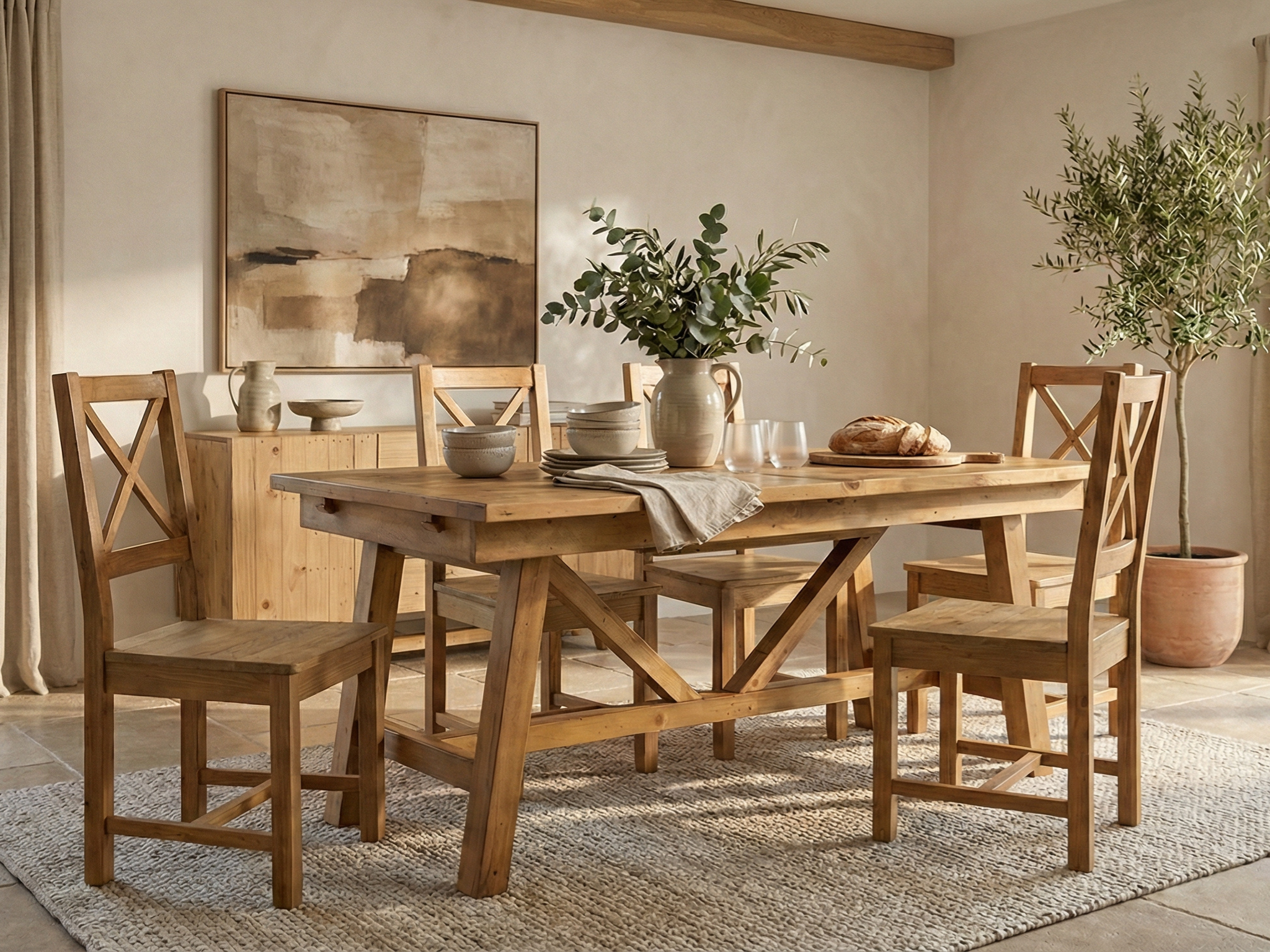

An 8 seater dining table is a popular choice for family dining, entertaining guests, and creating a dining space that comfortably seats more than just the everyday household. But choosing the right table isn't simply a matter of finding one with eight chairs around it.
The shape, dimensions, and amount of space around the table all affect how comfortable your dining room actually feels. A table that technically seats eight can still feel cramped if there isn't enough room to pull the chairs out or move around it.
Whether you're looking for a dining table for everyday family meals or a larger table for entertaining, this guide covers what to consider before buying an 8 seater dining table.
What Size Is an 8 Seater Dining Table?
The ideal size for an 8 seater dining table depends on its shape and how much space you want each person to have.
For a rectangular table, a length of around 180-200cm is commonly enough to seat eight people comfortably, though the exact dimensions vary depending on the width and design. A typical 8 seater dining table tends to sit in this range:
- 180-200cm long
- 90-100cm wide
- Around 75cm high
These are a useful starting point, not a strict rule. A wider tabletop provides more room for serving dishes and place settings, and the leg placement can also affect how comfortably eight people actually fit. Don't just look at the number of seats advertised - check the real dimensions and consider how the table will work in your room.

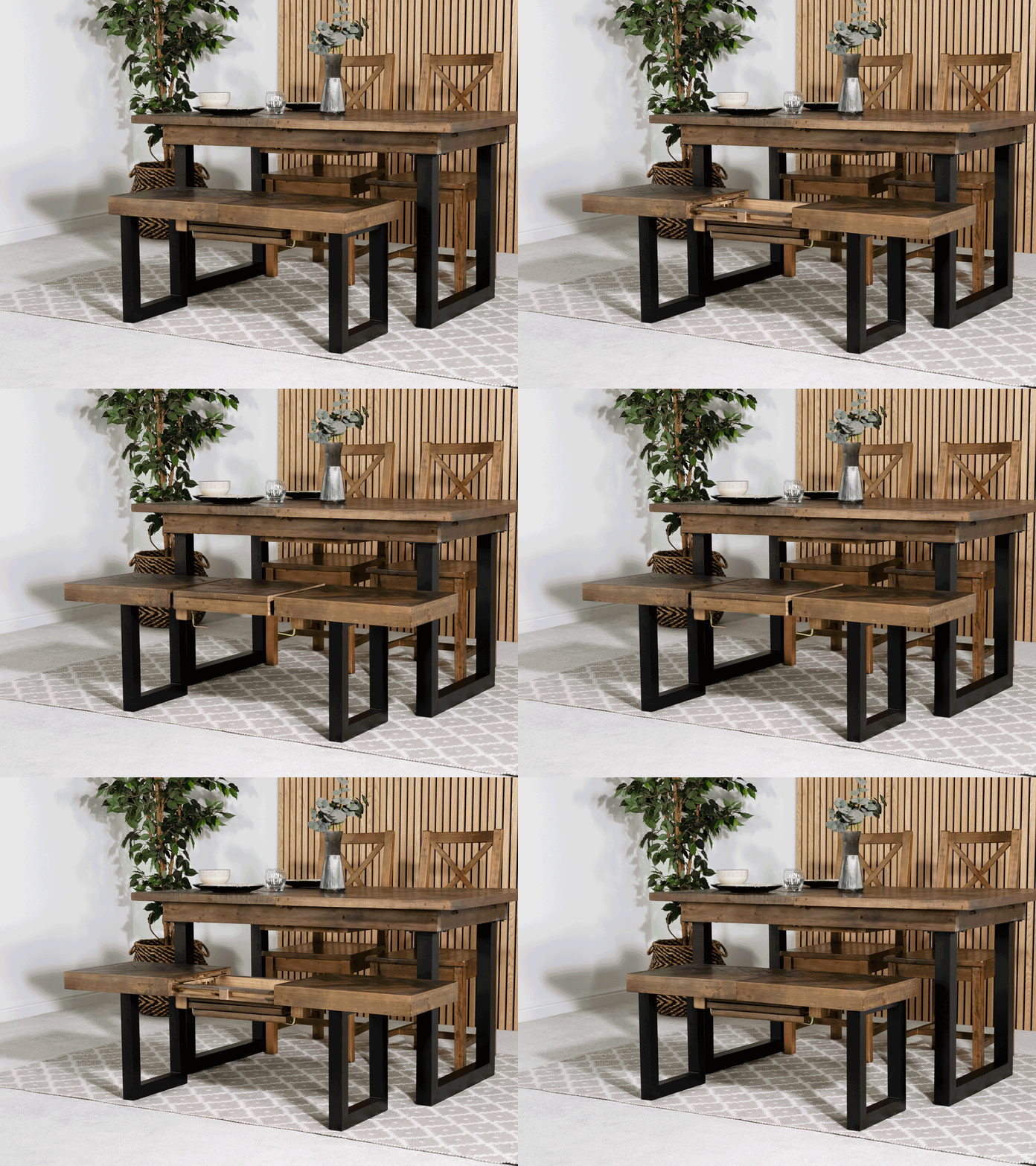
Brooklyn Extendable Dining Table (180cm - 240cm)
How Much Space Do You Need for an 8 Seater Dining Table?
One of the most important considerations when buying a larger table is the space around it, not just the table itself.
You need enough room for people to sit comfortably, pull their chairs out, and walk around the table without bumping into furniture or walls. As a general planning guide, aim for around 90cm of clear space around the table wherever possible. If your table is roughly 200cm by 100cm, you'll need considerably more floor space than that footprint alone.
Before buying, measure the room and mark the table's dimensions on the floor with masking tape. It's a simple step, but it's the easiest way to see how much space the table will really take up before you commit.
Don't forget the furniture already in the room - sideboards, cabinets, and doorways all affect how much usable space you actually have.
Rectangular, Round or Square: Choosing the Right Shape For Your Dining Table
8 Seater Rectangular Dining Table
A rectangular table is often the most straightforward way to seat eight - typically three along each long side with one at either end, or four on a side on a longer design. It works particularly well in longer dining rooms, where its proportions follow the shape of the room. Look for a length of around 180-200cm and a width of 90-100cm, and check that the leg position doesn't restrict where chairs can go.
Rectangular options generally come in two forms - extendable dining tables, which give you the flexibility of a smaller everyday size with extra leaves for occasions, and fixed top dining tables, built to one set size for a more permanent, substantial feel. If you often go back and forth between everyday meals and larger gatherings, our piece on why reclaimed wood extendable dining tables are perfect for growing families covers that decision in more depth.
8 Seater Round Dining Table
Round tables offer a different feel entirely. Without corners, everyone has a similar relationship to everyone else at the table, which tends to make conversation feel more natural. For a genuinely comfortable eight, look for a diameter towards the higher end of what's available - closer to 180cm gives the most breathing room, while smaller round tables suit fewer people more comfortably. Round tables suit square rooms or open-plan spaces particularly well, since they don't create the hard edges a rectangular table does. If you'd like the full picture on round tables specifically, why round dining tables are making a comeback is worth a read.
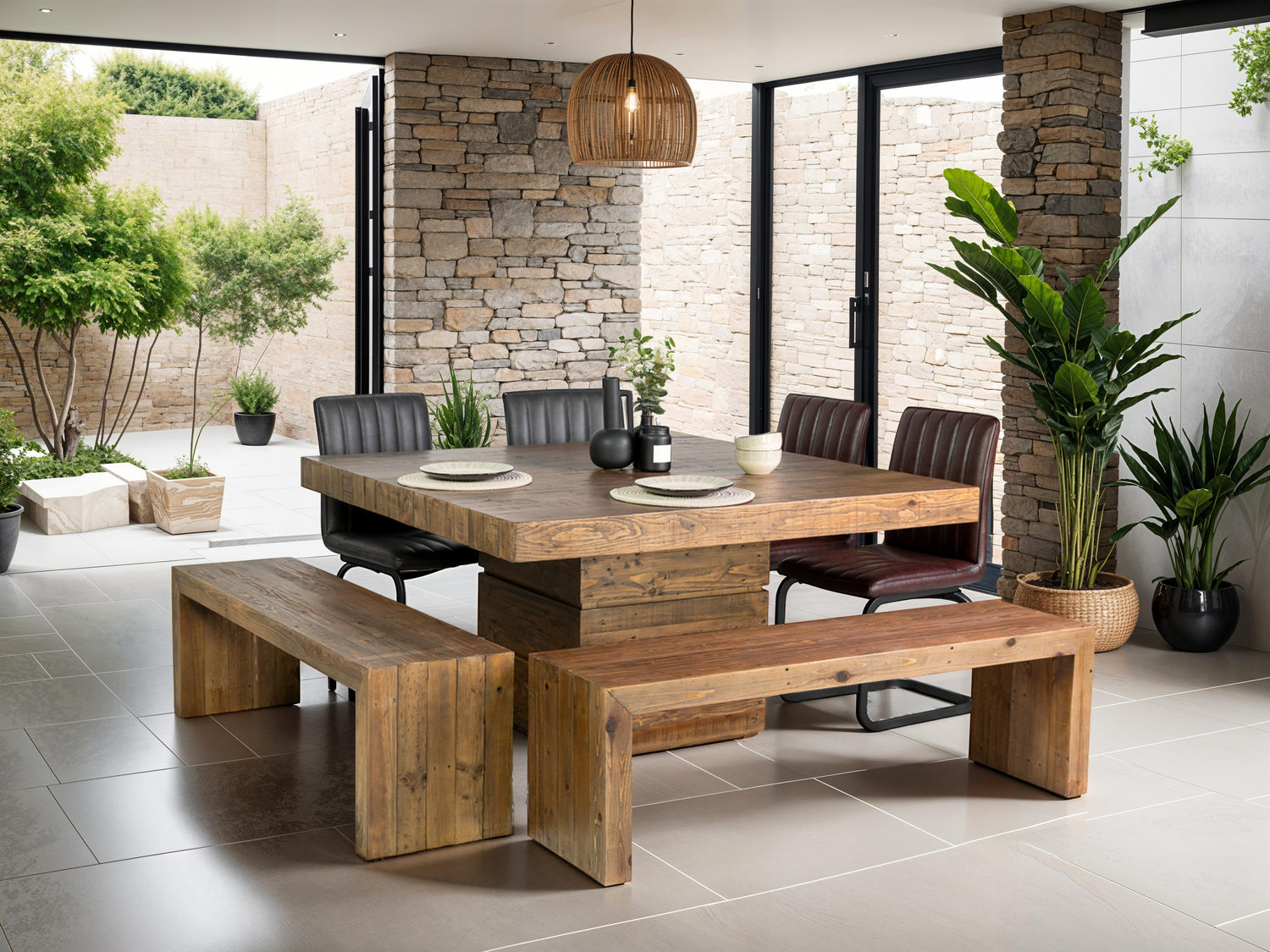
8 Seater Square Dining Table
Square tables are less common for eight people but can work well in larger, square-shaped rooms. A square table of around 150-180cm per side can seat eight, depending on the design and leg arrangement. The advantage is a strong central focal point and an even amount of table space for everyone - the trade-off is that a large square table can feel imposing in a smaller room, since its width and length are the same.
Pairing Your Dining Table With the Right Chairs
Buying an 8 seater dining table and chairs together makes it easier to create a cohesive dining space, though you don't have to buy them as a matched set.
A few things to check before you commit:
Chair width, not just style. Eight wide or upholstered chairs need more room than eight slimmer wooden ones - factor this into your space planning, not just the table dimensions.
Table and chair height. Standard dining tables sit at 28-30 inches (71- 76 cm). Leave 10-12 inches of clearance between the seat and the underside of the tabletop for comfortable legroom.
Armrests need extra width. If your chairs have arms, allow a little more space per seat so they can slide under the table without catching.
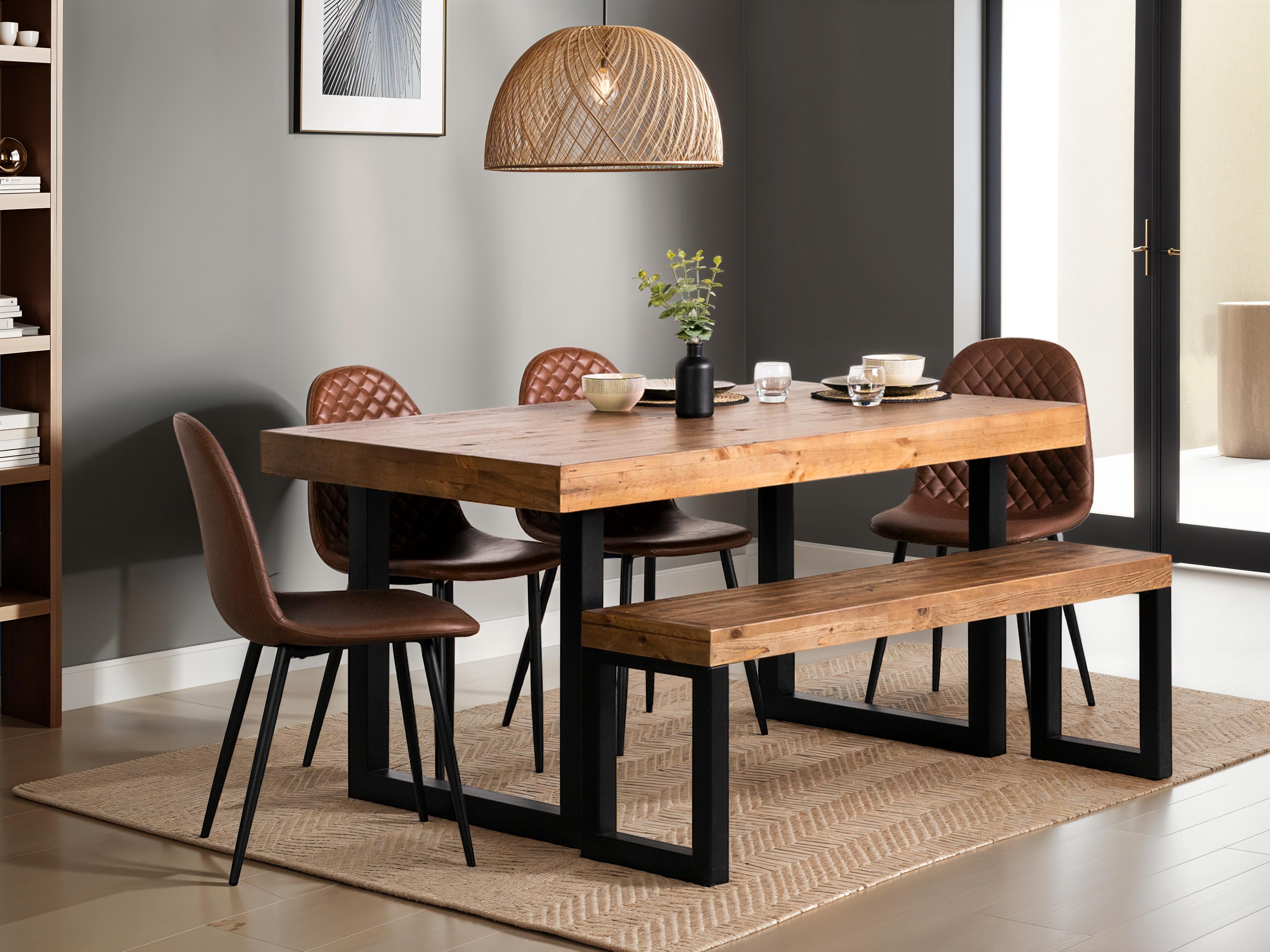
Consider a bench on one side. For rectangular tables especially, a bench can save space and give the room a more relaxed feel, paired with chairs on the other sides.
If you're buying the table and chairs separately, measure both rather than assuming they'll work together once they arrive. For more on choosing the chairs themselves, how to choose reclaimed wood dining chairs covers it in full.
Como Extendable Dining Table (180cm - 240cm)
Choosing the Right Material for Your Dining Table: Pine, Elm or Oak
The material shapes both the look of the table and how it holds up to years of daily use - which matters more with a table this size, since it's rarely a piece you replace on a whim.
Reclaimed wood offers something a freshly milled solid wood dining table can't. Because the timber has already had a previous life, every piece carries its own marks, grain pattern, and variation, rather than looking uniform. At Reclaim Nation, our tables are built primarily from pine and elm, salvaged from old floorboards, pallets, railway sleepers, and manufacturing offcuts. Pine actually hardens through the reclaiming process, gaining a density its softwood reputation doesn't suggest, while elm tends to carry a richer, more distinctive grain. Finishes are applied by hand in our Bristol workshop, which is part of why the grain remains visible rather than being obscured by a flat coating.
Oak is another material you'll come across when comparing 8 seater dining tables, valued for its familiar warmth and density. If you're weighing oak against reclaimed timber, it's worth considering not just appearance and durability but the material's history and sourcing too.
With a table this size, durability and repairability matter more than they do with smaller furniture. Depending on its construction and finish, a solid reclaimed table may also be able to be sanded back and refinished as it shows signs of wear after years of family meals, rather than replaced outright - which is really what you're paying for with a piece like this. Not just a table that seats eight, but one that's still doing the job in ten years without needing to be swapped out.
What to Check Before You Buy Your 8 Seater Dining Table
Measure the room first. Don't choose based on the tabletop dimensions alone - measure the whole dining area, including space for chairs and movement.
Check the real seating arrangement. An advertised capacity of eight doesn't always mean eight people get equal space. Look at the table's dimensions, leg position, and overall design, not just the label.
Think about how you'll actually use it. Everyday family meals call for a durable, easy-to-clean surface. If the table's mostly for entertaining, a little extra tabletop space for serving dishes is worth having.
Match the shape to the room. Rectangular tables tend to suit longer rooms, while round or square designs work well in more compact or square-shaped spaces.
Look past the trend cycle. A dining table this size is a long-term piece of furniture. Choosing it for materials, proportions, and craftsmanship rather than a passing look makes it easier for the table to still suit your home years from now.
Do You Actually Need an 8 Seater Table?
An 8 seater dining table can be a practical choice even if you don't regularly have eight people sitting down to eat. For larger households, it gives everyday meals room to breathe without feeling restrictive. For smaller households, the extra capacity makes it far easier to entertain friends and family.
If eight genuinely feels like more table than you need, it's worth looking at 6 seater or 4 seater dining tables instead - both give you the same solid reclaimed construction in a footprint that suits a smaller household or room.
The key is proportion. A large table should feel like a natural part of the room, not leave the space around it difficult to navigate. If you're unsure, measure your available space first and let those numbers narrow down what will genuinely work.
Frequently Asked Questions on 8 Seater Dining Tables
What is the minimum room size for an 8 seater dining table?
As a rough planning guide, allow for the table's footprint plus around 90cm of clear space on each side. For a 200cm x 100cm table, that works out to roughly 3.8m x 2.8m of room, though doorways, other furniture and how the room flows will affect what actually feels comfortable.
How long should an 8 seater dining table be?
Most rectangular 8 seater tables fall between 180cm and 200cm in length, though the exact figure depends on the width and how the legs are positioned.
Can a 6 seater table fit 8 people if needed?
Sometimes, if the table has drop leaves or an extendable design, or if you're comfortable seating people slightly closer together for occasional gatherings. It's not ideal as a permanent solution, since everyday comfort will be tighter than a table sized for eight from the start.
Is a round or rectangular table better for eight people?
It depends on the room. Rectangular tables suit longer spaces and more formal seating arrangements, while round tables work well in square or open-plan rooms and tend to make conversation feel more natural since there are no corners.
Do reclaimed wood dining tables need more care than new wood?
Not fundamentally. The same basics apply - avoiding excess moisture and direct heat, and an occasional wax treatment to keep the finish nourished.
Can a reclaimed wood dining table be extended?
Some designs offer extendable options with additional leaves, and others use a drop-leaf design that folds down when not in use. Both can be useful if you want the flexibility of a smaller everyday table with extra capacity for occasions - check the specific table's design, since not every style is built to extend.
Explore Reclaim Nation's collection of dining tables, including extendable dining tables for households that need flexibility between everyday meals and larger gatherings - each one handmade from solid reclaimed pine and elm.

Leave a comment
This site is protected by hCaptcha and the hCaptcha Privacy Policy and Terms of Service apply.