





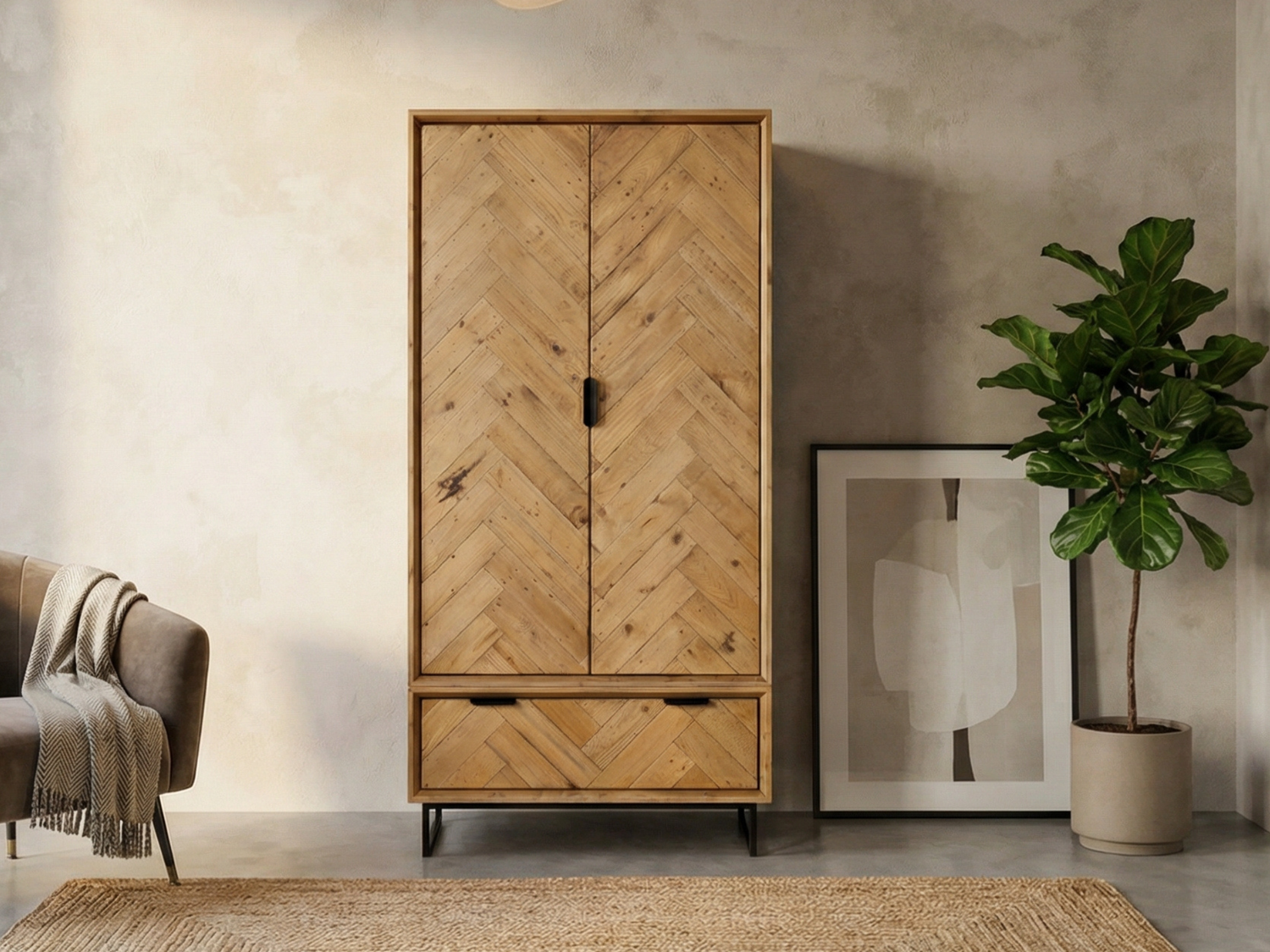
A wardrobe is one of those pieces you choose once and live with for a long time, so it's worth getting right the first time. It's easy to focus on how a reclaimed wood wardrobe looks and forget to think about how it actually works - how much it holds, how it fits the room, and whether the inside is arranged in a way that makes getting dressed easier rather than harder.
Here's what actually matters when you're choosing one, from size and shape through to what goes on inside and how it sits in the room.
Wardrobe Function - What to Think About Before You Buy
Wardrobe function comes down to a few practical things: how much hanging space you get, how the shelving is arranged, and whether the door style suits the room it's going into. A wardrobe that looks striking but doesn't hold what you actually own ends up being more trouble than it's worth.
Before you buy, think about what you're storing, not just how much space you need. Long-hanging items - coats, dresses, suits - need more vertical clearance than folded jumpers or shoes. A wardrobe with a mix of hanging rail and shelving tends to suit most households better than one that's all hanging space or all shelves.


Standard, Corner or Space-Saving Wardrobes: Choosing the Right Shape
The right layout depends on your room shape as much as the floor area you have to work with.
Standard wardrobes are usually the most straightforward option where you've got a clear run of wall. They give the most predictable capacity for the width, without needing an unusual layout.
Corner wardrobe ideas are worth considering in box-shaped or awkward rooms, since they make use of a corner that would otherwise sit empty. They tend to hold less than a standard wardrobe of the same width, so check the actual capacity rather than assuming a corner design automatically gives you more room.
Space-saving wardrobes - whether through a slimmer depth or doors that don't need a full swing into the room - can make a real difference in a smaller bedroom.
All Reclaim Nation wardrobes are freestanding, so they can be positioned wherever suits the room rather than requiring a fitted installation - useful to know if you're comparing options against a built-in design.
Measure the space before you buy, including door swing if you're going with hinged doors. A wardrobe that's the right width on paper can still feel wrong in the room if the doors can't open fully without hitting a bed or a wall.
Wardrobe Shelving and Storage Ideas Worth Considering
The interior layout matters as much as the exterior. A wardrobe with adjustable or well-positioned shelving gives you more flexibility over time than one with a fixed layout, especially if what you're storing changes with the seasons.
A few things worth looking for:
A mix of hanging rail and shelving. Rather than one long uninterrupted rail, a split layout with shelving at one end gives you somewhere for folded items, shoes or accessories.
Drawers built into the base. Useful for smaller items you'd rather not leave on open shelving, and it makes better use of space that would otherwise sit under the hanging rail unused.
Make use of vertical space. If the wardrobe is tall, check whether the upper section can be used for seasonal or less frequently worn items rather than leaving that space unused.
A wardrobe with a bit of built-in flexibility tends to age better than one designed around a single, fixed way of storing things.


How to Organise and Arrange Your Wardrobe
Once the wardrobe itself is chosen, how you arrange it makes a genuine difference to how easy it is to use day-to-day.
Group items by type rather than by outfit - hanging rail for anything that needs to stay uncrinkled, shelving for folded items, and drawers for smaller pieces. Keep what you wear most often at eye level or within easy reach, and move seasonal items to the back or top shelf until you need them.
Good wardrobe organisation usually comes down to giving each type of item its own dedicated spot rather than mixing everything, so you're not digging through folded jumpers to find a coat hanger.
Styling a Reclaimed Wood Wardrobe in Your Bedroom
A wardrobe is one of the largest pieces of furniture in most bedrooms, so how it sits alongside everything else matters as much as the piece itself.
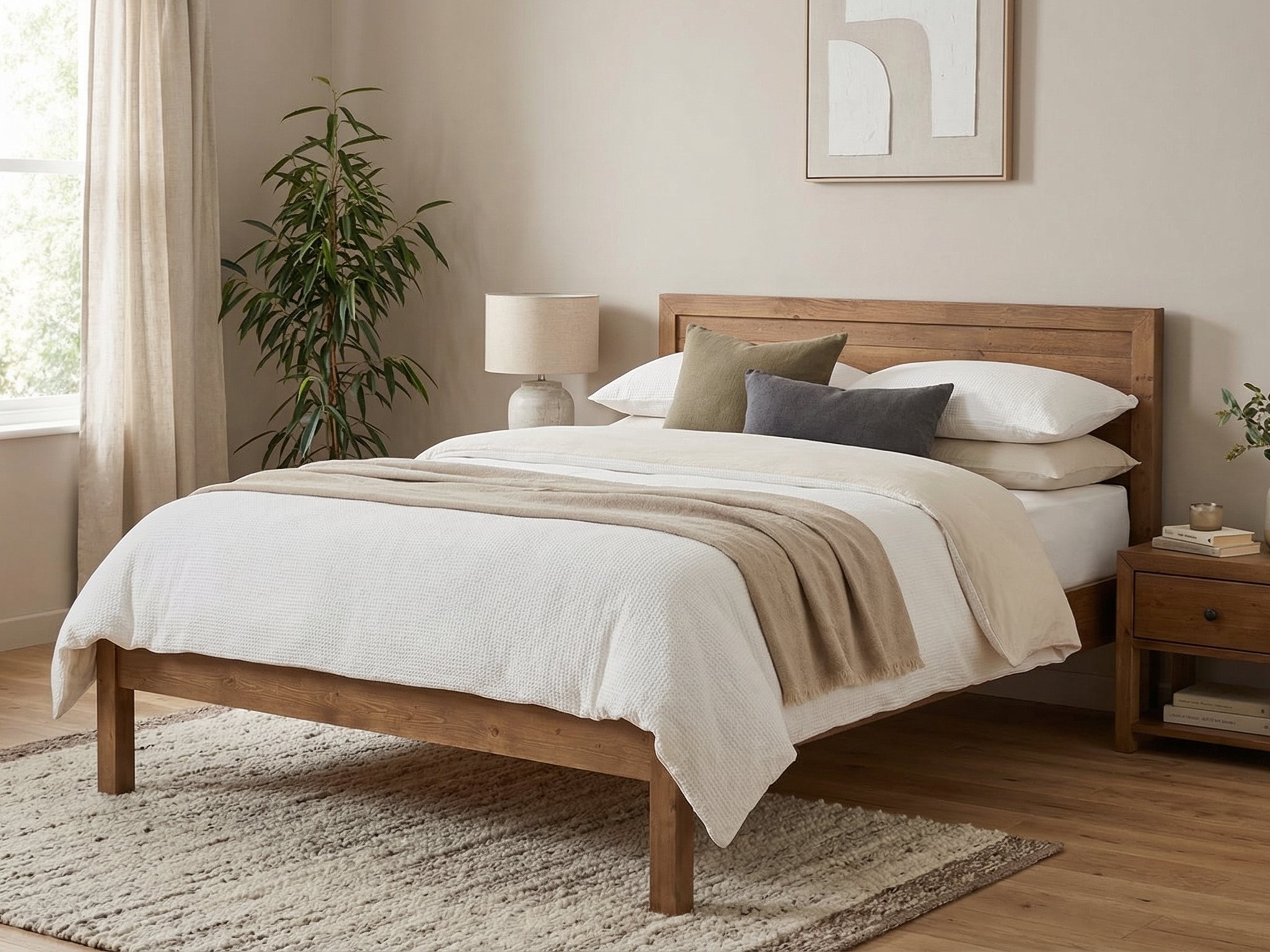
Where possible, let the wood tone talk to the rest of the room rather than matching it exactly. A wardrobe a shade darker or lighter than your bed frame or bedside tables tends to look collected rather than mismatched - a room where every piece matches exactly can end up looking like it was furnished in a single afternoon.
If the wardrobe carries strong grain and visible character, it's often worth keeping the rest of the room a little simpler around it, so the piece has room to be the feature rather than competing with everything else for attention.
Why Reclaimed Pine and Elm Suit a Wardrobe Built for Daily Use
A wardrobe gets opened and closed more than almost any other piece of bedroom furniture, so the material it's built from matters more here than it might for something used less often.
At Reclaim Nation, our furniture is built primarily from pine and elm, reclaimed from old floorboards, pallets, railway sleepers, and manufacturing offcuts rather than freshly felled timber. Pine hardens through the reclaiming process, giving it a density that suits a piece handled daily, while elm brings a richer, more distinctive grain that holds up well over years of use.
A solid wood wardrobe built this way can also be sanded back and refinished if it ever shows real wear - finishes here are applied by hand in our Bristol workshop, which keeps the grain visible rather than sitting under a flat coating. For more on how that compares to new timber over time, how reclaimed wood compares to new wood covers it in more detail.
Frequently Asked Questions on Reclaimed Wood Wardrobes
Is reclaimed wood durable for wardrobes?
Yes. Reclaimed timber has typically already been naturally seasoned over decades, which makes it more stable than freshly milled wood. It can also be sanded and refinished if it shows wear, something that isn't generally possible with composite or veneered wardrobes.
What wardrobe size fits my room?
It depends on the room shape as much as the floor area. Measure the wall space you have, allow room for doors to open fully, and check the wardrobe's actual capacity rather than judging by width alone.
Should I choose a standard, corner or space-saving wardrobe?
Standard wardrobes suit most bedrooms and offer the most straightforward capacity. Corner designs make sense in box-shaped or awkward rooms but hold less than a standard wardrobe of the same width. Space-saving designs, such as slimmer depths or sliding doors, work well where floor space is genuinely tight.
How should I organise the interior?
Group items by type rather than by outfit - hanging rail for anything that needs to stay uncrinkled, shelving for folded pieces, and drawers for smaller items. Keep what you wear most often within easy reach.
What finishes and styles work with reclaimed wood?
At Reclaim Nation, finishes are applied by hand using either a natural water-based coating or a whitewash, both of which let the grain of the pine and elm stay visible. Either works well alongside most bedroom styles, from simpler contemporary schemes to warmer, more rustic ones.
Explore the full wardrobe collection, or browse chests of drawers and blanket boxes for additional bedroom storage that pairs with it.

Leave a comment
This site is protected by hCaptcha and the hCaptcha Privacy Policy and Terms of Service apply.