





A reclaimed wood TV unit does more work in a living room than almost any other piece of furniture. It holds the television, hides the cables, stores the remotes and the game console, and usually ends up as one of the first things you notice when you walk into the room. Choosing the wrong one is easy to do quietly - it can look fine in the shop and then feel too small, too shallow, or oddly placed once it's actually against your wall.
Here's what's worth thinking through properly before you buy, from sizing to storage to the material itself.
Getting the Right Size TV Unit
TV units on the market span a wide range, from compact 100-120cm designs up to substantial 200-240cm pieces built for larger rooms and wider walls. The right size depends on more than just your television - it's about your wall space, your seating distance and how much you actually need to store.
As a rough guide, your unit should be at least as wide as your television, and ideally a little wider on either side. A 55-inch TV measures around 123cm across, so anything from roughly 120cm upwards tends to give it enough breathing room without looking cramped, while a larger room or a household with more to store may prefer something considerably longer.
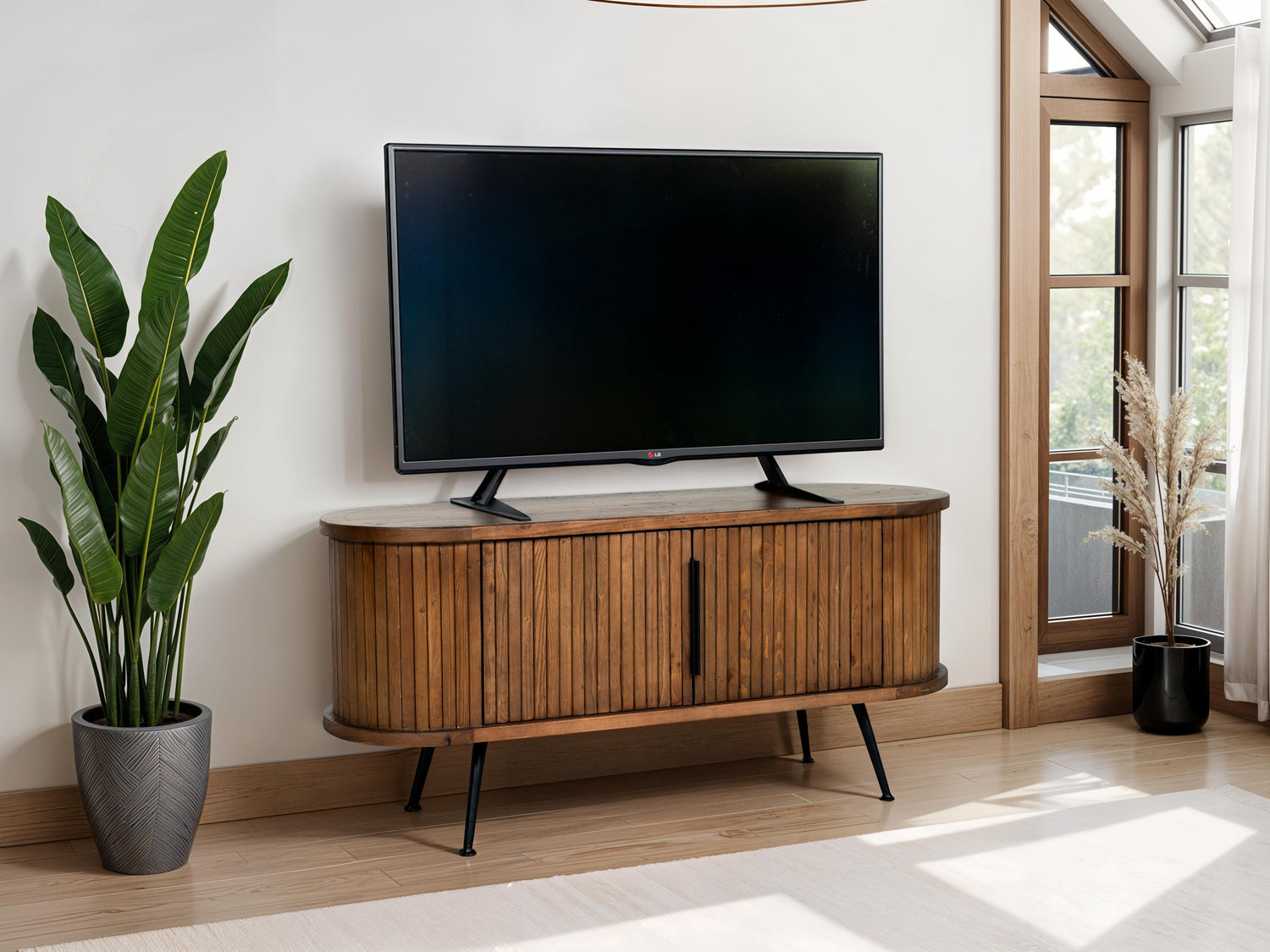
Our own range currently sits at the compact end of that spectrum. The Dakota TV Unit is 120cm wide, 56cm high and 40cm deep - a good fit for TVs up to around 50-55 inches without dominating a smaller living room. The Exeter Corner TV Unit is 102cm wide, 60cm high and 50cm deep, designed to sit into a corner rather than span a full wall. Both suit rooms where a large, long unit would feel out of proportion.
Before you settle on a size, measure the actual wall space rather than guessing. Leave a little clearance on either side so the unit doesn't feel jammed into the corner of the room, and check the depth too - a unit that's too shallow can leave a soundbar or games console overhanging the edge.
Width tends to get most of the attention, but height matters just as much. A unit that sits too high or too low can put the television at an awkward angle from the sofa. Before you buy, check the unit's height against your usual seating position, not just its length against the wall.


Long, Corner or Compact: Choosing the Right Shape
Not every room suits the same shape of TV unit, and the shape matters just as much as the length.
A long wooden TV unit works best against a single flat wall, where it can act as the visual anchor of the room. It gives you the most storage per unit and tends to suit larger or more open living rooms, where a shorter piece would look lost.
A wooden corner TV unit is the better option if your room doesn't have much unbroken wall space, or if you'd rather keep the television out of the direct sightline from the sofa. Corner units make good use of an otherwise awkward part of the room, though they generally offer a little less storage than a long unit of the same overall size. Our own Exeter range is built to sit neatly into a corner without losing the storage a straighter design would give you.
If your room is genuinely small, it's worth looking for a compact unit specifically rather than assuming any TV unit will fit. A smaller television with minimal extra kit doesn't need the same footprint as a full home entertainment setup.
Storage and Cable Management
A solid wood TV unit with storage is really the whole point for most households - somewhere to keep the console, the box of cables, the remotes, and whatever else tends to pile up near the television. Our long, straight Dakota unit is built with exactly this in mind, giving you enough surface and cabinet space to actually keep things out of sight rather than stacked on top.


A few things worth checking before you buy:
Open shelving versus closed cabinets. Open shelves suit things you want visible and easy to reach, like a games console or a soundbar. Closed cabinets are better for anything you'd rather not look at - cables, chargers, spare remotes.
Cable access. Look for a unit with a cut-out or gap at the back, so cables can run through neatly rather than trailing along the floor or bunching up behind the unit.
Shelf depth. A shallow shelf might not comfortably fit a soundbar or a larger games console. Check the internal depth, not just the overall size of the unit.
A long wooden TV unit or large wooden TV unit generally gives you the most flexibility here, simply because there's more surface and cabinet space to work with. If storage matters more to you than a slim profile, it's usually worth sizing up rather than compromising on what actually fits inside.
Choosing the Right Material
The material shapes how a TV unit looks day to day, and how well it holds up once it's carrying the weight of a television and everything that goes with it.
At Reclaim Nation, our TV units are built primarily from pine and elm, reclaimed from old floorboards, pallets, railway sleepers and manufacturing offcuts rather than freshly felled timber. Pine actually hardens through the reclaiming process, gaining a density its softwood reputation doesn't suggest, which matters for a piece that needs to support real weight day after day. Elm carries a richer, more distinctive grain, and both develop character over time rather than losing it.
A solid wooden TV unit also has a practical advantage over a composite or veneered one: if it picks up a scratch or a mark, it can usually be sanded back and refinished rather than replaced outright. Finishes at Reclaim Nation are applied by hand in our Bristol workshop, which is part of why the grain stays visible rather than sitting under a flat, sprayed-on coating - and with nearly 30 years of designing and selling furniture, that's not a shortcut we've ever taken.
Style is worth thinking about here too. A rustic wooden TV unit tends to lean into visible grain, knots, and a more textured finish, while a mid-century modern TV unit generally favours cleaner lines and tapered legs. Reclaimed wood works across both directions, since the character comes from the timber itself rather than heavy detailing.
Where a Wooden TV Unit Fits in Your Home
Most wooden TV units end up in the living room, but they're not limited to it.
Living Room TV Unit Ideas
In the living room, a TV unit usually needs to do the most work - holding the television, storing media equipment, and often doubling as a display surface. A long or corner unit tends to suit this room best, paired with a coffee table in a similar tone to tie the space together.
Bedroom TV Unit Ideas
A bedroom TV unit generally needs less storage and a smaller footprint than a living room piece. A compact or mid-sized unit is usually enough, and it's worth choosing something that doesn't visually compete with a bed frame or wardrobe already in the room.
A Few Things to Check Before You Buy a Wooden TV Unit
Measure your wall space and your television before choosing a size, rather than working the other way round. Think honestly about how much you actually need to store, since a unit that's too small will feel cluttered within weeks. Check cable access if tidy cables matter to you, and look past the finish to how the piece is actually built - joints, shelf depth, and drawer runners tend to matter more over time than how a unit photographs in a showroom.
It's also worth thinking beyond your current setup. Televisions get replaced more often than furniture does, so a unit chosen for a specific screen size today can end up feeling wrong in a few years if the shape and finish don't hold up on their own. A well-made solid wood piece doesn't really date the way a passing trend does, which is part of why it's worth choosing for proportion and build quality rather than fitting one exact television.
If you already own reclaimed wood furniture elsewhere in the room, our guide to caring for reclaimed wood furniture covers everything you need to keep a new TV unit looking its best alongside it. And if you're thinking about the room as a whole rather than a single piece, our look at timeless furniture trends is worth a read before you commit.
Frequently Asked Questions on Wooden TV Units
What size TV unit do I need for a 55-inch TV?
As a general rule, look for a unit at least as wide as the television, with a little extra clearance either side. Our own Dakota TV Unit, at 120cm wide, sits comfortably at that mark for a 55-inch screen without a lot of overhang either side.
Is a corner TV unit or a long TV unit better?
It depends on your room. A corner unit makes better use of limited wall space and can keep the television out of the direct sightline from the sofa. A long unit generally offers more storage and suits rooms with a single, unbroken wall to work with.
Do wooden TV units need special care?
Not fundamentally. The same basics apply as any solid wood piece - avoid excess moisture and direct heat, and an occasional wax treatment keeps the finish nourished.
Can a wooden TV unit hold a large television safely?
A well-built solid timber TV unit can be well suited to supporting a large television, but always check the manufacturer's weight guidance where one is provided, and pay attention to how the piece is actually constructed rather than the material alone.
What's the difference between a TV unit and a sideboard?
A TV unit is designed specifically around holding a television and media equipment, usually with cable access and shelving suited to that purpose. A sideboard is more general storage furniture, and because it reads as furniture first rather than TV storage, it can help the television feel less dominant in a room, though it isn't built with the same cable access as a dedicated unit.
How do I stop cables looking messy behind my TV unit?
Look for a unit with a cable cut-out or gap at the back before you buy, and route cables through it rather than letting them trail along the floor or bunch up visibly behind the piece.
Explore the full Reclaim Nation range of TV and media units, each one handmade primarily from reclaimed pine and elm in our Bristol workshop.

Leave a comment
This site is protected by hCaptcha and the hCaptcha Privacy Policy and Terms of Service apply.