




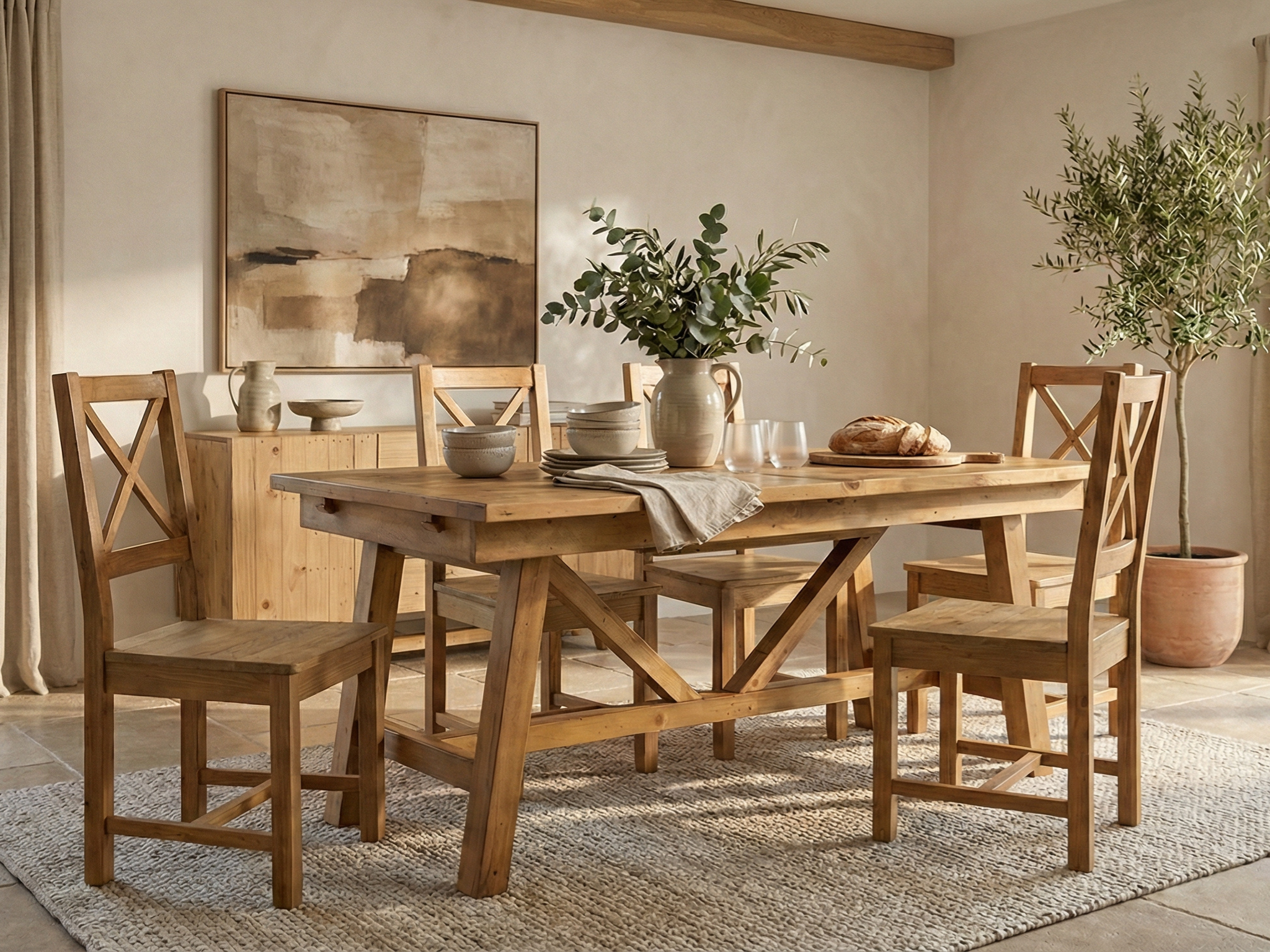

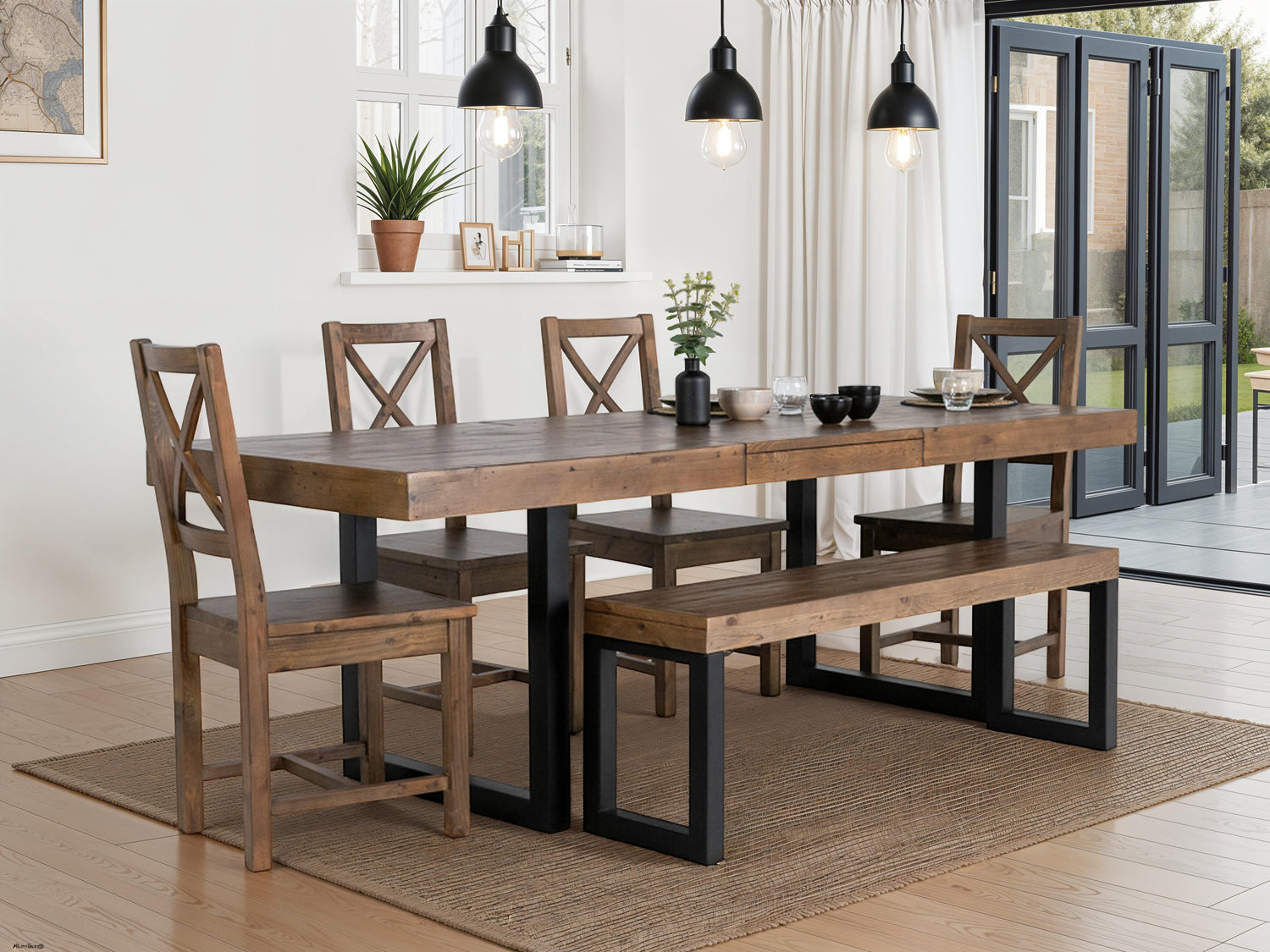
An extendable dining table earns its keep in a way a fixed table can't. It shrinks down for a quiet Tuesday dinner and opens up for the whole family at Christmas. That flexibility is exactly why it needs a little extra care in the one place a fixed table doesn't have to think about at all - where the leaves come together.
The good news is that most extendable dining table care is identical to caring for any solid wood table. It's really only the extension mechanism and how the wood behaves as it moves that need their own attention. Here's how to look after both.
Everyday Care for an Extendable Wooden Dining Table
Before getting into what's different about an extendable table, it's worth saying plainly: everything in our general reclaimed wood furniture care guide still applies here. Wipe the surface down with a soft, slightly damp cloth. Deal with spills immediately rather than letting them sit. Use coasters and placemats to protect against heat rings and scratches. Keep the table out of direct sunlight and away from radiators. Apply a natural wax polish every few months to keep the finish nourished.
None of that changes just because the table extends. What does change is what happens at the join.


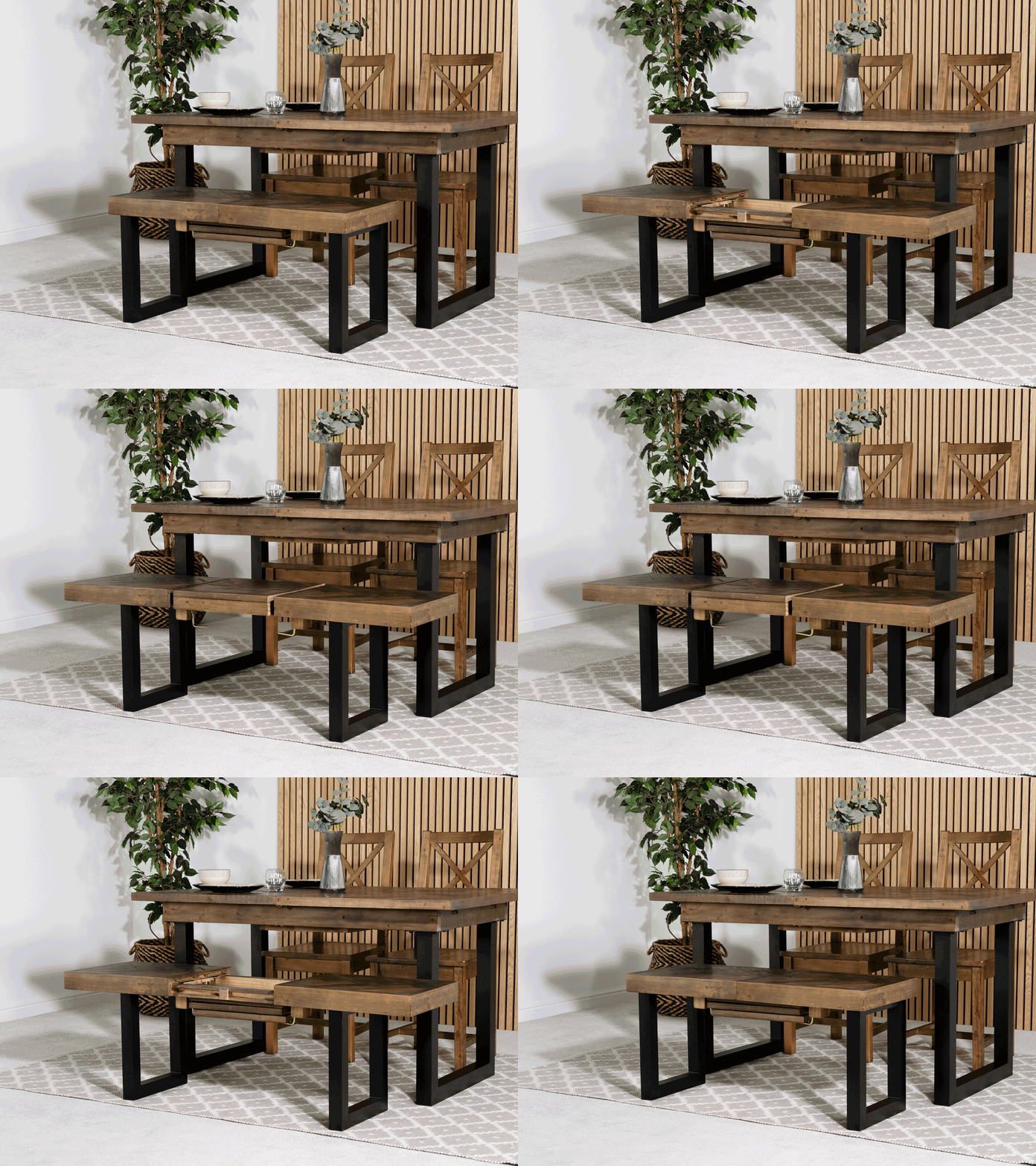
Brooklyn Light Round Extendable Dining Table
How to Care for the Extension Mechanism
The extension mechanism is the one part of the table that a fixed dining table doesn't have, and it's worth treating it as its own small maintenance task rather than assuming it looks after itself.
Check for spills around the join. If something has been spilled near the extension while the table was open, make sure the area is properly dry before closing it back down. Liquid that collects at the join is easy to miss until you fold the table away.
Keep the mechanism clean. Dust and debris can build up in the runners and joints over time, particularly if the table doesn't get extended often. A dry cloth or a soft brush run along the visible edges every so often stops build-up from making the leaves harder to move. If your table's care instructions recommend a specific product for the mechanism itself, follow those rather than a generic household one.
Extend and close the table gently. Forcing the leaves open or shut, especially if something is slightly misaligned, puts unnecessary strain on the joints. If the table feels like it's sticking, stop and check for an obstruction rather than pushing through it.
Support the table properly while extending. Where possible, extend the table with someone on each end rather than pulling from one side alone. This keeps the weight even and reduces the chance of the mechanism racking or binding.
Store leaves carefully if they're removable. Some extendable designs use leaves that lift out entirely rather than folding away within the table. If yours are stored separately, keep them somewhere flat and dry rather than leaning upright, so they don't warp out of shape before they're next needed.
Extend the table every so often even if you don't need the extra space, particularly with a table that's new to your home. A mechanism that's used occasionally tends to stay easier to operate than one left closed for months at a time.
Extendable Tables and Seasonal Wood Movement
Solid wood moves slightly with changes in humidity, expanding a little in warmer, damper months and contracting as the air dries out over autumn and winter. This is completely normal, and it's true of any solid wood piece, not just extendable ones.
Where it matters more with an extendable table is at the join. If the leaves feel very slightly tighter to open in summer and slightly looser in winter, that's the wood responding to seasonal humidity rather than a fault with the table. A room humidifier in the colder months, when central heating tends to dry the air out, helps keep that movement gentler and more predictable throughout the year.
What's not normal is a leaf that no longer sits flush with the rest of the tabletop, or a mechanism that's become genuinely difficult to move rather than just slightly stiffer with the season. If that happens, it's worth having a proper look rather than assuming it will settle on its own.
It's also worth checking the table's position every so often. Furniture has a way of drifting closer to a radiator or a sunny window over time, especially in a room that gets rearranged occasionally, and a small shift in position can make a bigger difference to seasonal movement than expected.

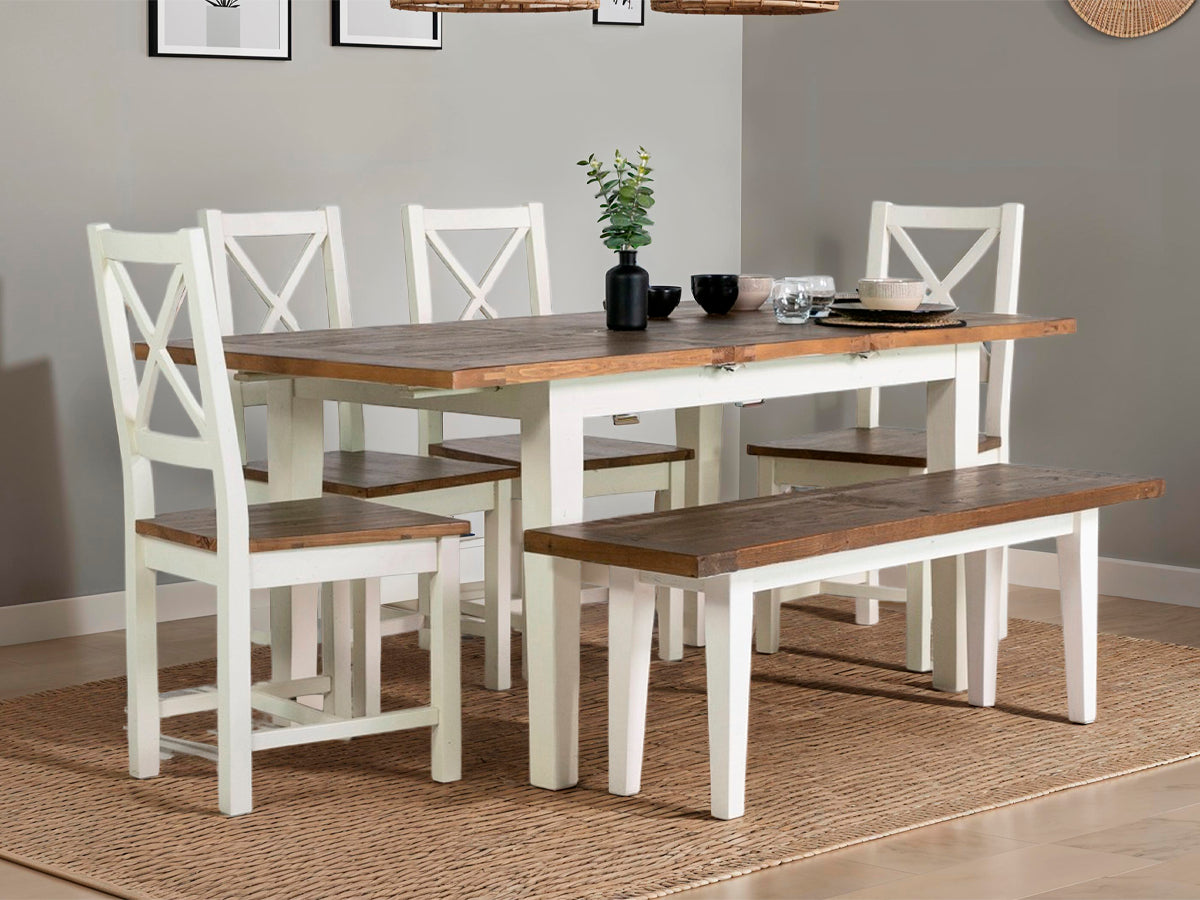
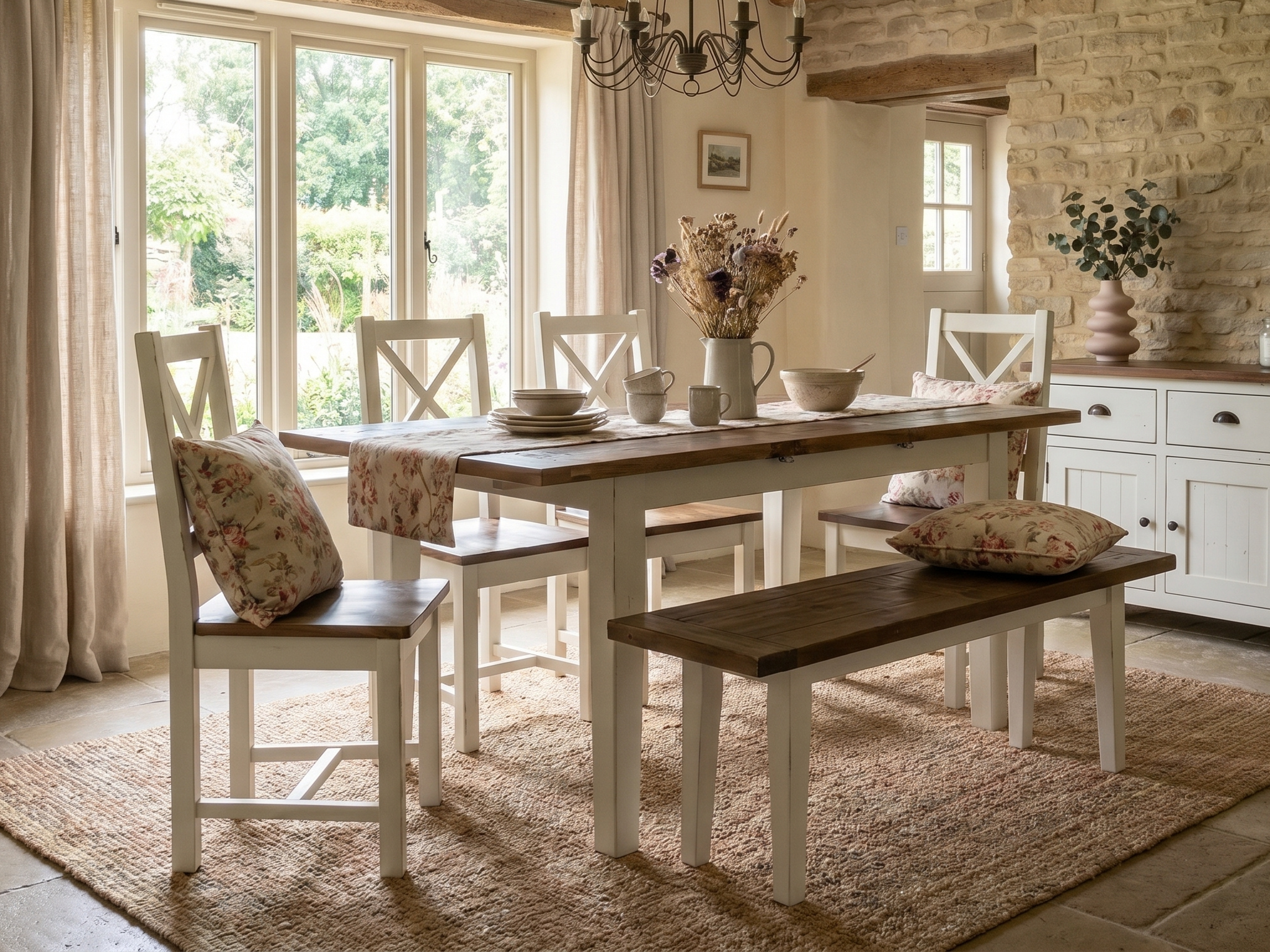
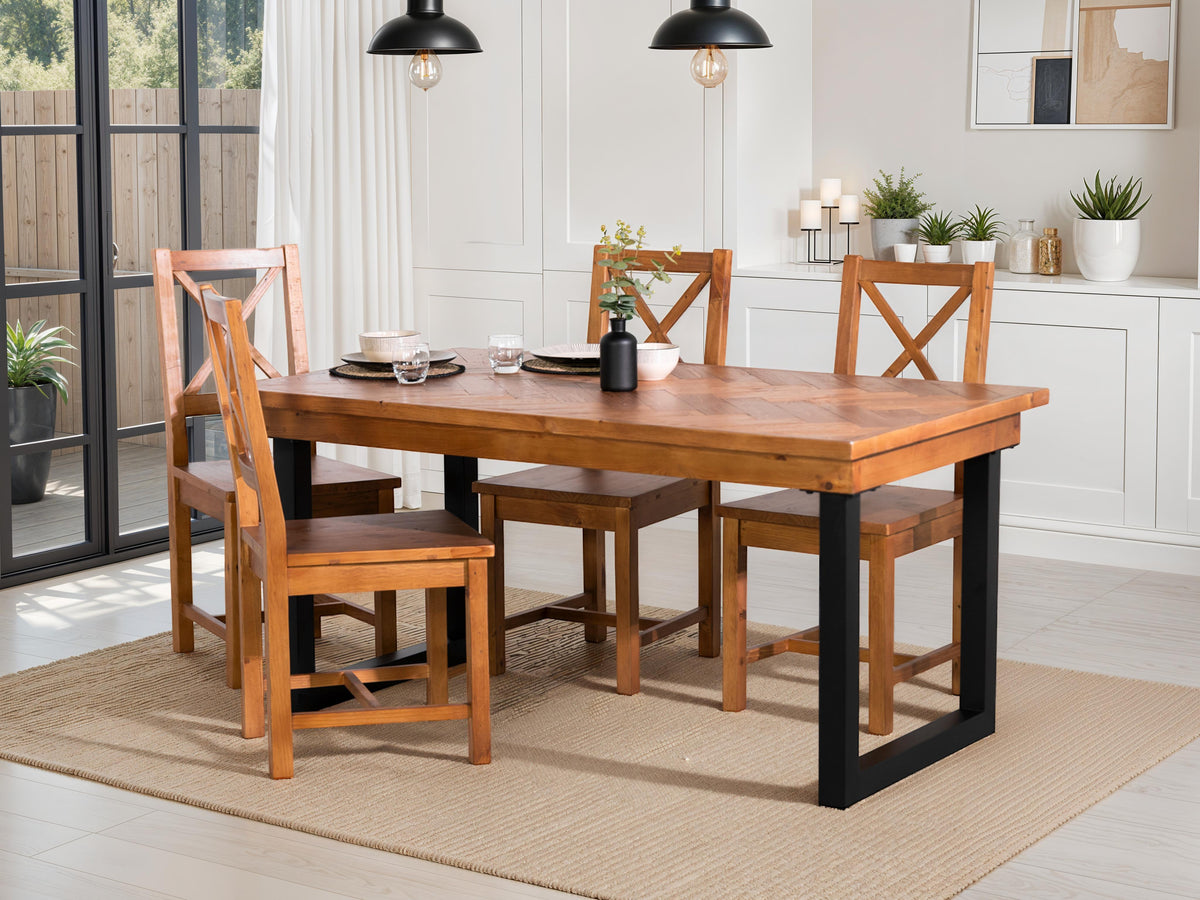
Provence Extending Dining Table (140-180cm)
What to Avoid When Caring for an Extendable Dining Table
A few habits are worth avoiding specifically because of the extra moving parts an extendable table has:
- Don't use excessive force if a leaf feels stuck - check for debris or misalignment first rather than pushing harder
- Avoid placing unusually heavy items directly across the join, particularly while the table is extended
- Don't ignore a mechanism that's become noticeably harder to operate - small issues are easier to sort out early than after months of continued use
Caring for an Extendable Table vs a Fixed Top Table
The main care difference between a fixed top dining table and an extendable one comes down to that one extra part. A fixed table has nothing to check beyond the usual cleaning and protection. An extendable table asks for the same care, plus a little attention at the join - covered here in full for households that specifically need that flexibility.
The same care applies whatever shape the table takes. Round dining tables are available in extendable designs too, and a bench along one side works just as well with an extendable table as a fixed one.
At Reclaim Nation, our extendable tables are built primarily from reclaimed pine and elm, finished by hand in our Bristol workshop. Solid timber like this can be sanded back and refinished if it ever shows real wear, which matters more with a table that gets handled and moved more often than a fixed one.
Frequently Asked Questions on Extendable Dining Table Care
Do extendable dining tables need more care than fixed tables?
Not significantly more. The everyday care is identical - cleaning, coasters, avoiding heat and moisture. The only real addition is keeping the extension mechanism clean and using it gently, which takes very little extra effort.
Why does my table feel stiffer to extend in winter?
Solid wood responds to humidity, and central heating tends to dry the air out over autumn and winter. Slight stiffness at the join during colder months is normal. A room humidifier can help keep that movement more gentle and consistent.
How often should I extend my table if I'm not using the extra space?
Every so often, even if you don't need the room. A mechanism that's used occasionally tends to stay easier to operate than one left closed for months at a time.
Can I use furniture wax on the extension leaves?
Yes, the leaves can be treated the same way as the rest of the tabletop with a natural wax polish. Just take care around the join itself and avoid letting wax build up in the mechanism.
What should I do if a leaf doesn't sit flush anymore?
This isn't typical seasonal movement and is worth looking into properly rather than waiting for it to settle. It's a different issue from the normal, slight seasonal tightness the mechanism can show.
Is it safe to put hot dishes near the extension join?
Always use coasters, trivets or placemats under hot items, and take particular care around the join, since it's less supported than the rest of the tabletop when the table is extended.
Explore Reclaim Nation's full range of dining tables, alongside extendable dining tables, fixed top dining tables and round dining tables - each one handmade from solid reclaimed pine and elm.

Leave a comment
This site is protected by hCaptcha and the hCaptcha Privacy Policy and Terms of Service apply.