





You spend about a third of your life in bed, and the frame underneath you is doing quiet work every night. It holds the mattress, takes your weight, and anchors the whole bedroom. Yet most people pick one on looks and think about the rest later. This wooden bed frame guide goes the other way round: size and support first, then construction, then style, so the frame you love is also one you'll still be happy with in ten years.
If you'd like to see what's available as you read, our wooden bed frames are all in one place.
How to Choose a Bed Frame That Fits Your Mattress and Your Room
Start with the mattress. Which size do you have, or plan to buy? These are the usual UK sizes:
| Mattress size | Width x length |
|---|---|
| Single | 90 x 190cm |
| Small double | 120 x 190cm |
| Double | 135 x 190cm |
| King | 150 x 200cm |
| Super king | 180 x 200cm |
Those are mattress sizes, not bed sizes. A frame is always bigger than the mattress it holds, because the side rails, headboard, and footboard all add to the outside measurements. A king mattress can sit in a frame that's well over 160cm wide, and a tall footboard can add noticeably to the length. Check the overall dimensions on the product page, not just the label.
Then see how it feels in your actual room. Mark the frame's footprint on the floor with masking tape and live with it for a day. Can you walk around both sides? Do the wardrobe doors still open fully? Is there room for a bedside table that doesn't block the route to the door? In a terraced house, remember chimney breasts and chunky skirting boards. In a loft conversion, check how the headboard sits against the sloping ceiling.
And think about getting it upstairs. A beautiful frame is no use if it won't turn the corner on your staircase. Check the size of the largest delivery component before you order.

Bed Frame Types: Which Style Suits How You Live?
The main bed frame types differ less in looks than in what they ask of the room. Here's how to think about them:
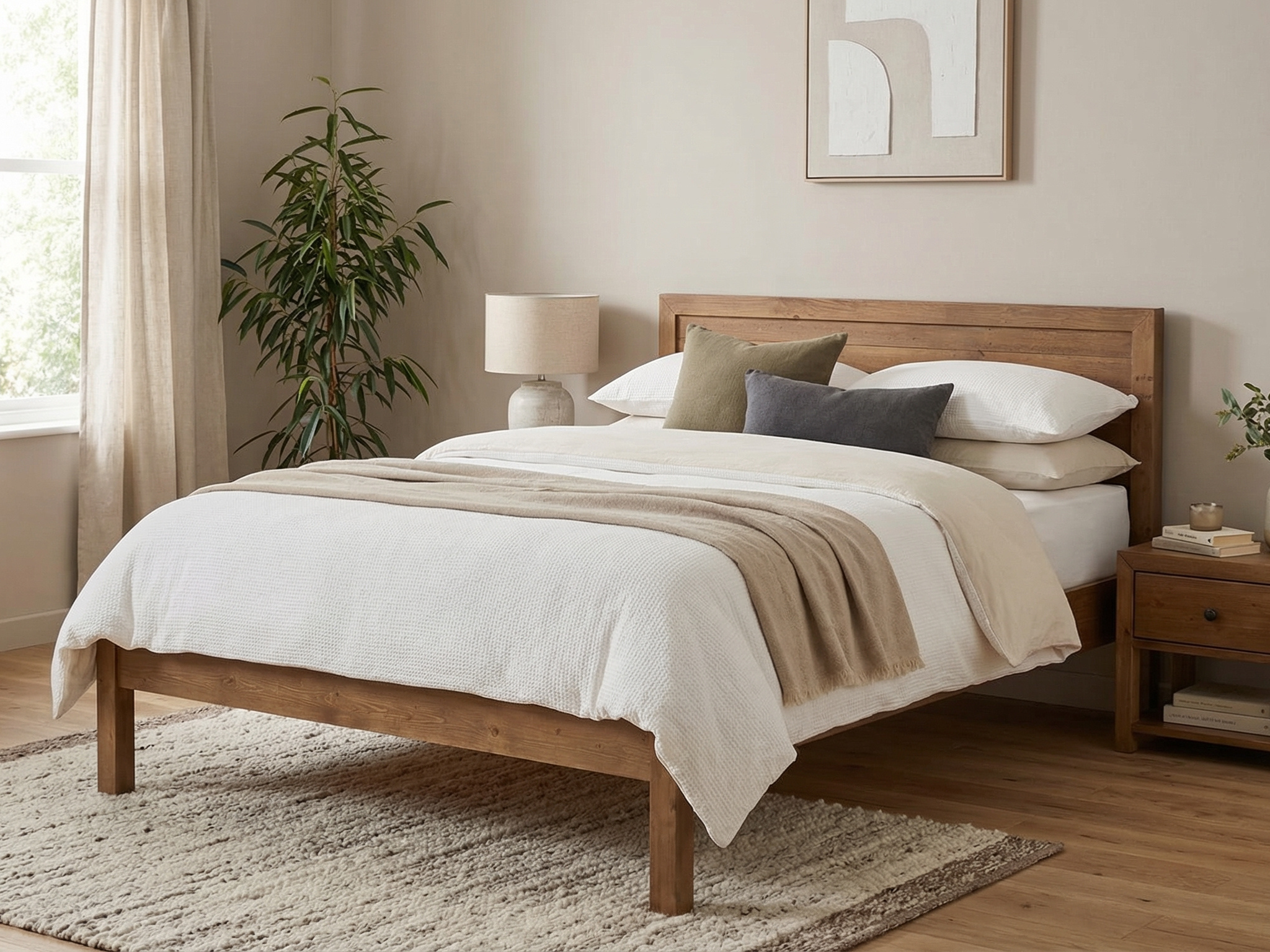
Standard frame with a headboard. The simplest option, and the one with the fewest moving parts. A good choice if you like clean floor space underneath or you already have storage elsewhere.
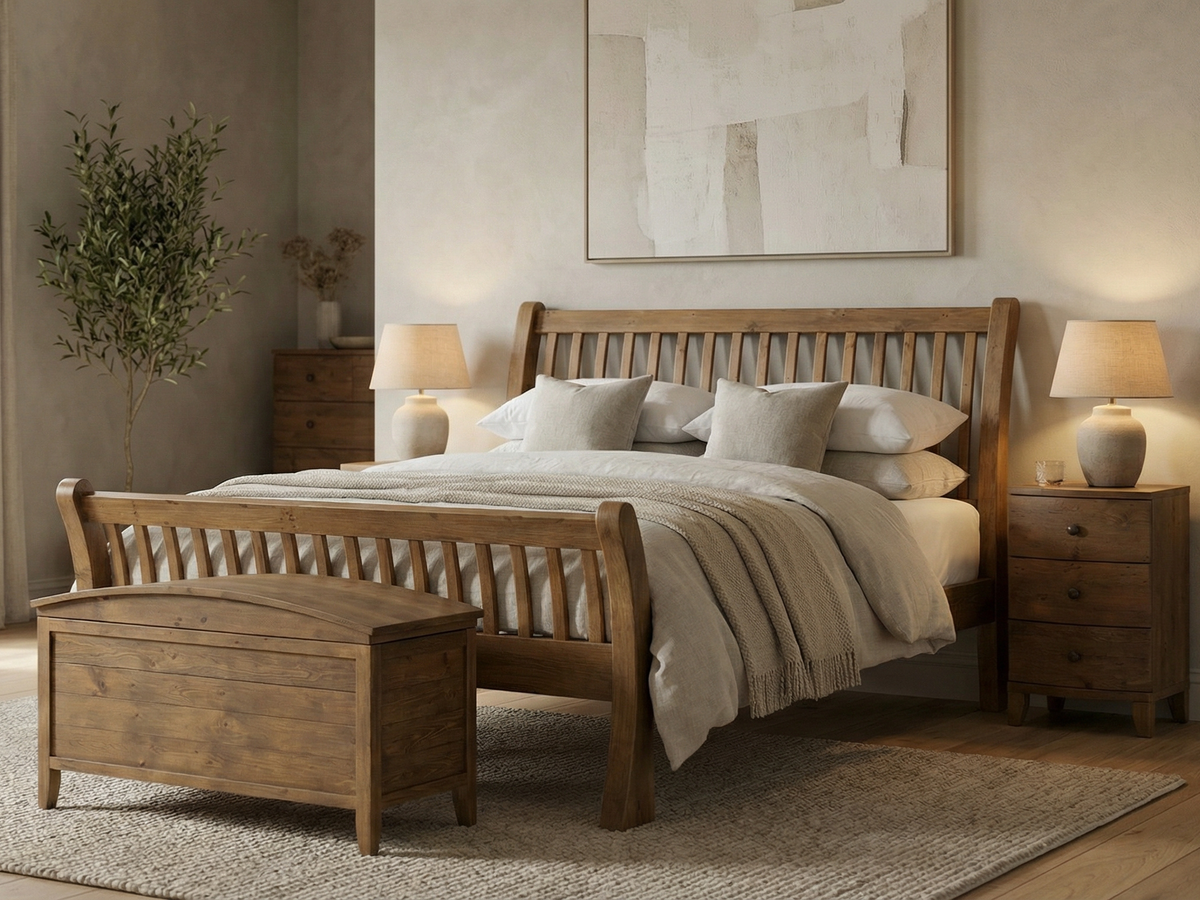
Frame with a footboard. It gives the bed a more finished, traditional look, but it adds length. In a smaller bedroom, measure carefully, because that extra length can pinch the walkway at the foot of the bed.
Sleigh and curved designs. These have a lot of presence and suit a bigger room. They look best when there's space to see them, and they usually take up a bit more room than their mattress size suggests.
Frames with storage. Drawers and ottoman-style lifts are handy in a compact flat, but they come with their own checks. Mark the full drawer extension on the floor and make sure nothing blocks it, and ask how any lifting mechanism works before you rely on it.
Whichever you lean towards, ask yourself what the bed has to do day to day. A frame that's perfect on paper but awkward to live with won't stay your favourite for long.
Support, Slats and What Your Mattress Needs
This is the part nobody photographs, and it matters most. A frame's job is to support the mattress properly, and mattresses are fussy about what they sit on.
Most wooden frames use slats, either rigid or slightly flexible. Neither is automatically better. What matters is that the base suits your mattress, so check the mattress maker's instructions for slat spacing and any support they require. Then compare that with the frame's specification. If you're buying the two separately, check this before you order either one.
On any frame you're considering, look for:
- The slat arrangement: are the slats included, and how are they held in place?
- The support for larger sizes: wider beds usually need extra support in the middle, so check what the frame has.
- The weight rating: and whether it includes the mattress.
- Replacement parts: can you get a spare slat if one ever needs changing?
If a listing is full of lovely photographs but doesn't say how the base is built, ask. A good maker will be glad to answer.
Construction: What to Look at Beyond the Wood
It's easy to get drawn in by the headboard. But a headboard tells you very little about the rails and joints holding everything together, and those do most of the work.
Ask what the frame is actually made of. Is it solid timber throughout, or solid timber in places and board elsewhere? A frame described as "wood" might be anything from solid planks to a thin wood-look layer over something else. These are different products, with different prices and ways of being cared for. Solid timber can often be sanded back and refinished, depending on the finish, while veneered surfaces generally require more careful treatment.
Then look at how the corners are joined and whether the fittings feel solid. Joints and fixings are where a frame tends to start creaking over the years, so it's worth checking.
At Reclaim Nation, our furniture is built primarily from pine and elm, salvaged from old floorboards, pallets, railway sleepers and manufacturing offcuts rather than freshly felled timber. Every piece is quality-checked at each stage, built with traditional carpentry methods and finished by hand in our Bristol workshop, using either a natural water-based coating or a whitewash. That hand finishing is why the grain stays visible rather than disappearing under a flat layer of colour. With nearly 30 years of designing and selling furniture, we know a bed frame earns its keep in the unglamorous details.
For a closer look at how solid reclaimed timber stacks up against new, our guide on how reclaimed wood compares to new wood goes into detail.
Choosing a Style for Your Bedroom
Once the practical bits are settled, the fun part. Think of style as a mix of shape, scale and finish, not just a wood colour. A low, simple frame and a tall panelled one can use the same timber and feel completely different.
Our own range shows how far that can stretch. The Montreal takes a heritage approach, with antique-style hardware and traditional panel detailing, so it suits a bedroom where the bed is meant to be the centrepiece. The Sydney and Washington lean towards a warmer, more modern rustic look, with simpler lines and softer shapes.

Don't feel you need to match everything. A bed frame a shade darker or lighter than the wardrobe often looks better than a perfect match, which can make a room feel like it was furnished in one afternoon. A bedroom built up over time tends to look more relaxed.
Think about the finish too. Is the room bright or dim? Pale and whitewashed finishes keep a small room feeling open, while richer tones add warmth to a larger one. If you can see a finish in daylight and in your own evening lighting, do. And remember how much of the headboard will actually show above your pillows. The detail you love in a photograph may end up hidden behind bedding.

Planning Bedside Tables and Wardrobes Alongside the Bed
The frame doesn't live alone, so it helps to think about its neighbours early. Our bedside tables are worth browsing before you settle on a frame, because the height of the bed decides what suits it. Work out where the top of your mattress will sit, including any topper, and check you can reach the bedside surface without stretching up or down.
Wardrobes need their own space too. Hinged doors swing out, and you'll want to open them fully without catching the end of the bed. If you're still deciding what will work in your room, explore our reclaimed wood wardrobes for different styles and storage options. Our guide to choosing a reclaimed wood wardrobe also covers door clearance, storage layout and room shape, and it's worth reading alongside your bed measurements, especially in a box room.
A quick tip: tape out the bed, the bedside tables and the wardrobe's door swing on the floor at the same time. It's the quickest way to see whether the whole arrangement works, and it takes about ten minutes.
Thinking About the Mattress and the Longer Term
If you're replacing the mattress at the same time, it makes sense to look at the bed as a whole rather than one piece at a time. Our sustainable mattresses are on their own page, and the same rule applies: check that the base and the mattress suit each other before you buy either.
It also pays to think long term. A bed frame is one of the pieces you're least likely to want to swap, so it's worth choosing for how it's built and how it will age. Solid reclaimed timber develops character with use, and depending on the finish, it can often be sanded back and refinished if it picks up marks. That's very different from furniture designed to be replaced when it looks tired.
Day-to-day, it's simple to look after. Wipe it with a soft cloth, clean up spills promptly, and avoid abrasive or chemical-based cleaning products. Natural markings and grain variations are part of what makes each piece unique. Our care guide covers the full routine.
A Quick Checklist Before You Order
- Size: do the overall dimensions, not just the mattress size, fit your room?
- Mattress: does the base match what your mattress maker recommends?
- Support: what's the slat arrangement, and what extra support does your size need?
- Construction: which parts are solid timber, and how are the corners joined?
- Delivery: will the biggest component make it up your stairs and round corners?
- Neighbours: do the bedside tables and wardrobe still work with this frame?
- Style: will you still like the shape and finish in several years?
- Aftercare: do you know how to look after it?
Get those right, and the rest is down to taste, which is how it should be.
Frequently Asked Questions on Choosing a Wooden Bed Frame
How do I choose a bed frame?
Start with your mattress size, then check the frame's overall dimensions against your room. After that, look at the support, how the frame is built, and which style suits your bedroom.
What are the main bed frame types?
The most common are standard frames with a headboard, frames with a footboard, sleigh or curved designs, and frames with storage such as drawers or a lift-up base. Each one asks something different of your room, so choose by how you live, not just looks.
Do I need a particular type of slat for my mattress?
Mattress makers set their own requirements, so check the instructions for your exact mattress. Compare them with the frame's slat details before you order, particularly if you're buying the two separately.
Is a solid wood bed frame better than one with a veneer or board?
They're different products. Solid timber can often be sanded back and refinished if it picks up marks, depending on the finish, which isn't generally possible with a thin veneer. Ask which parts of a frame are solid timber before you compare prices.
What size bed frame do I need for a king size mattress?
A king mattress is 150 x 200cm, and the frame will be larger than that, so check the overall dimensions on the product page. Allow for walking space on both sides of the bed.
Are reclaimed wood bed frames hard to look after?
No. Wipe with a soft cloth, clean up spills promptly, and avoid abrasive or chemical-based cleaning products. Knots and grain variations are natural and part of each frame's character.
How high should a bed frame be?
It depends on you. Think about how easily you can get in and out of bed, then check that your bedside tables will sit at a comfortable height once the mattress is on.
Choosing the right bed frame comes down to finding a balance between comfort, construction, and the way you use your bedroom. When you're ready to find yours, explore Reclaim Nation and discover reclaimed timber furniture made to bring character and lasting style to your home.

Leave a comment
This site is protected by hCaptcha and the hCaptcha Privacy Policy and Terms of Service apply.