






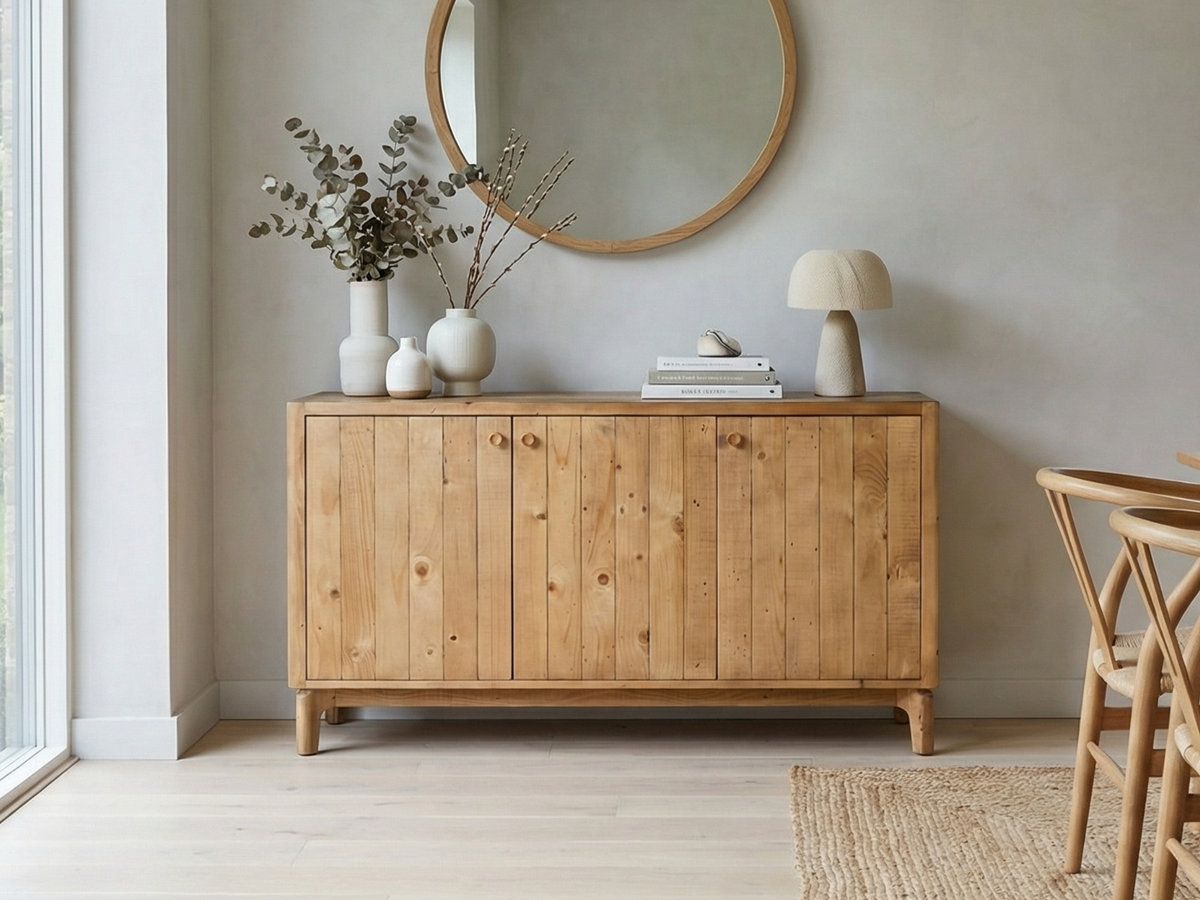
A sideboard is one of the hardest-working surfaces in the house. Keys land on it, serving dishes rest on it, a lamp or a plant sits on it, and at party time it turns into a drinks table. That's a lot of traffic for one piece of furniture, which is why wooden sideboard care comes down to a few easy habits rather than occasional big jobs.
Here's how to check your finish, clean a sideboard day to day, look after slatted fronts, louvred doors, handles and the inside, and protect the top from everyday wear. We've also included a few tips for getting your sideboard ready for a party and looking after it afterwards. It all applies to wooden sideboards, with specific examples from the reclaimed wood sideboards in our range.
Check the Finish Before You Clean a Wooden Sideboard
Before a cloth touches the wood, it helps to know what you're cleaning. Our sideboards come in a range of finishes, from weathered tones and natural wood colours to a pale natural finish and a soft Buttermilk. Finishes across the range are applied by hand, so it's worth taking a little care before trying a new cleaning product or treatment.
Our product pages recommend wiping clean with a soft cloth, clearing up spills promptly and avoiding abrasive or chemical-based cleaning products. If you're unsure how a finish will react to a new cleaner, polish or even a barely damp cloth, test it somewhere out of sight first. The back edge, underside of the top or inside of a door can work. Let it dry, then check for any change in colour or sheen before going further.
Reclaimed wood doesn't need a complicated routine, but it does ask for a slightly different attitude to marks. Grain variations, knots and natural markings are part of what makes each piece unique. The aim is to keep the sideboard clean and well looked after, not to remove every natural variation in the wood.
The inside may also have a different finish from the visible surfaces. Drawer interiors and cupboard backs can be less finished, so dry dusting is the safest starting point. If a little more cleaning is needed, use a barely damp cloth only where the finish allows, and never soak the wood.
How Do You Clean a Wooden Sideboard Day to Day?
Most everyday care comes down to dusting. A soft, dry microfibre cloth once a week helps keep grit off the surface. This matters because grit can scratch wood when objects are moved across it.
For a simple routine:
- Clear the top so you can clean the surface properly.
- Dust with a dry microfibre cloth, moving along the grain.
- If the surface needs more than dusting, use a soft cloth that has been wrung out thoroughly in water. It should be barely damp, not wet.
- Test the cloth on an inconspicuous area first if you haven't used this method on the finish before.
- Dry the surface straight away with a clean, soft cloth. Never leave water sitting on the wood.
Avoid scouring pads, steel wool, bleach, ammonia-based sprays and other harsh cleaning products, which can damage the finish. Silicone-based spray polishes are best avoided too, as residue can build up on the surface over time.
One thing to know about sticky patches: they aren't always dirt. A tacky spot can be old polish or product residue, and a stronger cleaner won't necessarily fix it. Avoid layering another product on top. If the patch remains sticky after gentle cleaning, leave it alone and get in touch for advice.
How Do You Clean the Fronts, Handles and Inside of a Sideboard?
Not every sideboard front cleans in quite the same way. Dust can settle in decorative details, so a little attention to the design makes the job easier. Here are a few examples from our own range.
Slatted fronts. The Dakota Sideboard's slatted detailing looks great, but the grooves between the slats can hold dust. Run a dry microfibre cloth along the length of the slats, or use a soft brush for the corners. Avoid pushing a damp cloth into the gaps. The doors push open, so there are no handles to clean, but fingerprints can gather on the door fronts and are worth a quick wipe. Its black metal legs can be cleaned with a dry or suitable barely damp cloth, dried straight away.

Louvred doors and drawers. The Mayflower Natural Large Sideboard pairs louvred cupboard doors with a central bank of four drawers. Dust can settle on each louvre, so work along them with a soft brush or the edge of a dry cloth, then wipe the flat drawer fronts. On a pale natural finish, splashes and fingerprints may be easier to notice, so deal with them promptly.

Mayflower Natural Large Sideboard
Inlay patterns and metal bases. The Tulsa 2 Door Sideboard has a cross-pattern inlay across the front and a black metal base. Dust can settle along the pattern lines, so use a soft, dry brush first. If the surface needs further cleaning, follow the finish's care instructions and use a suitable soft cloth. At 100cm wide, it suits a hallway as well as a dining room. A small tray on the top is useful for keeping keys and post in one place.

Smooth fronts and concealed hinges. The Exeter and Scandi 3 Door sideboards have simpler fronts, which makes them quicker to dust. Pay attention to the door edges and the areas where hands tend to land. Both have concealed storage behind three doors, so if a door starts to catch or hang slightly crooked, check that nothing is blocking it. Don't force it if the problem continues.
On any sideboard with handles, wipe them with a dry or suitable barely damp cloth and buff them dry. Keep cleaning products off the surrounding wood, where residue can collect. A handle that has developed a little character over time doesn't need to be polished until it shines.
Inside, a tidy every few months is usually enough. Take everything out, remove dust with a dry cloth, and use a barely damp cloth only if the surface finish allows. Let the inside dry fully before restocking. Avoid putting damp items such as just-washed tablecloths or serving dishes straight into a closed cupboard.
How Can You Protect a Sideboard Top From Heat, Water and Scratches?
Many marks on a sideboard come from what's been put on it, rather than anything missed while cleaning. A handful of simple habits can help prevent them.
Hot dishes should always go on a trivet or heat-proof mat, never straight from the oven onto the wood. Use coasters for drinks, and put ice buckets and chilled bottles on a mat because condensation can leave water marks. Plant pots need a saucer to catch excess water, while keys and loose change are better kept in a tray.
Lamps, bowls and ceramics can also scratch a surface if they are dragged or moved around. Lift them rather than sliding them, and check the bases of decorative objects regularly. Some rubber or plastic materials can react with furniture finishes, so avoid leaving them in direct contact with the wood for long periods.
Don't overload the shelves inside. Tableware can be heavy, so spread it between cupboards and drawers rather than stacking everything on one shelf.
When something spills, blot it rather than rubbing, then follow the care instructions for the finish. Avoid using a hairdryer or applying direct heat to speed up drying.
The same habits work for other pieces around your home. A console table in a hallway collects wet umbrellas and keys, while a lamp table may hold glasses of water and houseplants. A tray, coaster, or suitable protective mat can help keep these surfaces in good condition too.
If a water ring or heat mark has already appeared, avoid experimenting with household remedies or rubbing treatments into the finish. What works on one type of wood or coating may damage another. Check the furniture's care instructions or ask a professional restorer for advice if the mark does not come away with gentle cleaning.
Sideboard Maintenance in UK Homes: Heating, Sunlight and Damp
Wood responds to its surroundings, and a UK home can put it through quite a range of conditions across the year. In winter, central heating can make rooms very dry. Try not to position a sideboard directly against a radiator, and leave a little space around it where possible.
In brighter months, strong sunlight through a window can cause the colour of a surface to change unevenly over time. Curtains or blinds can help soften direct sunlight, and moving lamps and ornaments occasionally can prevent one area from being covered for months while the rest of the surface is exposed.
In colder weather, condensation can sometimes collect behind furniture placed against an outside wall. Leaving a small gap behind the sideboard allows air to circulate and makes it easier to check the wall and the back of the furniture.
You may notice a door or drawer feeling slightly tighter as the seasons change. Wood can respond to changes in temperature and humidity, but persistent sticking, a door that no longer sits properly, or a drawer that will not open should be checked rather than ignored.
If you need to move the sideboard, empty it first and lift it rather than dragging it. Don't use handles or decorative detailing as lifting points. Suitable protective pads under the feet can also help protect the floor, but check that they are appropriate for the furniture and do not mark its finish.
How Do You Prepare a Sideboard for a Party or Festive Gathering?
Christmas, a birthday or a big Sunday lunch: whatever the occasion, the sideboard often becomes the buffet, the drinks station or the place where candles go. A few minutes of preparation beforehand, and a little care the next morning, can help keep it looking its best. If you're styling the living room for the occasion too, our guide on how to style a coffee table covers that side of the room.
Before Guests Arrive
Start with a clean, dry top, then set up some protection before anything goes down:
- Use a runner, heat-proof mats, or a large tray where food and drinks will sit.
- Keep candles and tealights in proper holders, ideally on a tray, to catch any drips.
- Rest hot dishes on trivets and put ice buckets on a mat.
- Group drinks together on a tray with a cloth nearby, so spills can be dealt with quickly.
- Check that anything placed on the surface has a clean, suitable base that will not scratch or mark the finish.
The Morning After
Clear the top before bed if you can, or first thing the next morning. Then:
- Lift every mat and runner and check underneath for trapped moisture, particularly around wet glasses and ice buckets.
- Deal with sticky patches from sugary drinks promptly. Follow the care instructions for the finish, using a soft cloth and drying the area straight away.
- For candle wax, allow it to harden before carefully lifting it with the edge of a plastic card. Never use a knife or another sharp object, which could scratch the wood.
- Give handles and door edges a gentle clean to remove fingerprints collected during the party.
- Check inside the cupboard for damp items and allow the space to dry before closing the doors.
A Simple Sideboard Maintenance Schedule
| When | What to do |
|---|---|
| Weekly | Dust with a soft, dry microfibre cloth. |
| After spills or parties | Deal with spills promptly, lift mats and runners, check underneath and make sure the surface is dry. |
| Every few months | Empty and dust the inside, and check doors, handles and fixings. |
| Each season | Check the sideboard's position in relation to radiators, direct sunlight and any signs of condensation behind it. |
There is no need to use polish simply because a certain amount of time has passed. If you're considering a wax or furniture treatment, first check that it is suitable for the particular wood and finish. Always follow the care instructions supplied by the seller or manufacturer, and test any approved treatment on an inconspicuous area before applying it more widely.
When Should You Use Furniture Wax or Call for Help?
Natural beeswax furniture polish is sometimes used as part of the care routine for wooden furniture, but it is not suitable for every finish. Before using it on a sideboard, check the seller's or manufacturer's instructions for your particular piece. This is especially important with paler finishes, painted finishes or furniture with a protective coating. If wax is recommended, use it sparingly and follow the product instructions. Applying too much can leave a sticky surface that attracts dust.
Marks deserve some perspective. Natural markings and grain variations are part of reclaimed wood, and small signs of daily life can become part of a piece's character over time. If a deeper scratch or stain bothers you, ask a professional restorer whether it can be treated. Sanding or refinishing may be possible on some solid timber furniture, but it depends on the construction and finish, so it is not something to try without checking first.

Stop and get advice if you notice a finish that is flaking, a joint that has come loose or anything that looks like insect activity. A photo and a note of what you have already used will help when asking for advice. If a hinge or fixing has come loose on a recent order, the 2 Year Guarantee covers faults such as loose fixings and loss of structural integrity on orders placed on or after 15 January 2024. The Help Centre is the quickest way to get in touch.
A sideboard tends to outlast the room it was bought for. It moves from the hallway to the dining room, picks up a lamp one year and a drinks tray the next. With nearly 30 years of designing and selling furniture behind us, we want people to keep using and looking after their furniture for years to come. Our full reclaimed wood care guide covers the general routine for other pieces around your home.
Frequently Asked Questions on Wooden Sideboard Care
What is the best way to clean a wooden sideboard?
Start by dusting with a soft, dry microfibre cloth. If the surface needs more cleaning, use a soft cloth that has been wrung out thoroughly, provided this is suitable for the finish. Dry the surface straight away and avoid soaking the wood. Do not use scouring pads or harsh, chemical-based cleaning products.
How often should I clean my sideboard?
A weekly dust is a good starting point for most homes. Deal with spills as soon as they happen, and give the inside a tidy every few months. The exact routine will depend on how often you use the sideboard and the care instructions for its finish.
Should I use furniture polish on a reclaimed wood sideboard?
Avoid assuming that every polish is suitable for reclaimed wood. Silicone-based spray polishes can leave a build-up, while waxes and other treatments may not suit every finish. Check the seller's care instructions before applying any polish or treatment.
Can I put hot dishes straight onto my sideboard?
No. Always use a trivet or heat-proof mat under hot dishes. Coasters and mats are also useful for drinks, chilled bottles and anything that may leave condensation on the surface.
How do I get a water ring or heat mark off a wooden sideboard?
Start by checking the care instructions for your particular finish. Avoid rubbing the area with wax, household cleaners or other treatments unless the seller confirms they are suitable. If gentle cleaning does not help, ask a professional wood restorer for advice.
How do I protect my sideboard when hosting a party?
Clean and dry the top first, then use a runner, heat-proof mats or a tray under food, drinks and candles. Deal with spills promptly. The next morning, lift every mat and check underneath for trapped moisture.
How do I clean a slatted or louvred sideboard?
Use a dry microfibre cloth or a soft brush along the slats or louvres, working gently into the corners. Avoid pushing a wet cloth into the gaps. Wipe the flat parts of the front with a suitable soft cloth and dry them straight away.
Most sideboard care comes down to a soft cloth, a trivet under anything hot and a few minutes of attention after a busy day or a party. Follow the care instructions supplied with your furniture, particularly before using any polish, wax or other treatment.
Explore the full Reclaim Nation collection to find pieces for every room, each one made from reclaimed timber and designed to be used and looked after for years.

Leave a comment
This site is protected by hCaptcha and the hCaptcha Privacy Policy and Terms of Service apply.