







A round reclaimed wood furniture dining table doesn't need a completely different care routine from any other solid wood piece. But its shape changes a few things worth knowing before you settle into a routine - there's no corner to break up the surface, the whole tabletop is part of the dining experience at once, and an extendable round dining table has a mechanism to think about too.
Here's what to know about round dining table care specifically, alongside our full care guide for the everyday routine that applies to any reclaimed wood piece.

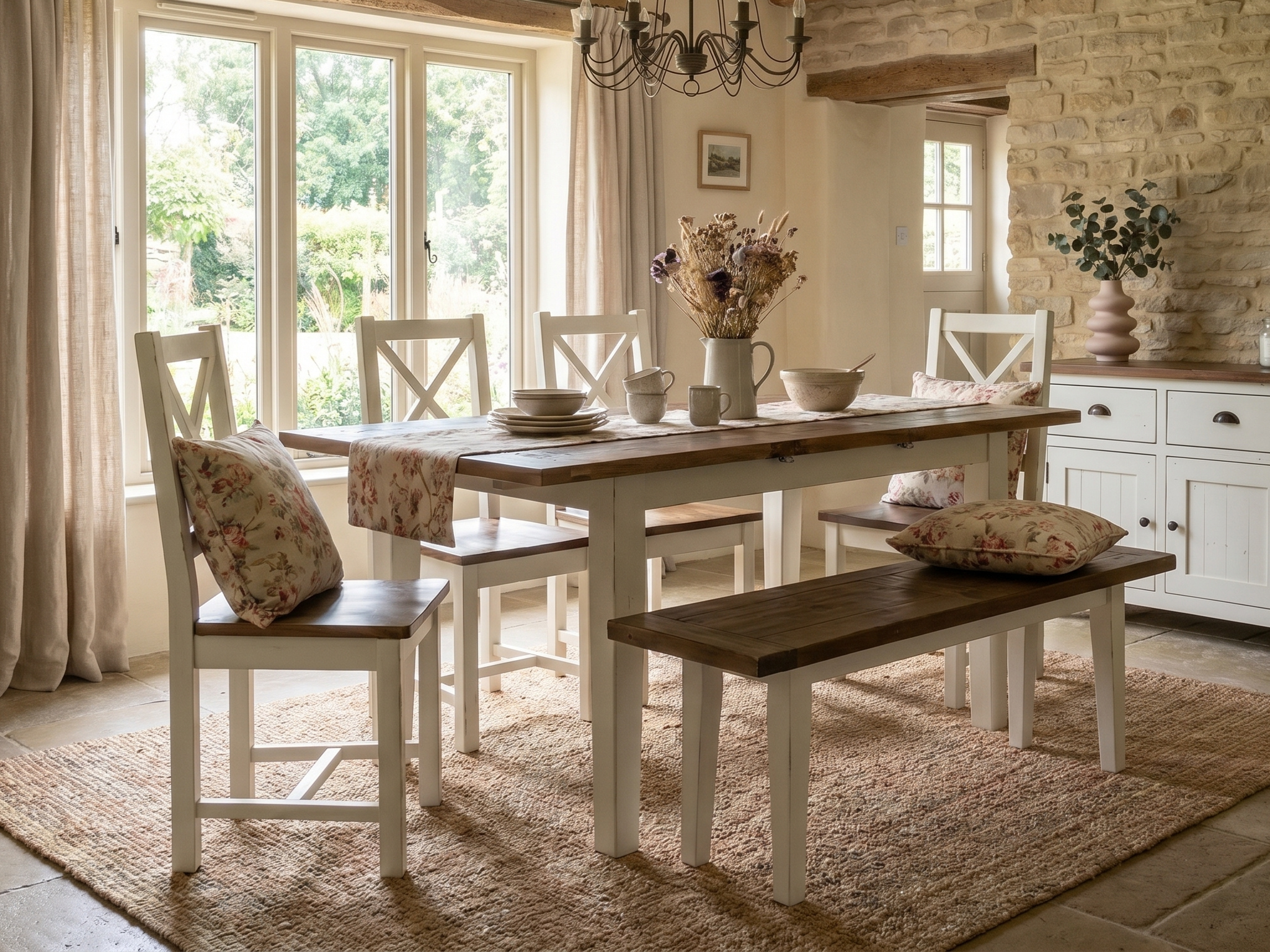
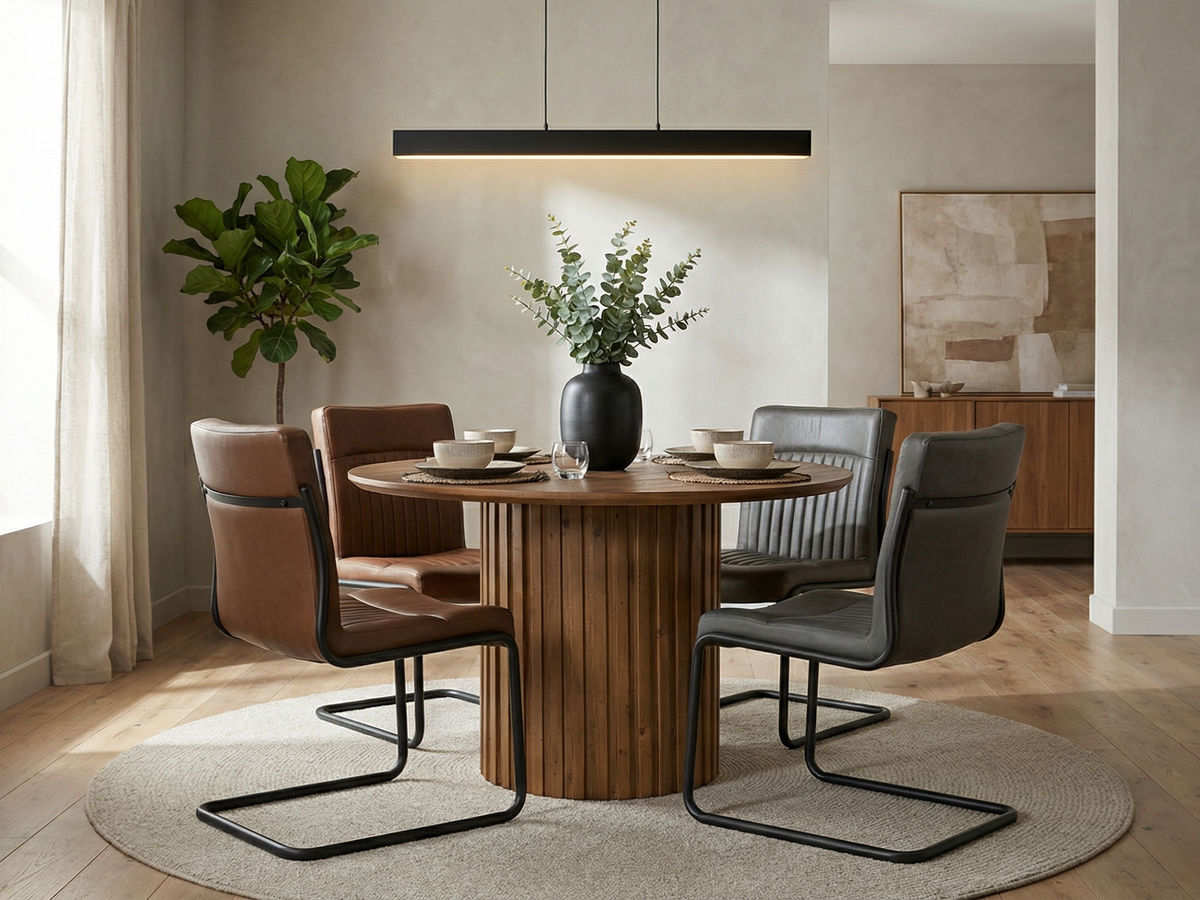
Brooklyn 120cm Round Dining Table
How a Round Table's Shape Affects Everyday Care
With a rectangular table, there's often an end that sees less use than the rest - tucked against a wall, or simply the seat that's chosen last. A round table doesn't really have that quieter corner. Every seat sits at roughly the same distance from the centre, so the whole tabletop tends to stay part of the dining experience rather than one section doing more work than another.
That's really the thread running through everything below. There's nowhere on a round table for an uneven mark, a patchy wax job or a faded section to hide, so a bit of consistency in how you care for it goes further than it might on a table with a quieter end.
Clean Your Table Regularly and Gently
A soft, dry or slightly damp cloth handles most everyday wiping. Microfibre is a good choice, since it lifts dust and light marks without scratching the finish, and it's soft enough to use across the full tabletop without missing patches. If the surface needs more than a quick pass, a small amount of mild soap diluted in water works well, followed by a clean, damp cloth and then a dry one - don't let moisture sit and air-dry on its own.
Deal with spills as soon as you can. Blot rather than rub, and work from the outside of the spill inward. On a round table this is genuinely easier than on a rectangular one, since there's no corner for liquid to pool into unnoticed.
Avoid anything abrasive - scouring pads, steel wool, bleach or harsh chemical cleaners can all strip or dull the finish. Gentle and consistent care beats anything stronger, and it's worth building this into a weekly habit rather than only wiping the table down when it looks obviously in need of it.
Protect the Tabletop from Heat and Moisture
Because the whole tabletop is exposed and central to how everyone sits, marks here tend to be more noticeable than on a piece with an unused end section. Use trivets or heat-resistant mats under hot dishes, and coasters under drinks to guard against condensation and water rings - a mark in the centre of a round table sits right where every guest can see it, rather than tucked near an edge.
Excess moisture is worth avoiding altogether. A lightly damp cloth is fine for cleaning, but don't soak or steam-clean the surface - prolonged exposure to water can cause solid wood to swell, crack or warp over time, and a round tabletop shows that kind of change across its whole surface rather than in one isolated patch.
It's also worth thinking about placement. Keep the table a reasonable distance from radiators, fireplaces or underfloor heating vents, since these can dry the wood out unevenly. Sunlight matters too - a round table often sits under a pendant light or near a window as the natural centrepiece of a room, and even exposure across a circular surface can still fade unevenly if one side catches more sun than the other through the day. Rotating a centrepiece or runner occasionally helps keep that even, and curtains or blinds can soften direct sun during the brightest parts of the day.
Take Care Around the Edges
There's no sharp corner on a round table to catch on clothing or bump into, which is part of why the shape suits smaller or busier rooms so well. But the curved rim sees near-constant contact from chairs being pulled in and out, elbows resting on the edge, and hands gripping it while people sit down or stand up.
Check the rim periodically for any roughness or dryness compared with the rest of the tabletop. If it starts to feel drier than the centre, a light application of natural wax along the edge can even things out - work it in with a soft cloth, let it sit briefly, then buff off. Lift items rather than dragging them across the rim, and avoid resting anything with a rough or gritty base directly on the edge, where a scratch is easy to pick up without noticing at the time.
Be Mindful of the Finish
Different pieces can carry different finishes, so it's worth checking what yours needs before reaching for a wax or oil - the wrong product can leave a round tabletop looking uneven, and because the whole surface is on show at once, unevenness is harder to hide than it would be on a table with a quieter end. As a general rule for our natural and whitewash finishes, a natural beeswax polish every few months, applied in circular motions and buffed off with a clean cloth, is usually enough. Avoid silicone-based or spray polishes, which build up over time and seal in moisture rather than letting the wood breathe.
At Reclaim Nation, finishes are applied by hand in our Bristol workshop, and our tables are built primarily from pine and elm sourced from old floorboards, pallets, railway sleepers and manufacturing offcuts. Pine actually hardens through the reclaiming process, which is part of why a well-cared-for piece can typically be sanded back and refinished if it ever shows real wear, rather than replaced.
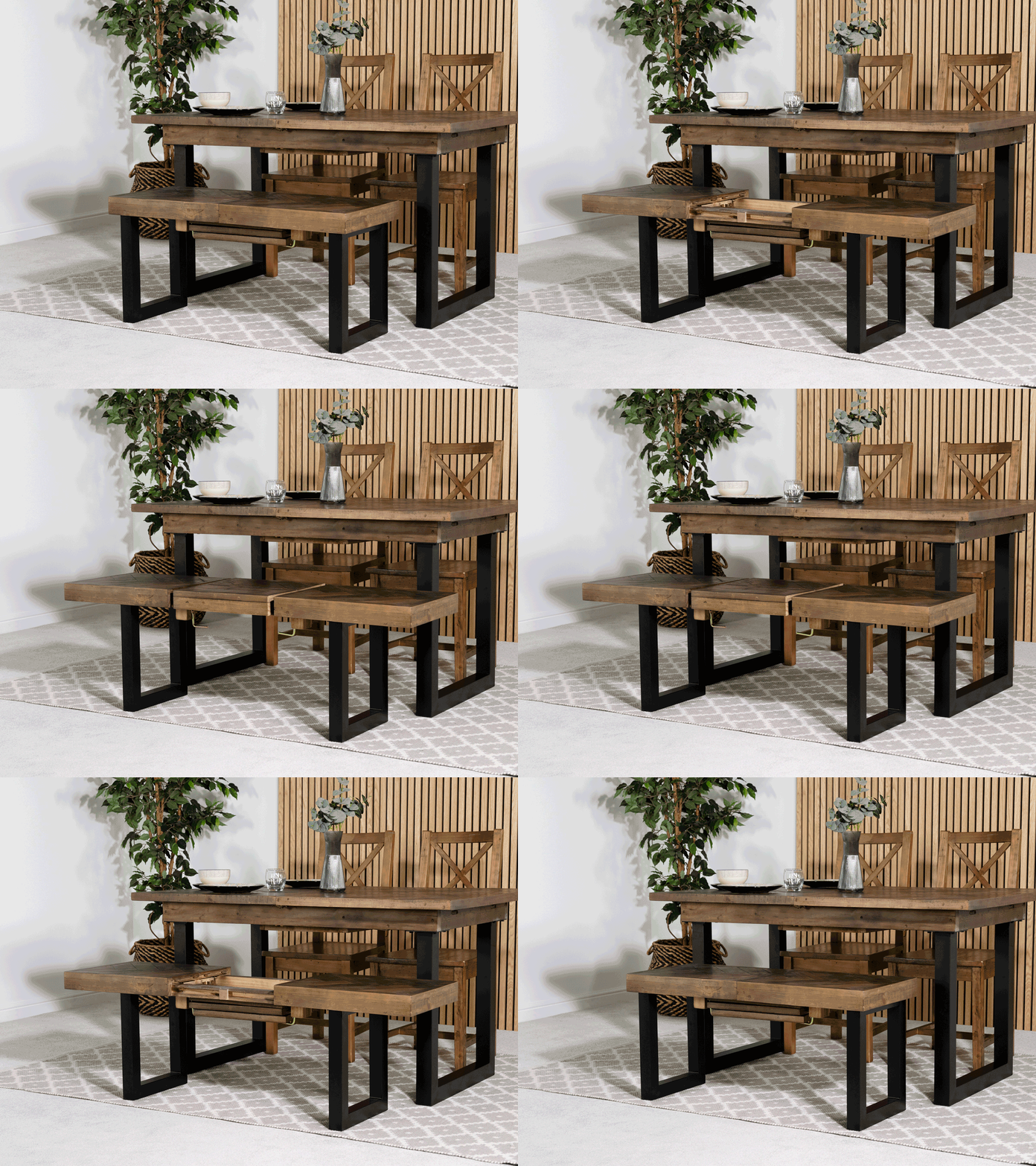
If your table is an extendable design - like our Brooklyn Light Round Extendable Dining Table below - keep the mechanism dry and free of debris, and store the leaf flat and out of direct sunlight when it's not in use, so it doesn't develop a different tone from the rest of the tabletop.

Brooklyn Light Round Extendable Dining Table
Everyday Habits That Help Protect Your Table
Good round wood table maintenance doesn't need to become another household chore. A few small habits make the difference:
- Wipe up spills promptly rather than leaving them to dry
- Use coasters under drinks, particularly cold glasses that cause condensation
- Use trivets or heat-resistant mats beneath hot dishes
- Lift items rather than dragging them across the tabletop or edge
- Keep the surface clear of standing water and dry it after cleaning
- Rotate any centrepiece occasionally so light exposure stays even
Protecting the Table When It's Not Meal Time
A round table often doubles as more than a dining spot - somewhere to sort post, do homework, or set down keys and bags on the way through the room. That everyday traffic is where a lot of avoidable marks actually happen, simply because coasters and placemats aren't top of mind outside of mealtimes.
It's worth keeping a small stack of coasters or a placemat within easy reach of wherever the table gets used most, rather than only bringing them out for meals. If the table's central to the room, a simple table runner or a cloth mat in the middle - moved occasionally so it doesn't sit in exactly the same spot for months - does double duty as decoration and light protection from whatever gets set down there through the day.
Frequently Asked Questions on Round Dining Table Care
Does a round dining table need different care from a rectangular one?
Not fundamentally. The same basics apply - regular wiping, prompt spill cleanup and an occasional wax treatment. The main differences are that the whole tabletop stays part of everyday use rather than one section seeing less wear, and the curved rim takes more direct daily contact than a straight edge would.
Can I put hot dishes directly on a round wooden dining table?
Always use coasters, placemats or trivets. A heat mark in the centre of a round table sits in the most visible spot on the whole piece, so it's worth being consistent rather than only using protection for special occasions.
How do I remove a water ring from a round dining table?
For our natural and whitewash finishes, gently rubbing the mark with a soft cloth and a small amount of natural furniture wax is usually the first thing to try. If the mark doesn't lift, or you're not sure which finish your table has, it's best to consult a professional wood restorer rather than risk making it worse with an unsuitable DIY treatment.
How often should I wax or oil a round wooden dining table?
For our natural and whitewash finishes, every few months is a useful general guide, though a table that sees very heavy daily use may benefit from slightly more frequent attention. Apply in circular motions, let it absorb, then buff off with a clean cloth.
How do I care for the edge of a round dining table?
Check it periodically against the rest of the tabletop. If the rim feels drier than the centre, a light application of natural wax evens things out. Lift items rather than dragging them across it, and avoid resting rough-based objects directly on the edge.
Will a round dining table fade unevenly in sunlight?
It can, if one side of the table consistently catches more sun than the other through the day. Rotating a centrepiece or runner occasionally, and using curtains or blinds to soften direct sunlight at the brightest times of day, helps the colour develop evenly across the whole surface.
Do extendable round dining tables need any extra care?
Keep the extension mechanism clean and dry, and store the leaf flat and out of direct sunlight when it isn't in use, so it ages at the same rate as the rest of the tabletop.
Browse the full Round Dining Tables collection, or explore our fixed top and extendable ranges if you're still deciding which shape and style suits your dining room. And if you're curious what's behind the shape's renewed popularity in the first place, our piece on why round dining tables are making a comeback covers that in more depth.

Leave a comment
This site is protected by hCaptcha and the hCaptcha Privacy Policy and Terms of Service apply.