




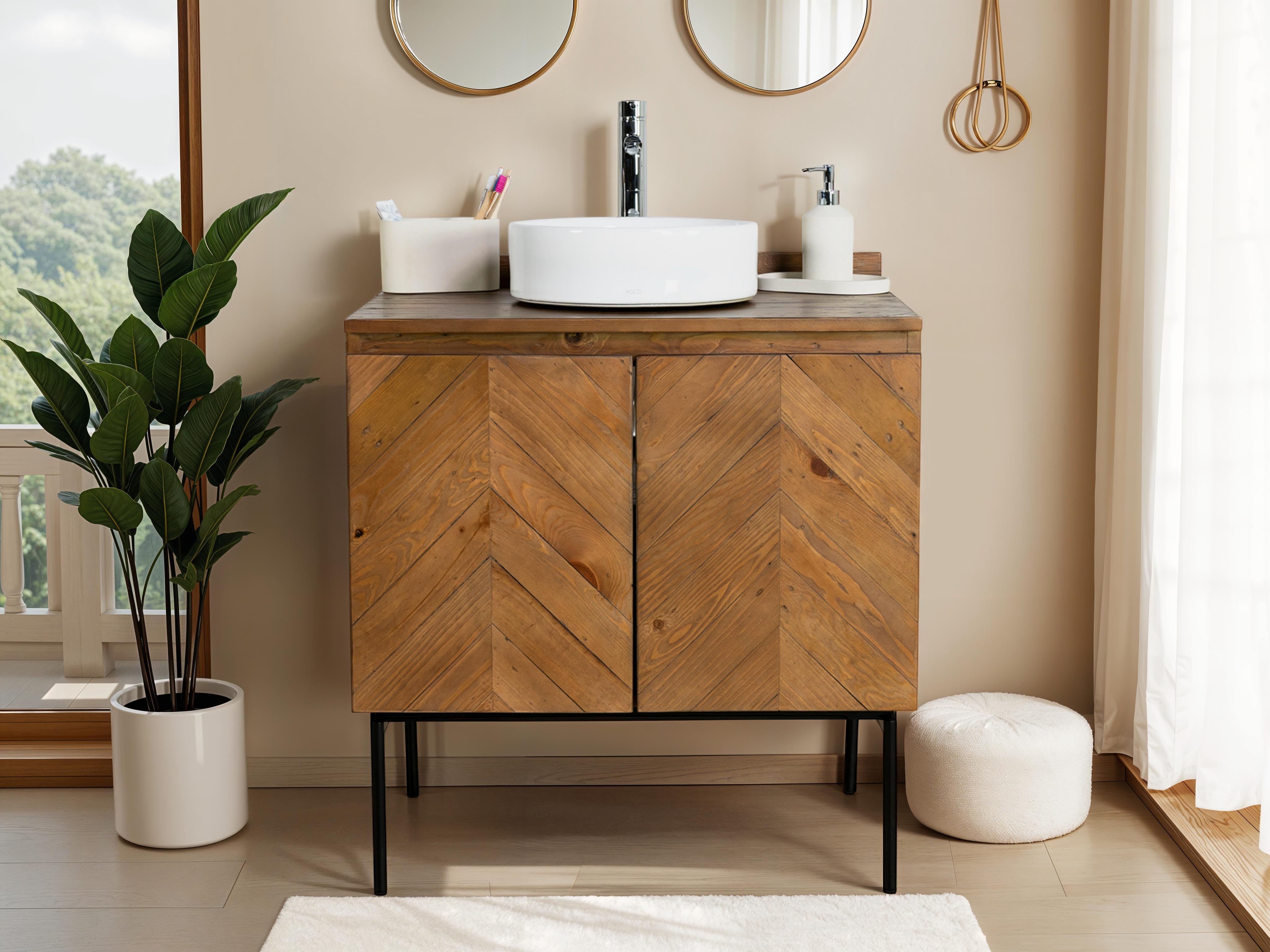
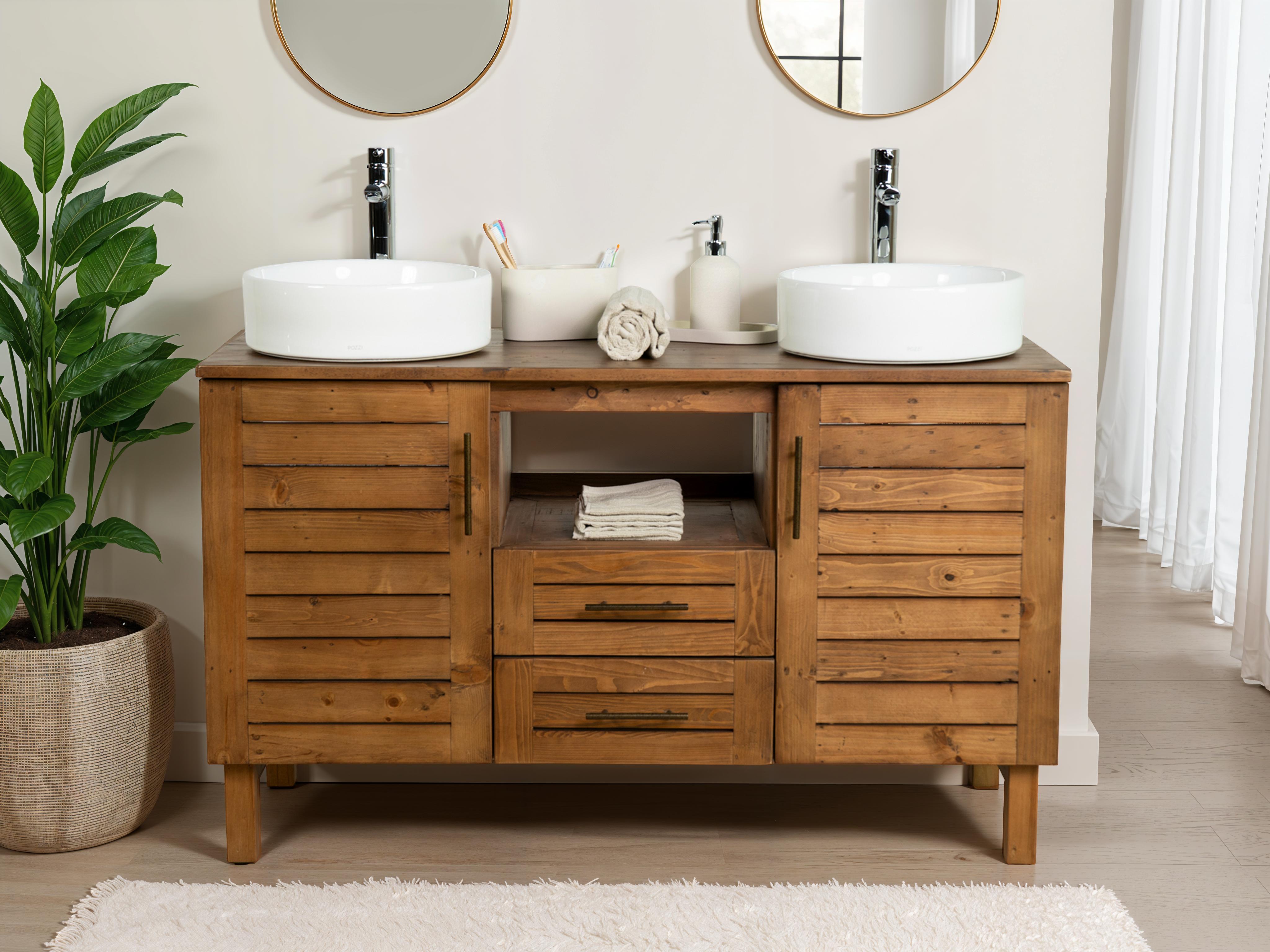
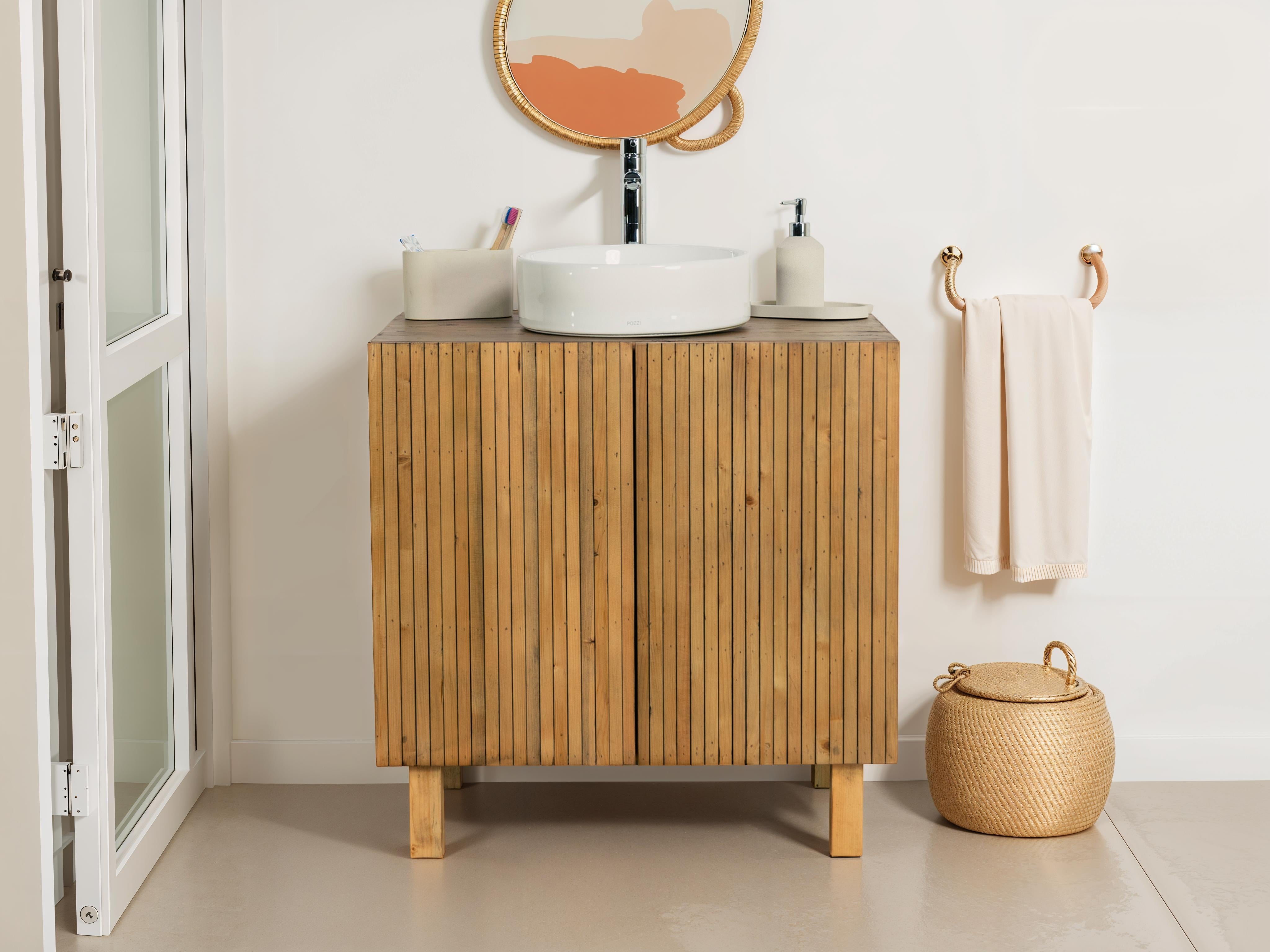
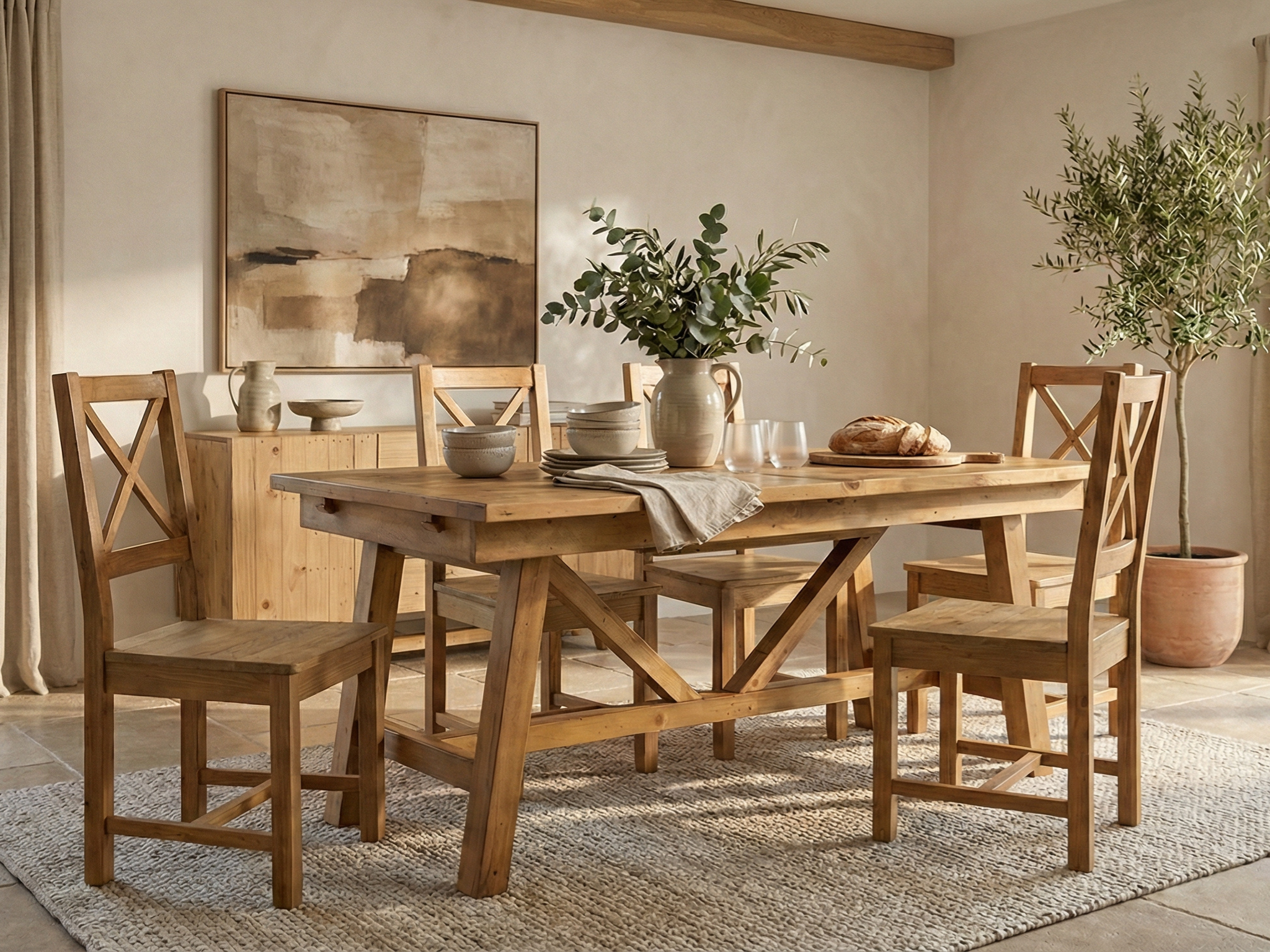

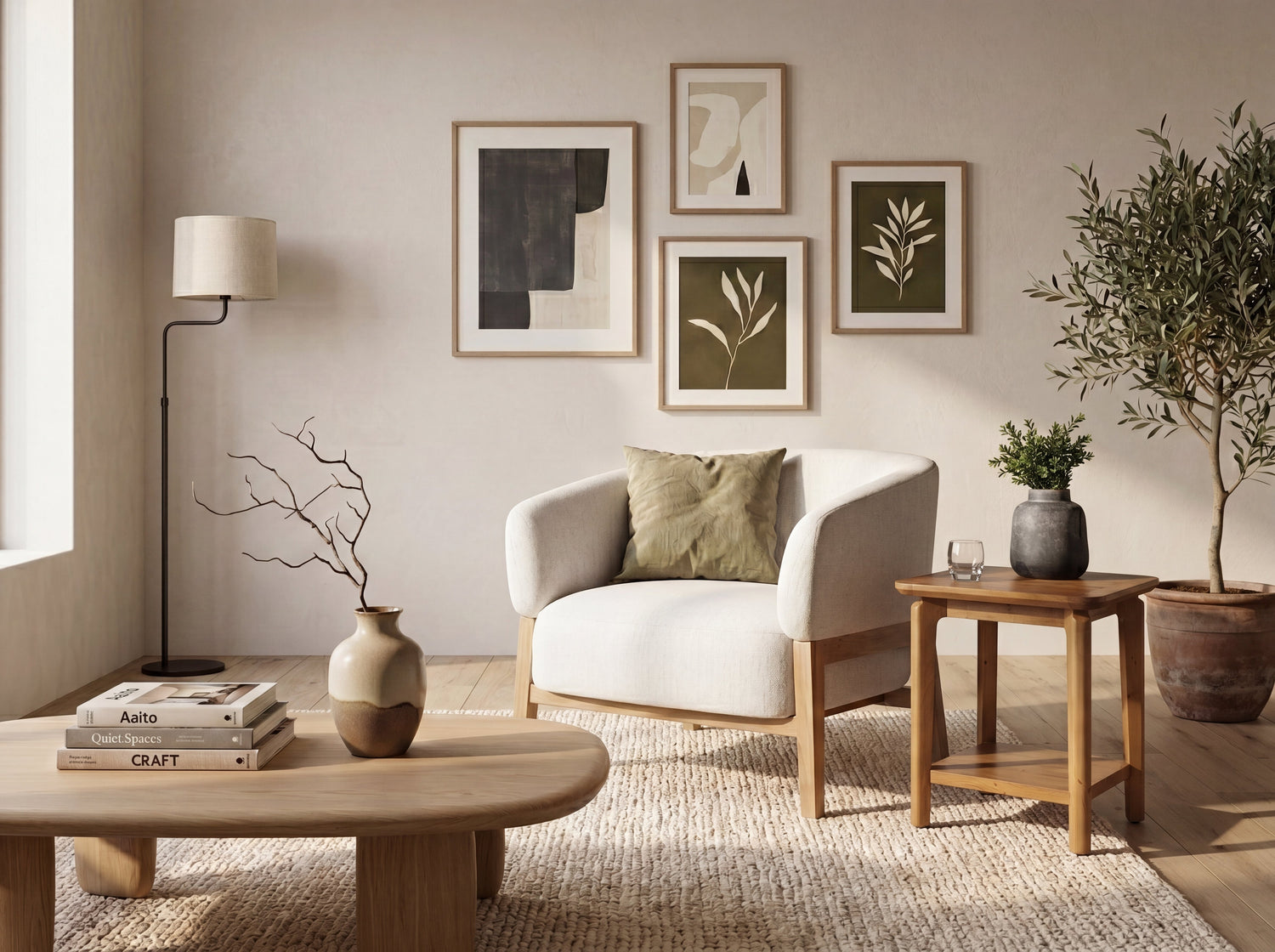
Japandi style furniture isn't built around filling a room with beautiful pieces. It's built around choosing less, but choosing well. That makes every piece matter - and it's also why reclaimed wood furniture fits the style far more naturally than many people expect. The pairing sits between two design traditions, but what actually shapes a Japandi room comes down to three ideas worth understanding before you buy anything.
Japandi Style Furniture and the Beauty of Imperfection
The first is wabi-sabi - a Japanese design principle that's probably the most quoted of the three, and the most misunderstood. It doesn't mean "distressed" or "shabby." It means finding real beauty in age and imperfection rather than treating them as something to disguise. The idea has roots in the Japanese tea ceremony, where an unevenly glazed bowl or an asymmetrical form was valued precisely because it wasn't machine-perfect.

Freshly milled timber is built to look consistent - that's the whole point of it. Reclaimed timber does the opposite. Every plank carries its own grain, its own colour shift, its own small marks from wherever it's been before. That's wabi-sabi in material form, not something reclaimed wood has to fake to fit the brief.
Each piece at Reclaim Nation is quality-checked at every stage before it leaves the workshop, so what reaches the room is genuine character rather than damage. Pine, one of our two primary timbers alongside elm, actually gains density through the reclaiming process rather than staying soft - one of the reasons an older reclaimed piece often feels sturdier underfoot than something bought new.
Why Empty Space Matters in Japandi Living
The second idea is ma - the deliberate use of space. In a lot of Western interiors, empty space reads as unfinished, somewhere that still needs a lamp, a rug or a sidetable. In Japanese design, that same space is treated as part of the room, not a gap in it. It's there on purpose, and it's what gives the furniture around it room actually to be seen.
This is really what should drive the colour choices in Japandi living, rather than picking a palette first and fitting furniture into it. Let whichever reclaimed piece anchors the room set the tone, and build the rest of the palette to sit quietly behind it - oatmeal, clay, soft stone, a muted charcoal for contrast if the room needs one. The wood is doing enough visual work on its own. Everything else in the room, walls included, is there to give it space to be seen properly.

Choosing Japandi Furniture Style Pieces That Earn Their Place
The third idea is kanso - simplicity through active elimination rather than simply owning less by default. It's the difference between a room that feels sparse because nothing's been added, and one that feels sparse because things were deliberately taken away.
Because a Japandi room relies on so few pieces, each one has to justify its place. Scale matters more than usual - a piece that would disappear into a fuller room becomes the entire focal point here, so it's worth choosing something with real presence. Height matters too. Lower, grounded furniture suits the style better than anything tall, echoing the floor-level living that low seating and platform beds have long been part of in Japanese interiors.
Ornamentation works against the room rather than for it. A straightforward frame with a clean line lets the timber's own grain do the visual work, rather than competing with carved detail or elaborate hardware for attention. In practice, that usually means one anchor piece per room - a dining table, a bed frame, a storage piece - chosen for real presence, rather than a full matching set trying to do the same job.
Japandi Living Room Ideas
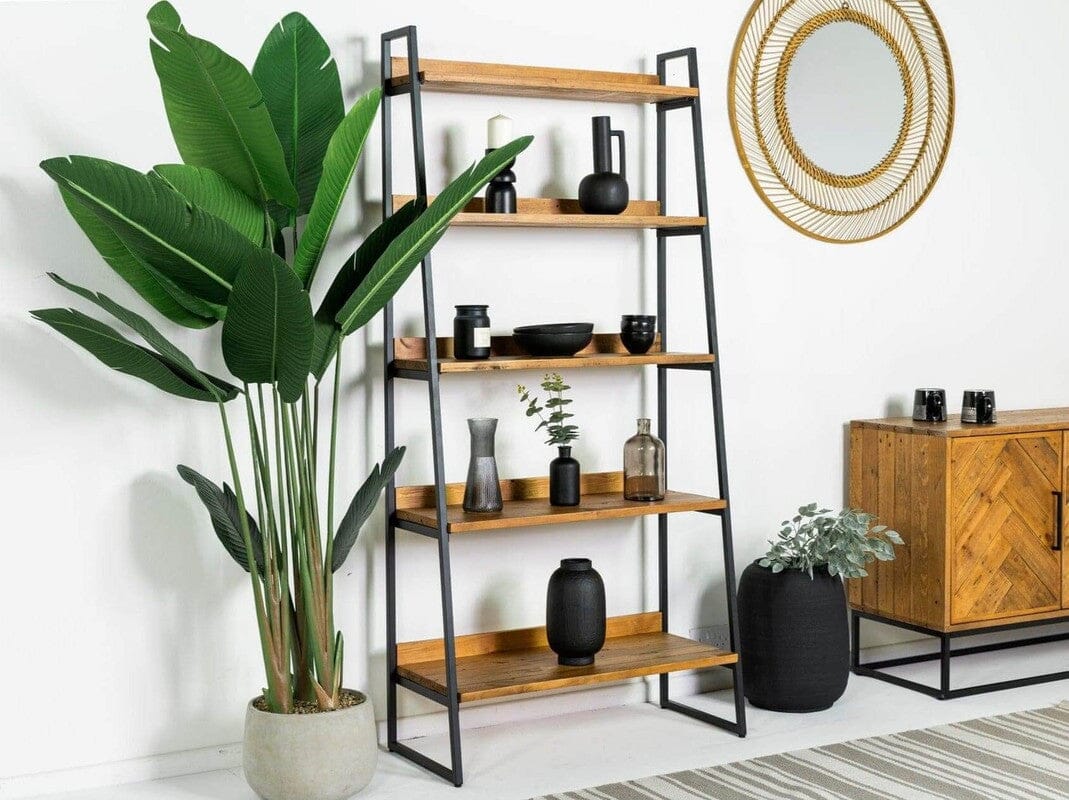
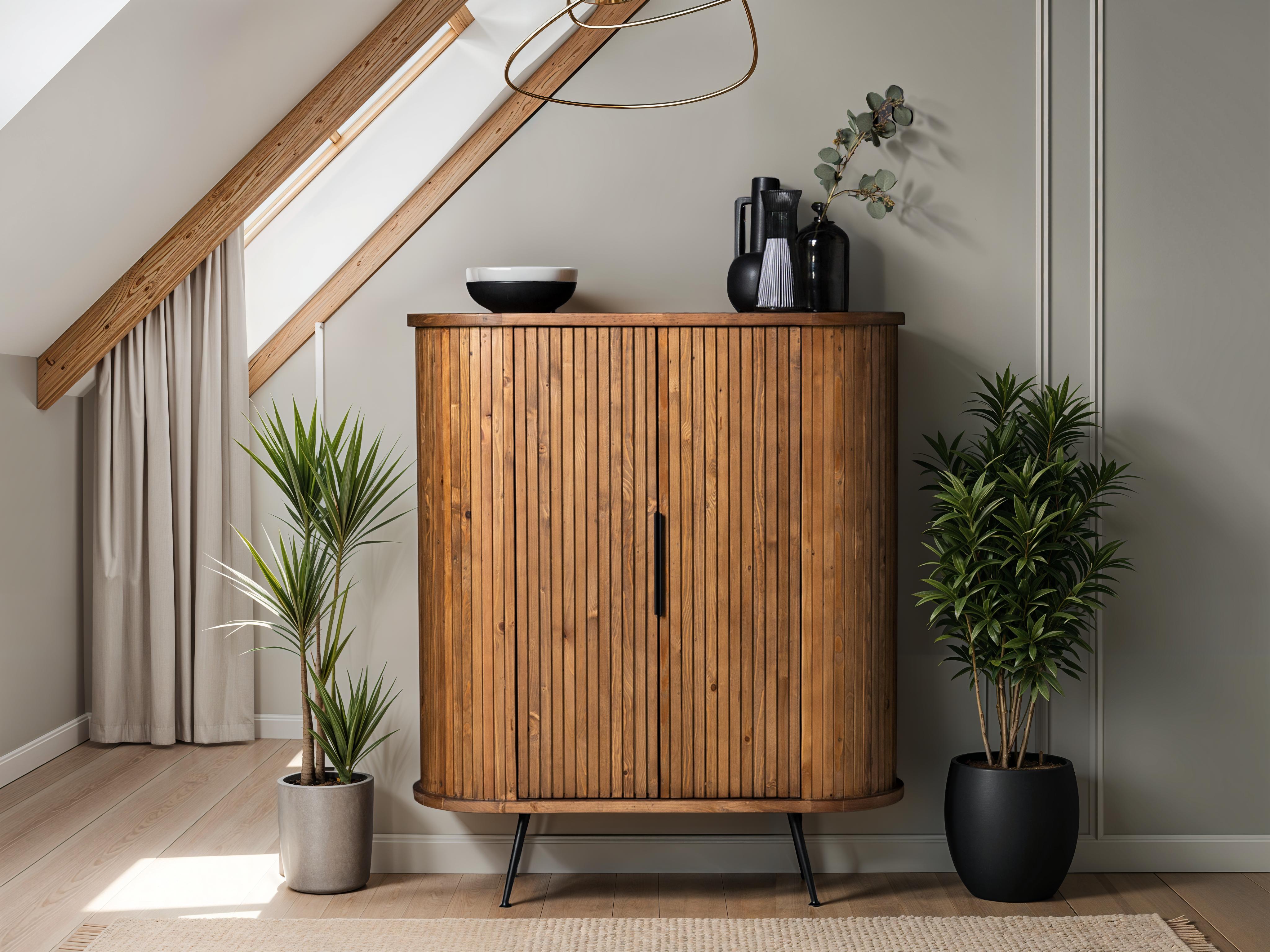
A single console table against a plain wall can carry a whole entryway on its own, without anything stacked around it. In the seating area, one rug in a warm, undyed tone grounds the space without introducing a second competing pattern.
Japandi Bedroom Ideas
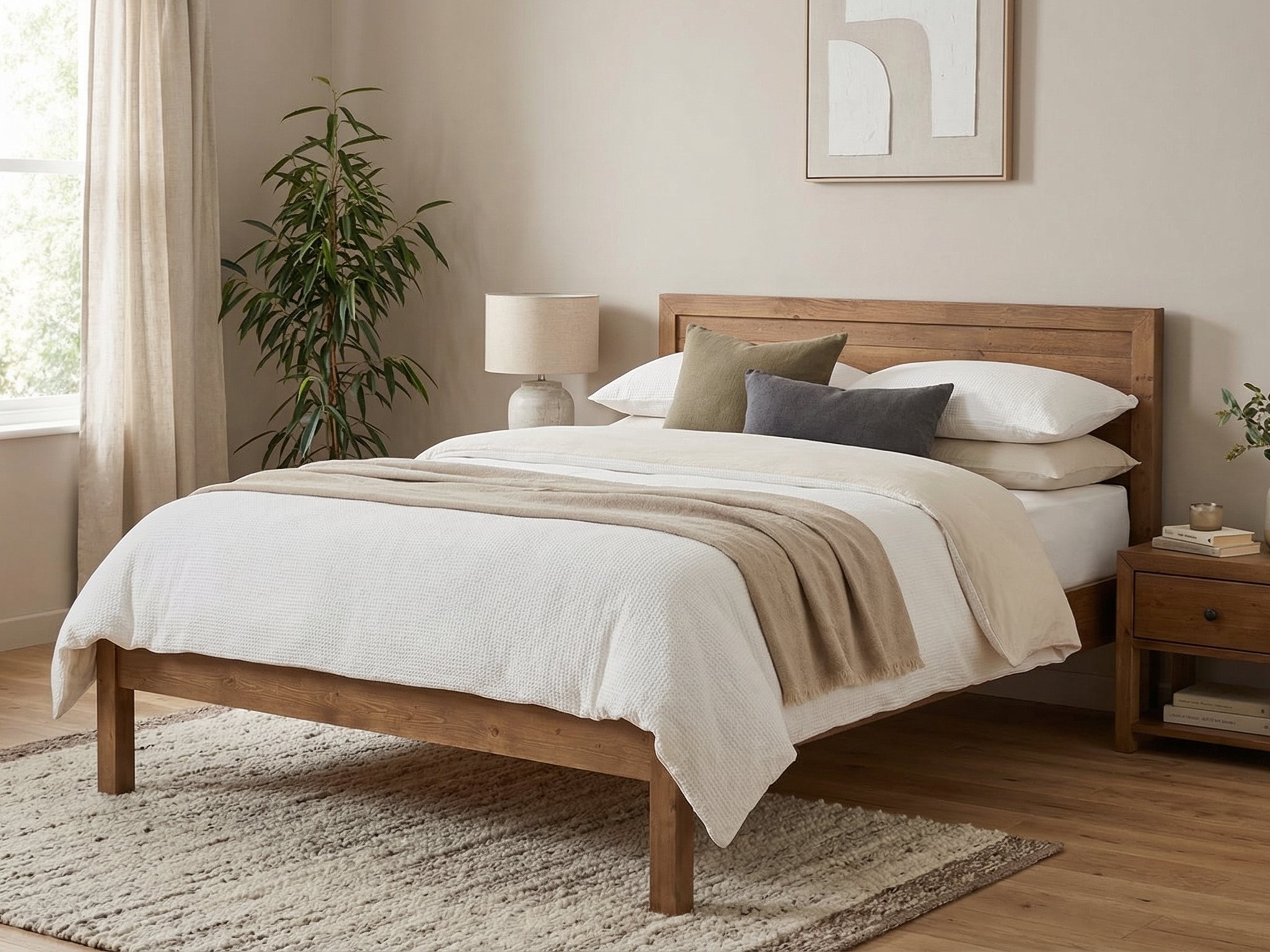
A low bed frame with a plain headboard sets the tone for the whole room on its own. A blanket box at its foot adds practical storage while keeping the room's silhouette low and uncluttered.

Japandi Dining Room Ideas
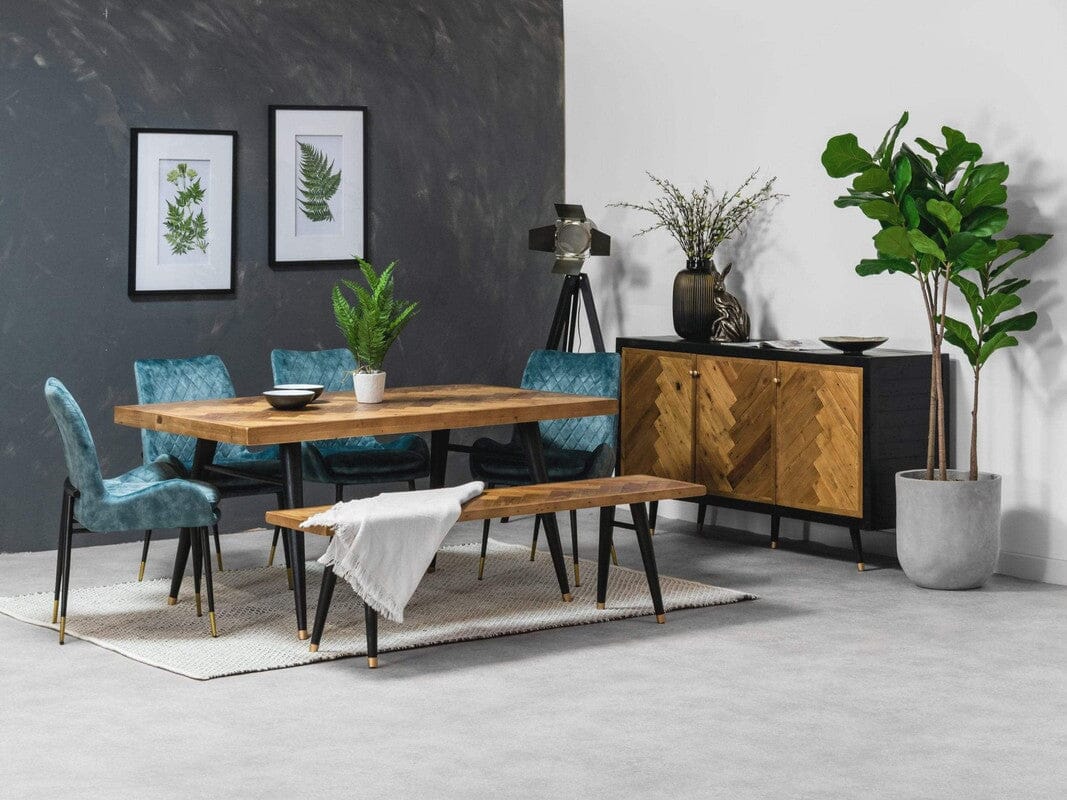
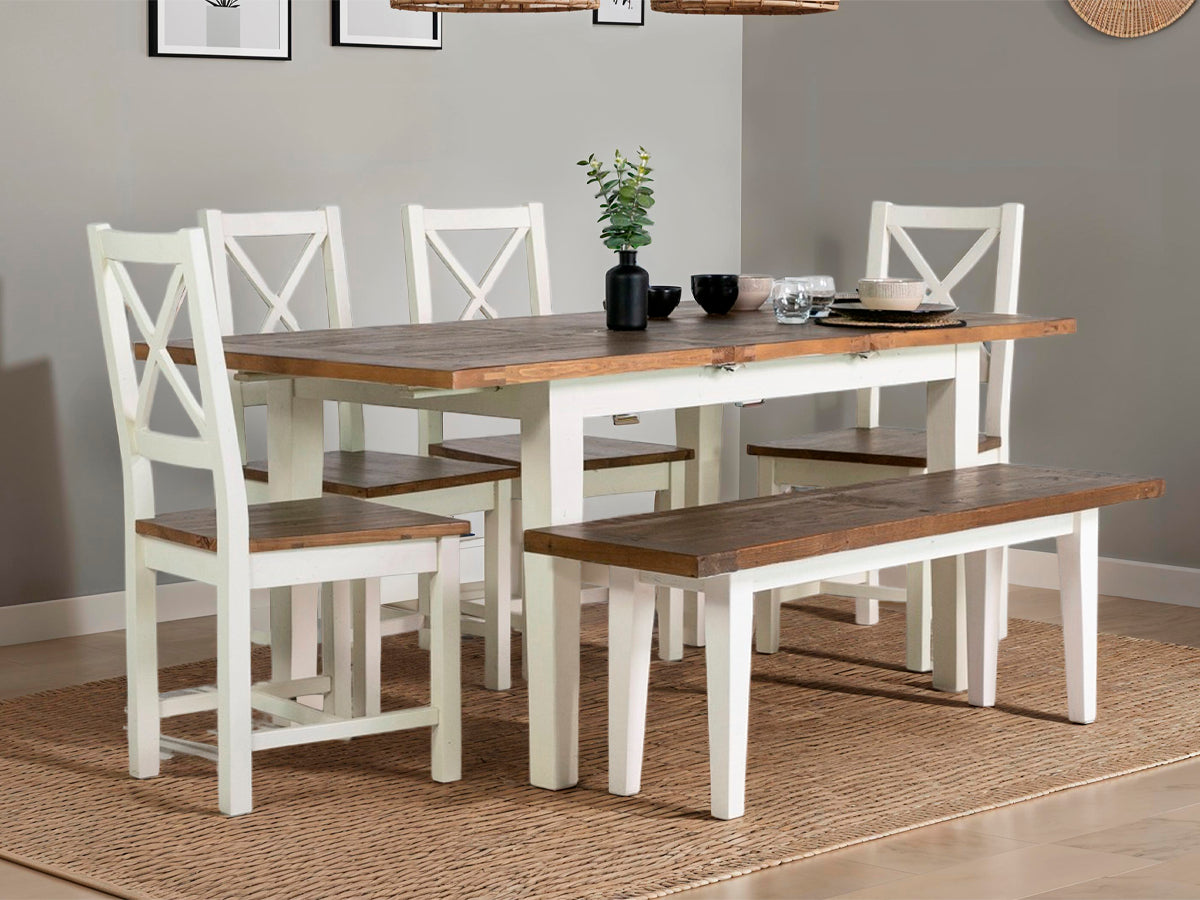
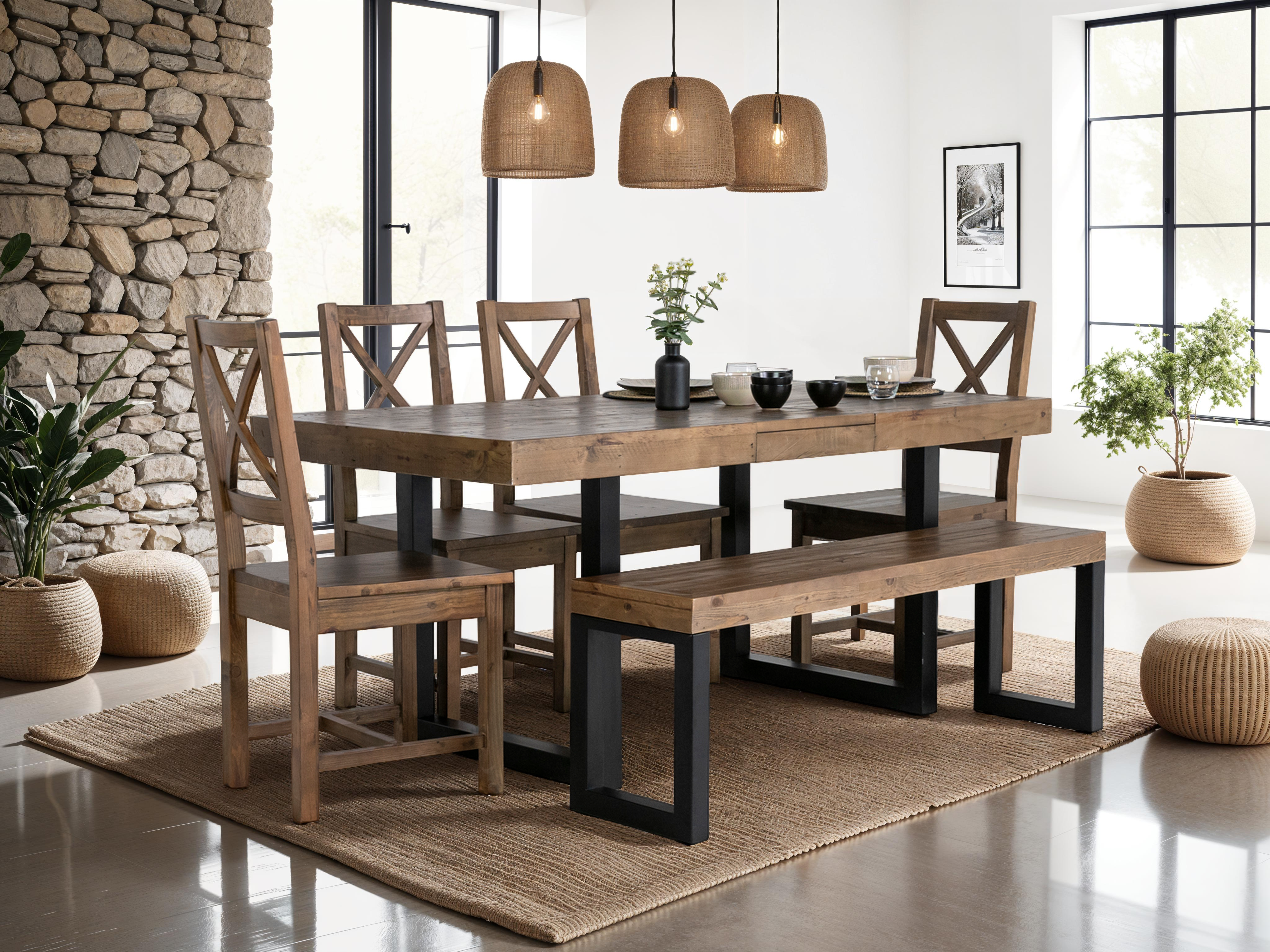
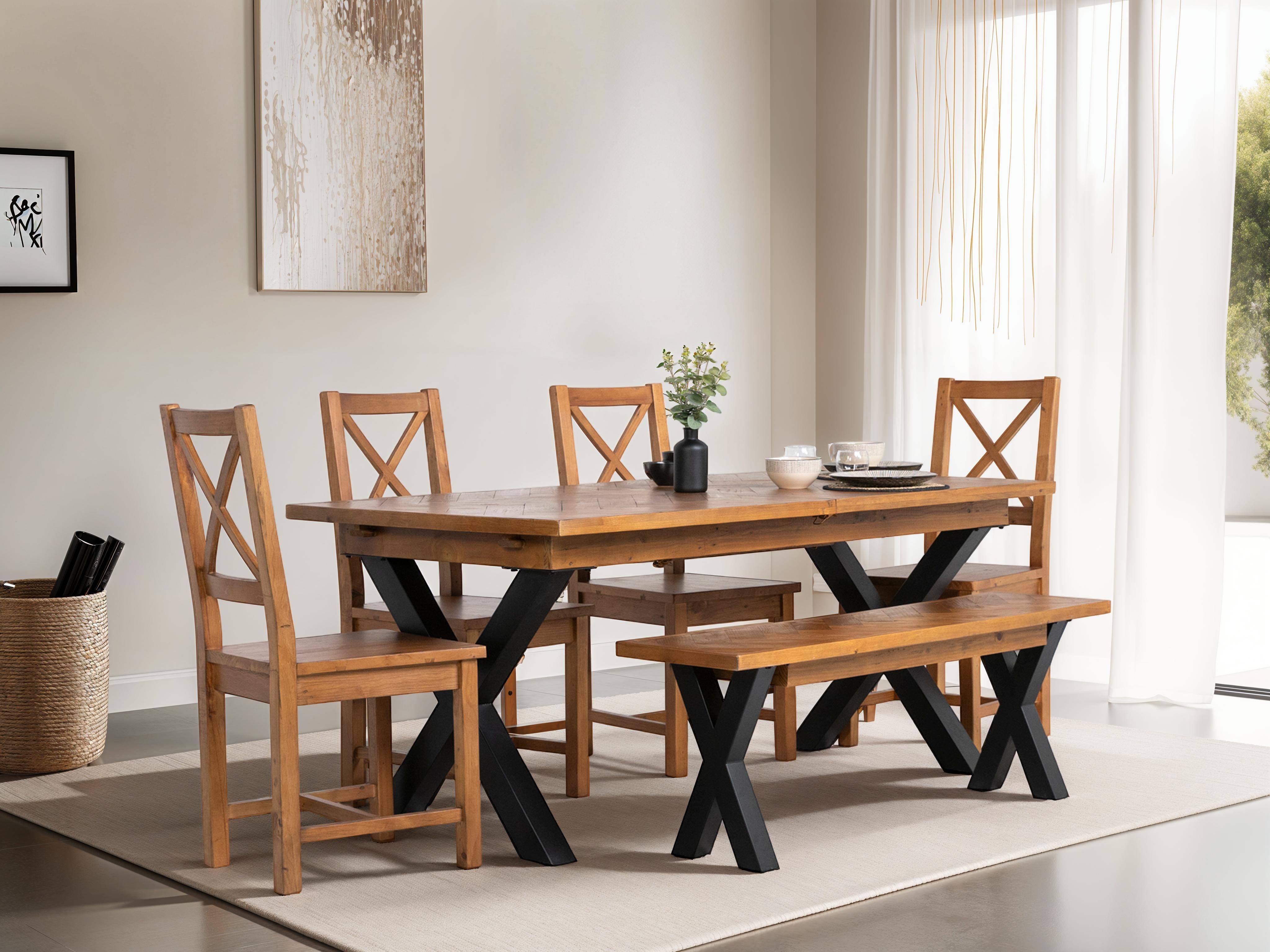
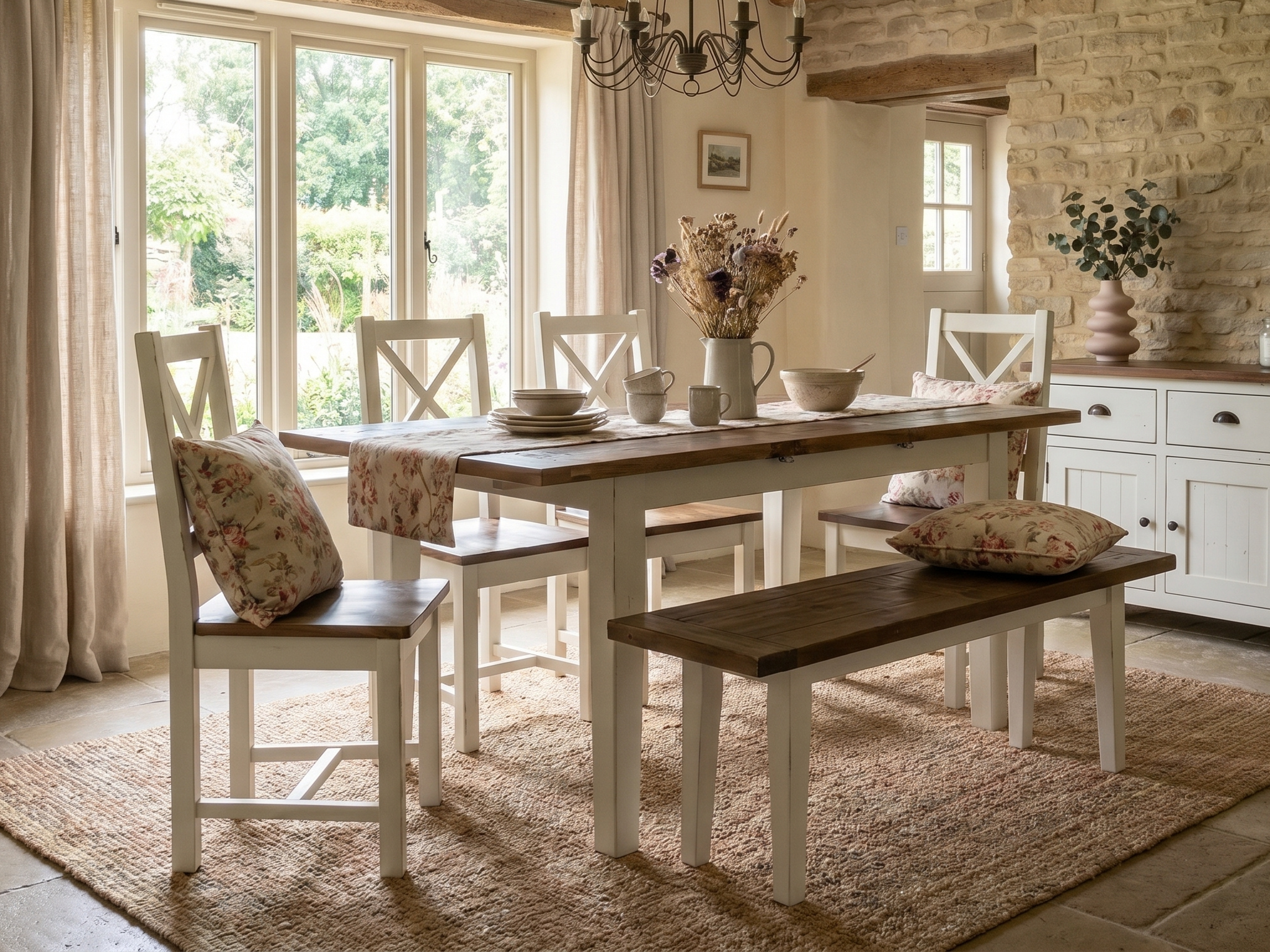
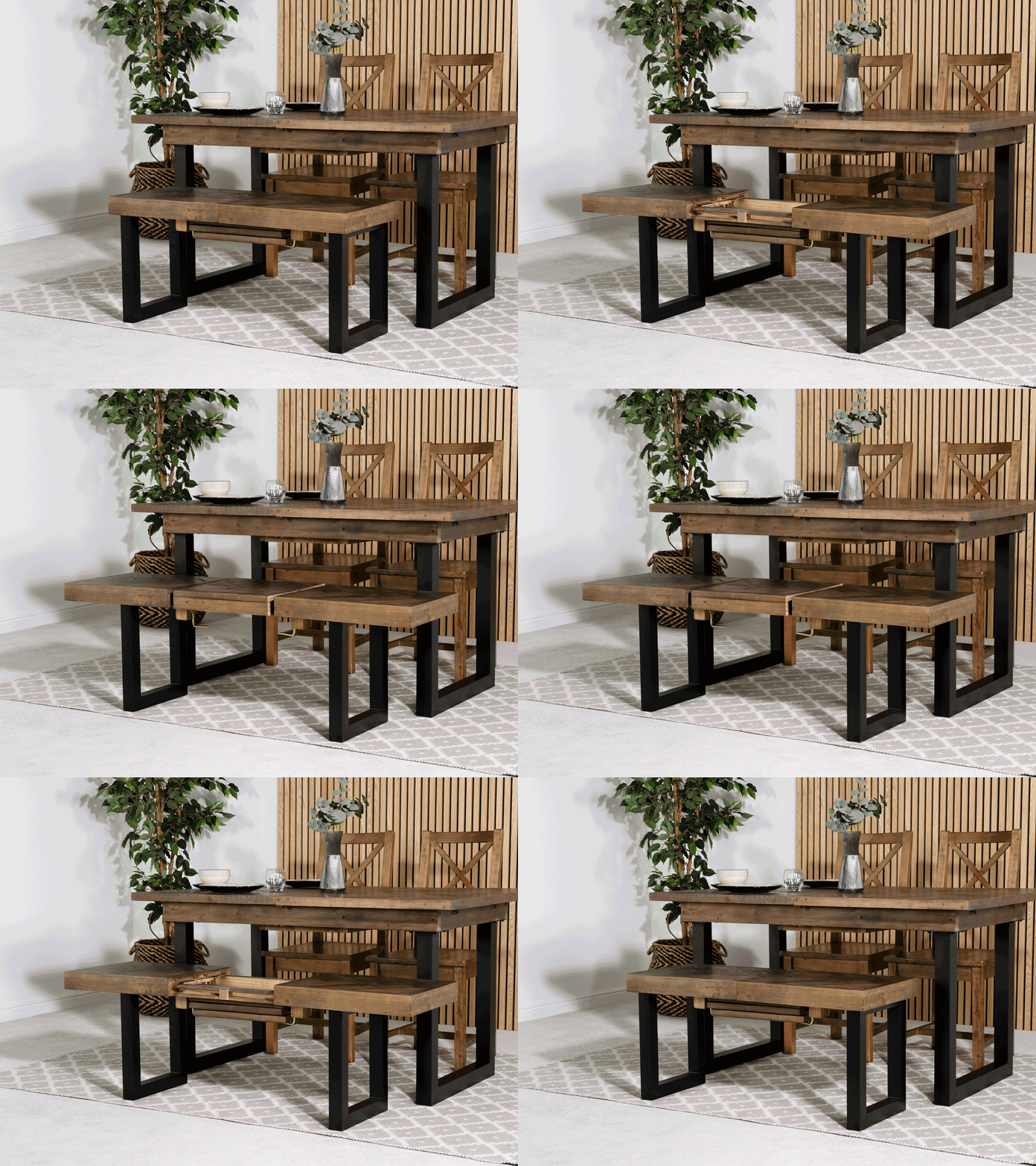
A simple bench along one side of the table does more for a Japandi dining space than a full set of matching chairs - it keeps the sightline low and avoids the room feeling over-furnished before anyone's even sat down.
Is Reclaimed Wood Too Rustic for Japandi Style?
Reclaimed wood is strongly associated with farmhouse and rustic interiors, so it's a fair question to ask. But the wood itself doesn't change between those settings - the room around it does.
The same grain and marking that reads as weathered in a busy, layered farmhouse room reads as considered once there's almost nothing else in the frame competing with it. Strip a room back far enough and texture stops looking accidental. It starts looking chosen.
Craftsmanship and Japandi Design
Japanese and Scandinavian design don't just share a taste for restraint - both place real weight on furniture that's made properly rather than made quickly. A piece worth keeping for decades has to be built to survive them, and that standard shows up in both traditions independently.
It's the same standard we hold our own furniture to. Finishes are applied by hand rather than sprayed on in a single automated pass, and every piece goes through quality checks at each stage before it reaches a customer. None of that changes how a Japandi room looks. It does change how long the furniture in it is actually built to last.
Where to Buy Japandi Style Furniture
If you'd rather lean towards the lighter Scandinavian half of the pairing, look for pieces with simple silhouettes, lighter timber tones and minimal detailing. Our Scandi collection is a natural place to start, with exactly that warmth and simplicity built in. From there, bring in a second, more heavily grained reclaimed piece to add the Japanese half of the look, and the balance comes from how the two sit together rather than from any single collection alone. You don't need to source everything from one range to make this work - a simple piece from one collection and a heavily grained bench or sideboard from another can sit together perfectly well, provided the room around them stays quiet.

Why Japandi Furniture Is Built to Last
A room built on very few pieces has less room for error, since there's nowhere for a weak choice to hide. Solid reclaimed timber holds up to that pressure better than most materials, because it can be sanded back and refinished if it ever shows wear rather than needing to be swapped out.
That matters more in a Japandi room than in most others. The whole approach depends on a handful of pieces staying right for a long time, not on being able to replace something the moment it starts looking tired quietly.
Building a Japandi Home One Piece at a Time
None of this needs to happen in one go. Start with the piece that will carry the most weight in the room, whether that's a bed frame, a console table or a single dining piece, and let the rest build up around it over time. Bring in linen, wool or a plain woven rug for softness rather than pattern, and resist adding a second statement piece before the first one has had room to settle.
The most common mistake isn't choosing the wrong furniture - it's not stopping. A second rug, a few too many ornaments, a matching set of dining chairs instead of a single bench, and the restraint that makes Japandi work quietly disappears. If a room still feels busy once the obvious clutter is gone, it's usually a sign that something else needs to go too, not that more needs to be added.
Reclaim Nation has been making furniture using traditional carpentry methods for nearly three decades, which is really what makes a reclaimed piece a sensible foundation for a style built around longevity. If you'd like to see how the same timber behaves in a warmer, more layered setting by comparison, our piece on rustic luxury interiors covers that side of things, and sustainable interior design trends looks at the wider picture if Japandi is one of a few directions you're weighing up.
Frequently Asked Questions on Japandi Style Furniture
What is Japandi style in simple terms?
It's a pairing of Japanese and Scandinavian design principles - restraint and natural imperfection from Japanese design, warmth and comfort from Scandinavian design - resulting in rooms built around fewer, well-chosen pieces.
Are wabi-sabi and Japandi the same thing?
No. Wabi-sabi is a Japanese design principle valuing beauty in imperfection and age, and it's one of several ideas that feed into Japandi. Japandi itself is the wider pairing of Japanese and Scandinavian design as a whole.
What's the difference between Scandi and Japandi style?
Scandi style leans lighter and brighter, often with pale woods and higher contrast. Japandi pulls in a more restrained, earthier Japanese influence on top of that, favouring quieter tones, lower furniture and simpler forms overall.
Is Japandi style still in style in 2026?
Yes, and it's shown real staying power rather than fading as a passing trend. That's largely because it's built around materials chosen for longevity - like solid reclaimed wood - rather than a specific colour or shape that dates quickly.
What are common Japandi decor mistakes?
The most frequent one is adding too much rather than too little - a second rug, extra ornaments, or a matching furniture set where one simple piece would do more. Japandi depends on restraint holding throughout the room, not just in the furniture.
Does reclaimed wood work in a minimalist room, or does it only suit rustic interiors?
It works well in minimalist settings. Grain and natural marking read as considered rather than weathered once a room has very little else in it, which is part of why it suits Japandi specifically.
What colours work with reclaimed wood in a Japandi home?
Warm, muted neutrals - oatmeal, clay, soft stone - tend to work best, letting the wood grain stand out rather than competing with the palette around it.
Can a Japandi style home work in a small space?
Yes, often better than a busier style would. Fewer, well-chosen pieces take up less visual space than a fully furnished room, which is part of why Japandi suits smaller UK homes and flats particularly well.
Explore the wider Reclaim Nation collection, including coffee tables and chests of drawers, to find pieces with the kind of quiet character a Japandi home depends on.

Leave a comment
This site is protected by hCaptcha and the hCaptcha Privacy Policy and Terms of Service apply.