
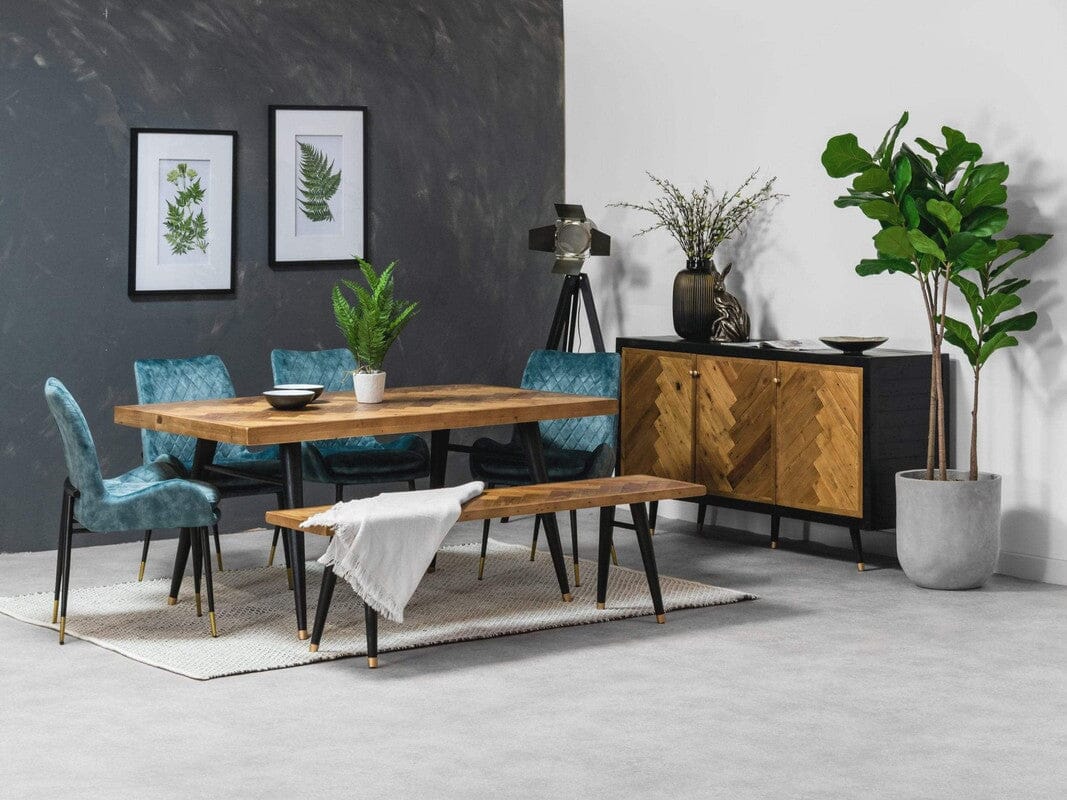
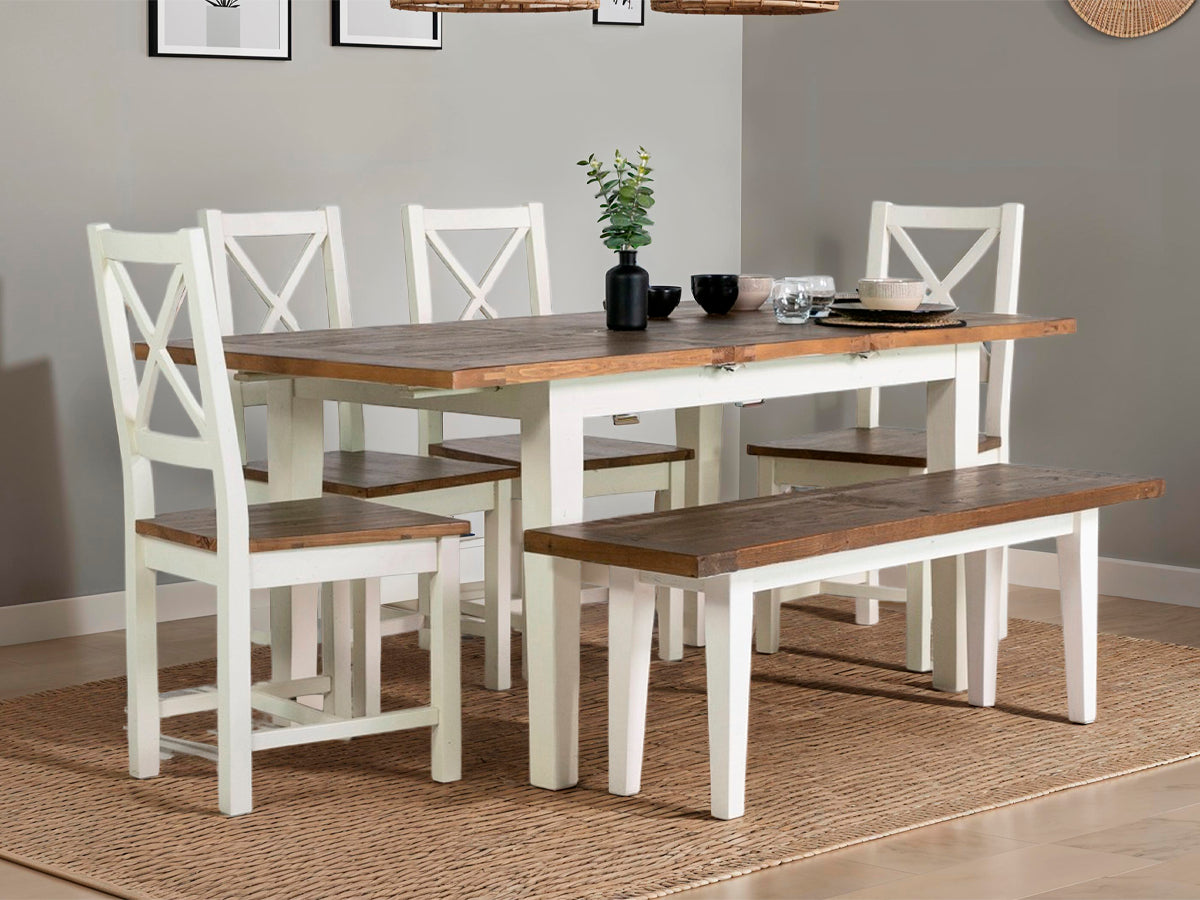
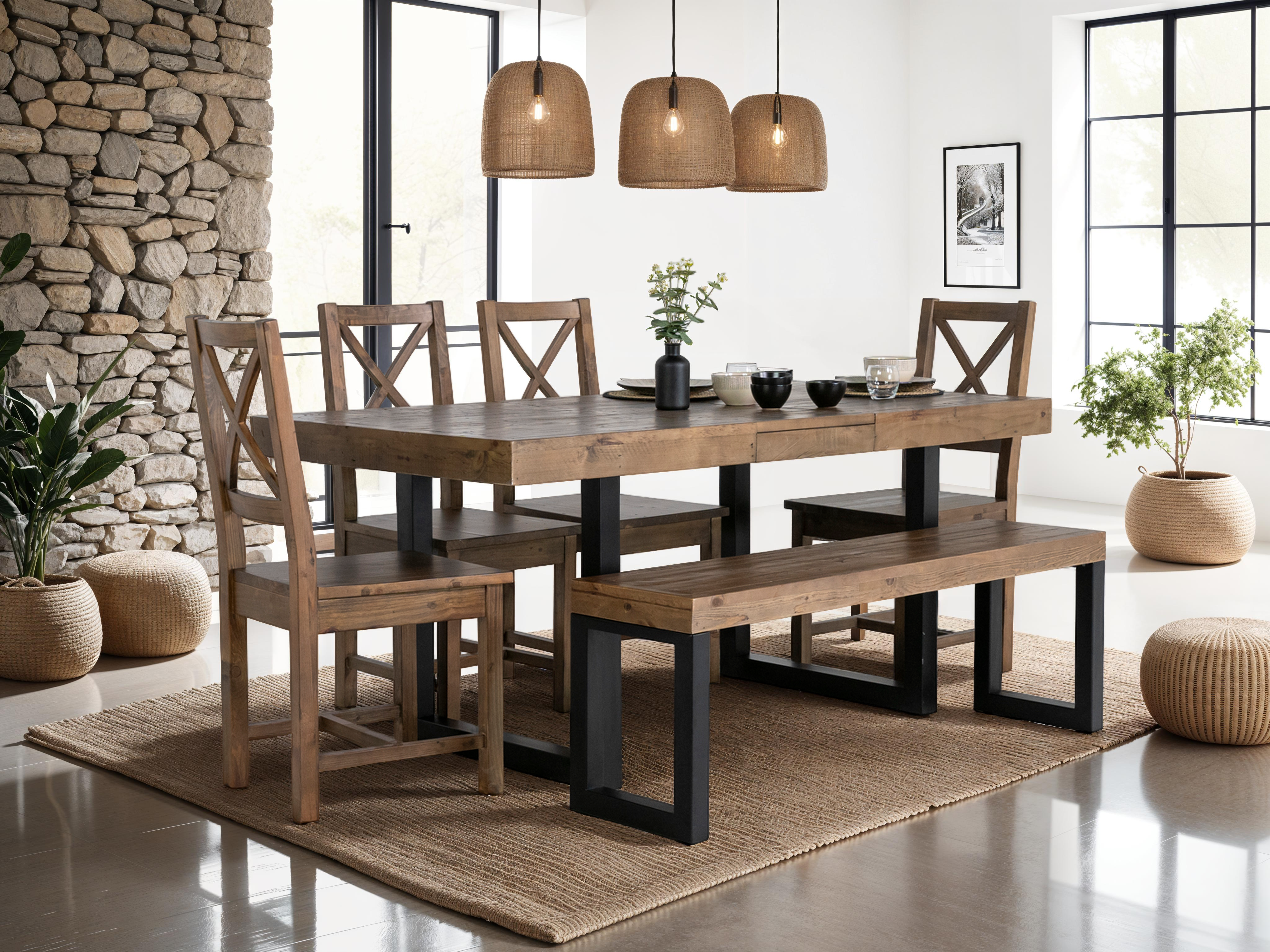
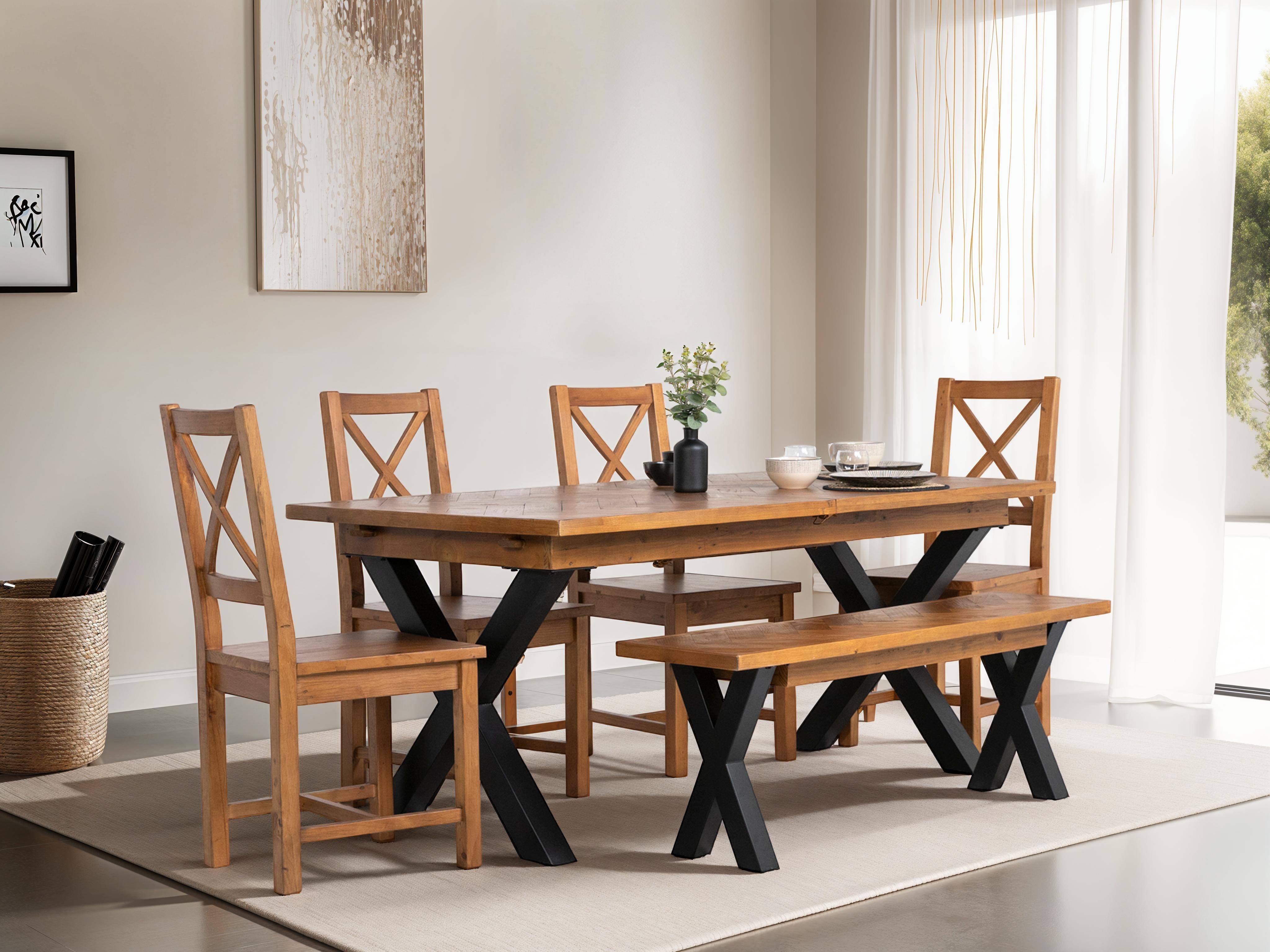




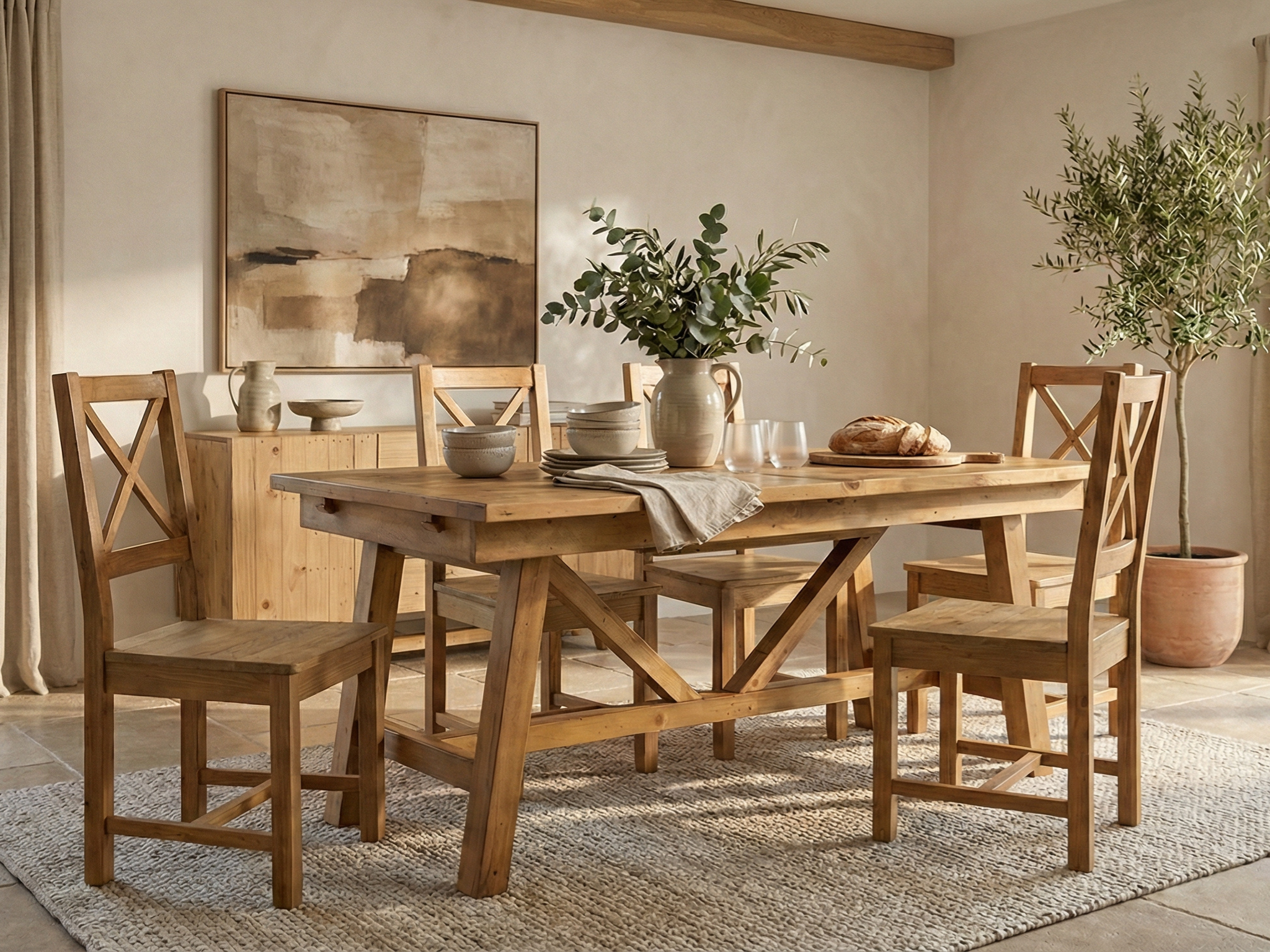

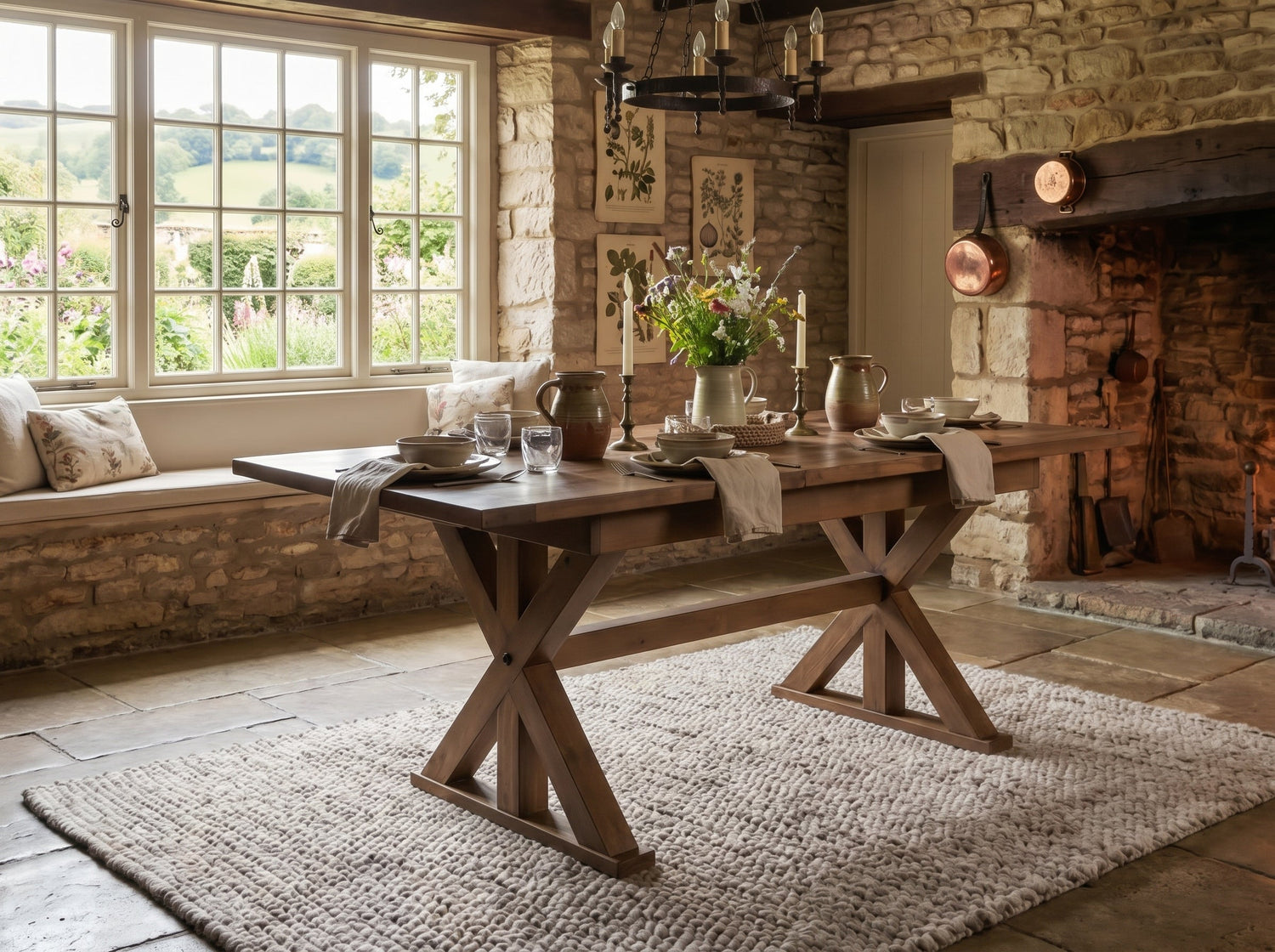
Rustic and luxury don't sound like they belong in the same sentence. Rustic suggests something rough and unpolished. Luxury suggests the opposite - considered, refined, a little formal. Put the two together and you get one of the more interesting directions in interior design right now: rooms that keep the warmth of raw, natural materials, but treat them with far more care than "rustic" usually implies.
It's a look built on contrast rather than compromise. A weathered sideboard sitting under a sculptural light fitting. A heavily grained dining table paired with something cleaner and more contemporary around it. Nothing here is trying to look brand new, and nothing looks accidental either. Reclaimed wood furniture sits naturally at the centre of that contrast, since it already carries the texture and history the style depends on.
What Is Rustic Luxury Interior Design?
Rustic luxury interiors sit between two looks that don't usually overlap. Straightforward rustic decor leans into rough edges and a lived-in feel, sometimes at the expense of polish. Traditional luxury interiors lean the other way entirely, favouring smooth surfaces and a tightly controlled palette, which can occasionally tip into feeling a little cold. It shares elements with modern rustic and luxury farmhouse interiors, but introduces a greater sense of refinement through cleaner lines, restrained styling and carefully chosen materials.
Rustic luxury takes the texture from one and the restraint from the other. A dining table with real grain variation still sits beneath a considered pendant light. A sideboard with visible knots and saw marks still gets styled with the same intention you'd expect from a formal showroom piece. The imperfections aren't hidden. They're simply given a more deliberate setting.
Contrast is really the whole engine of the look. Old sits next to new. Rough sits next to smooth. A heavy, characterful piece gets balanced by something calmer around it. The timber does a lot of that contrast work on its own, because unlike new wood, no two pieces read the same way twice.
Why Reclaimed Wood Defines the Rustic Luxury Look
New timber, however well finished, tends to look consistent from piece to piece. Reclaimed wood doesn't. Every plank carries its own grain pattern and colour variation, built up over decades before it ever became furniture, and that variation is what gives rustic luxury interiors their depth.
At Reclaim Nation, our furniture is built primarily from pine and elm, salvaged from old floorboards, pallets, railway sleepers and manufacturing offcuts rather than freshly felled timber. Pine actually hardens through the reclaiming process, gaining a density its softwood reputation doesn't suggest. Elm brings a deeper, more distinctive grain. Both develop character with age rather than losing it, which is exactly what elevated rustic furniture depends on.

Our Mayflower collection carries its own version of this story. Built from salvaged hardwoods sourced from old homes, workspaces, and decommissioned boats, each piece arrives with a distinct, layered tone and a weathered finish that no two rooms will style the same way. It's a different sourcing story to the pine and elm range, and part of why the collection reads as slightly more coastal and characterful, well suited to a scheme leaning into visible history rather than smoothing it away.
Craftsmanship That Makes Rustic Luxury Furniture Worth Having
Mass production hides its process. Handmade furniture doesn't. Joints, finishes, and the way a piece has actually been put together are visible if you know where to look. That visibility is part of what separates rustic luxury from rustic-as-an-afterthought.
At Reclaim Nation, finishes are applied by hand in our Bristol workshop rather than sprayed on in a single automated pass. It's a slower way of working, but it's why a hand-finished piece tends to sit closer to the wood itself rather than sitting on top of it as a coating. With nearly 30 years of designing and selling furniture, that approach hasn't really changed. It's slower, but it's also why a piece bought today should still be worth having in twenty years, not something to replace once the next look comes along.
Choosing Furniture for a Rustic Luxury Interior
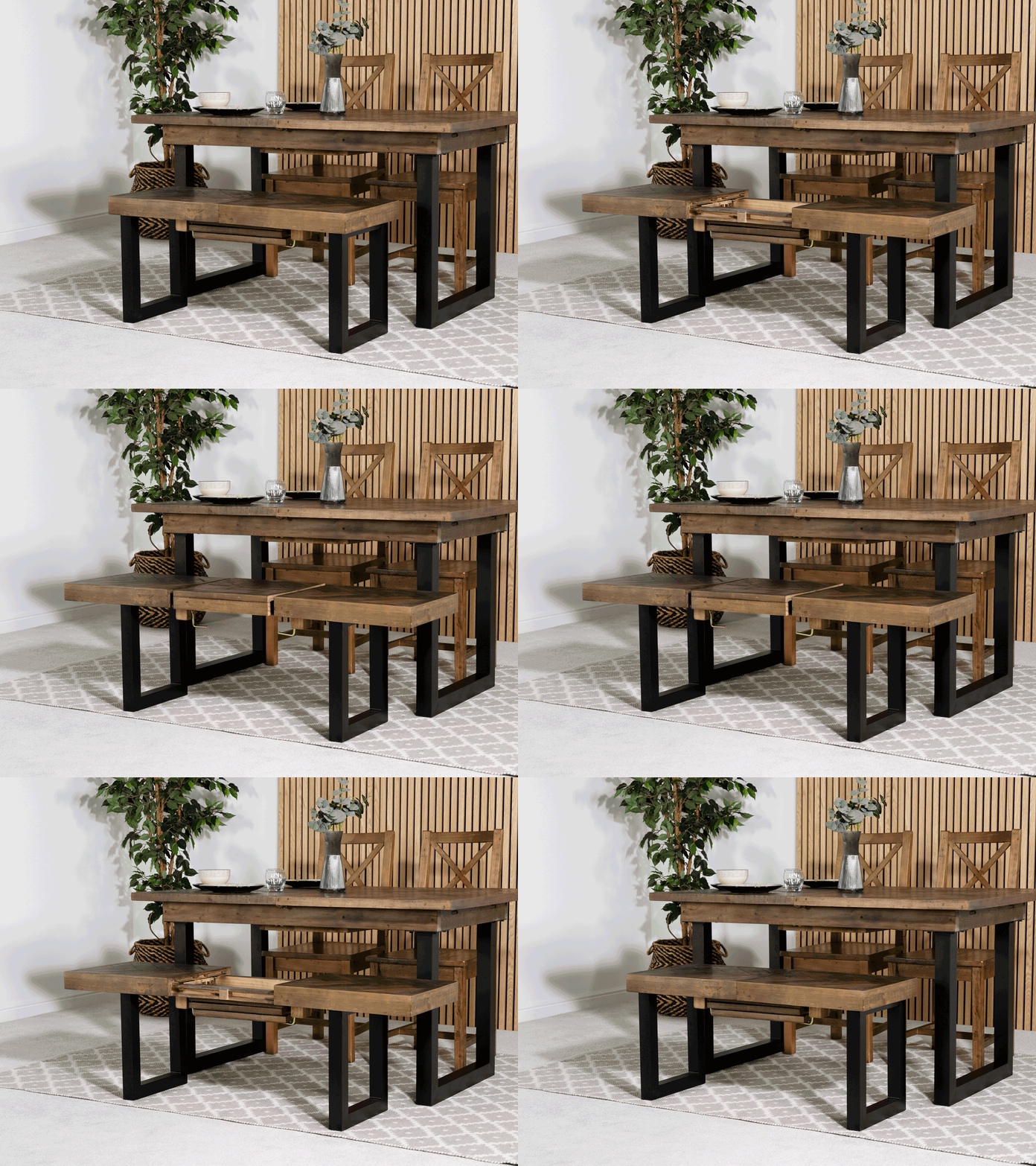
Rustic luxury tends to work best when it's anchored by one or two statement pieces rather than spread thinly across a room. A heavily grained dining table or a substantial coffee table does more for the atmosphere than several smaller rustic touches layered on top of one another.

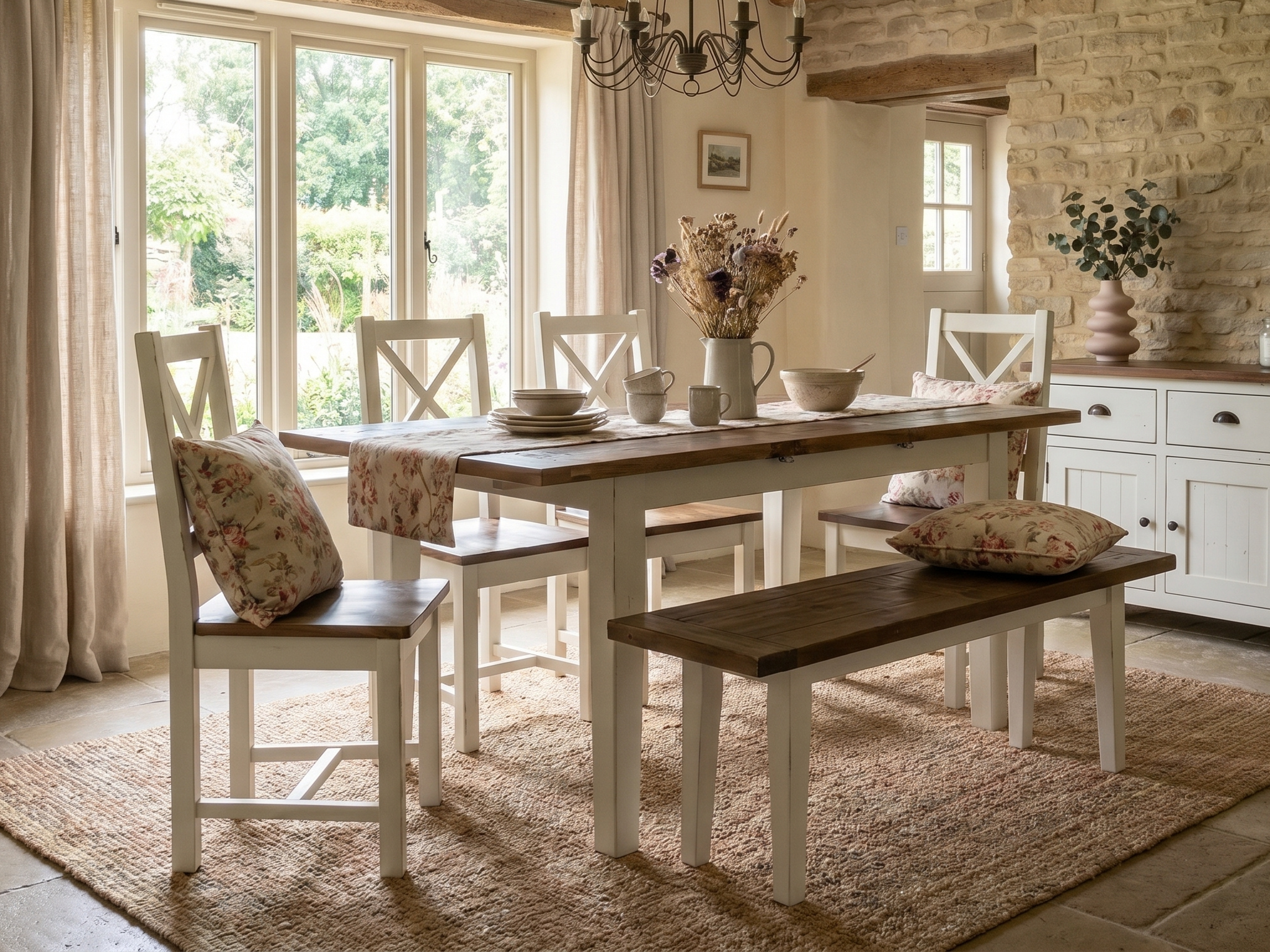
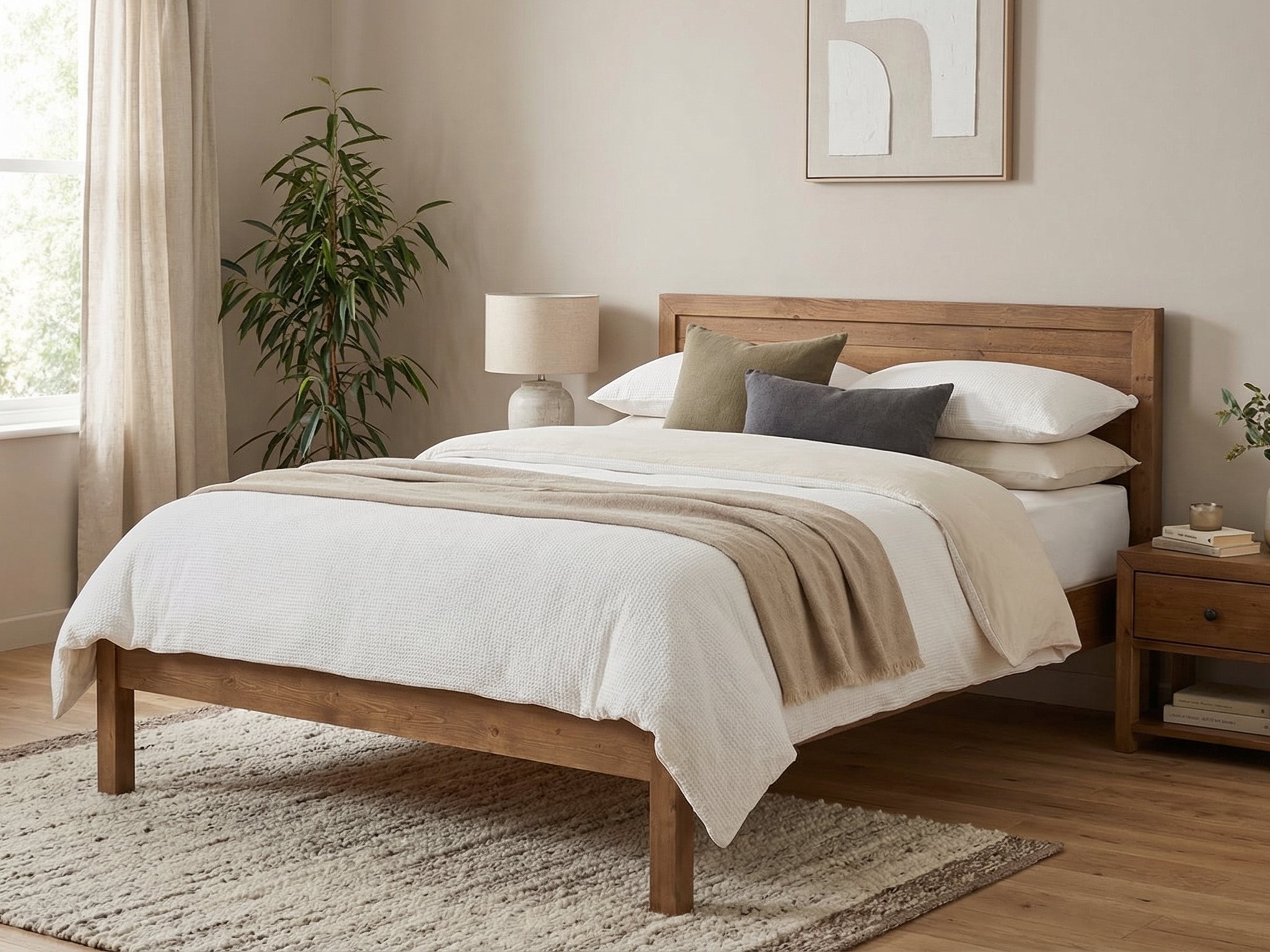
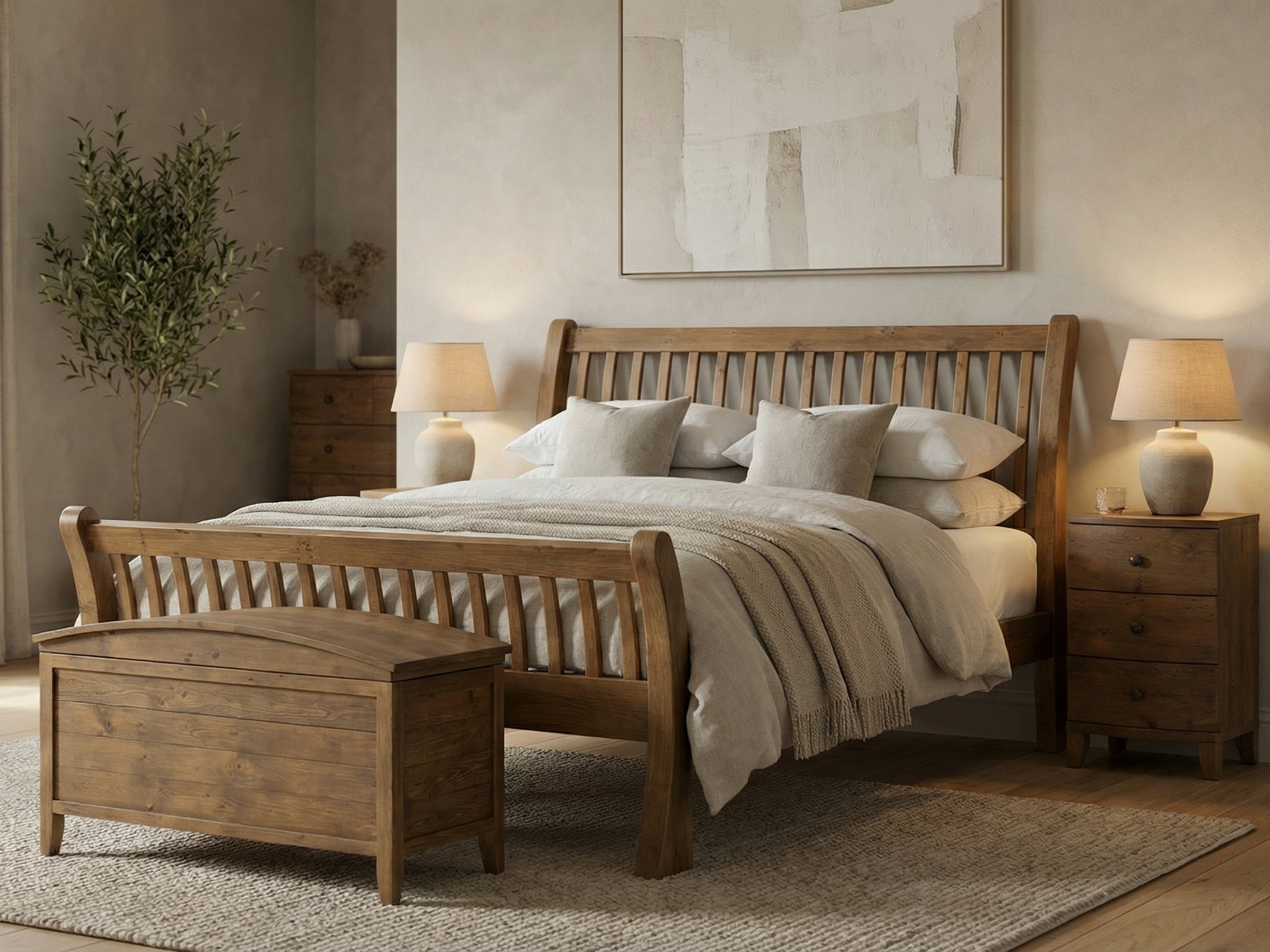
In the dining room, a solid dining table paired with a sideboard gives the room its foundation. In the living room, a coffee table with real grain variation reads completely differently from anything veneered, even from across the room. In the bedroom, a solid bed frame alongside bedside tables brings the same texture somewhere quieter and more personal.
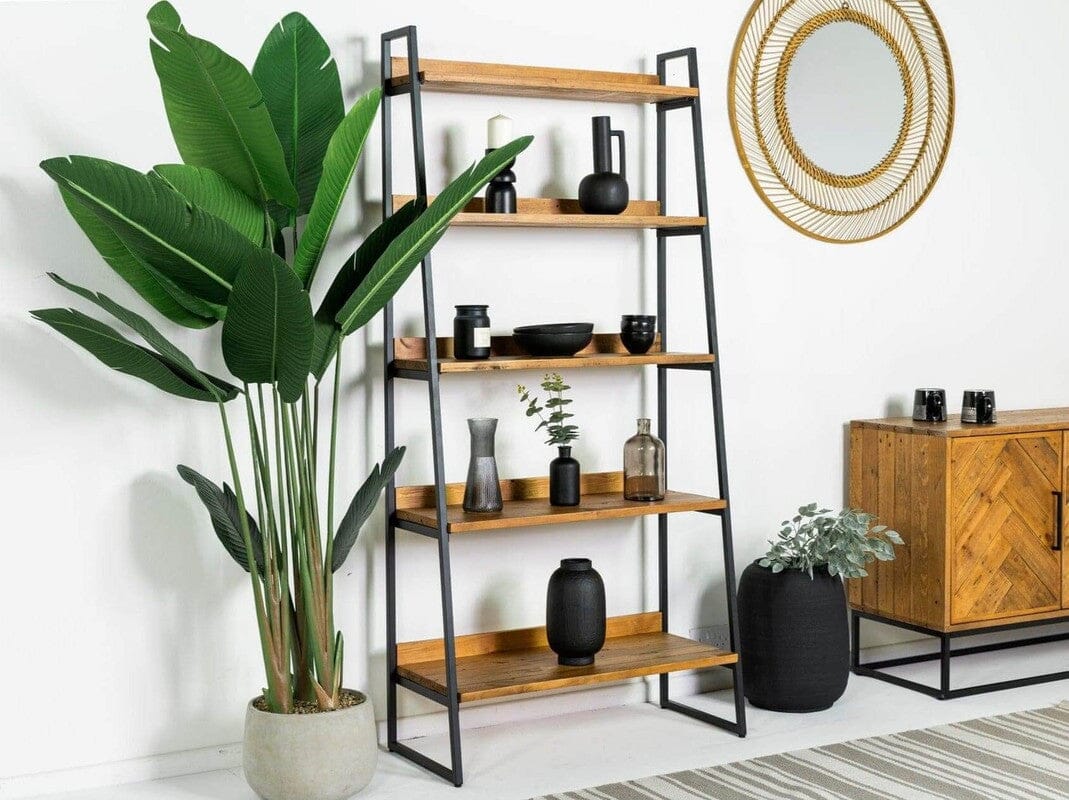
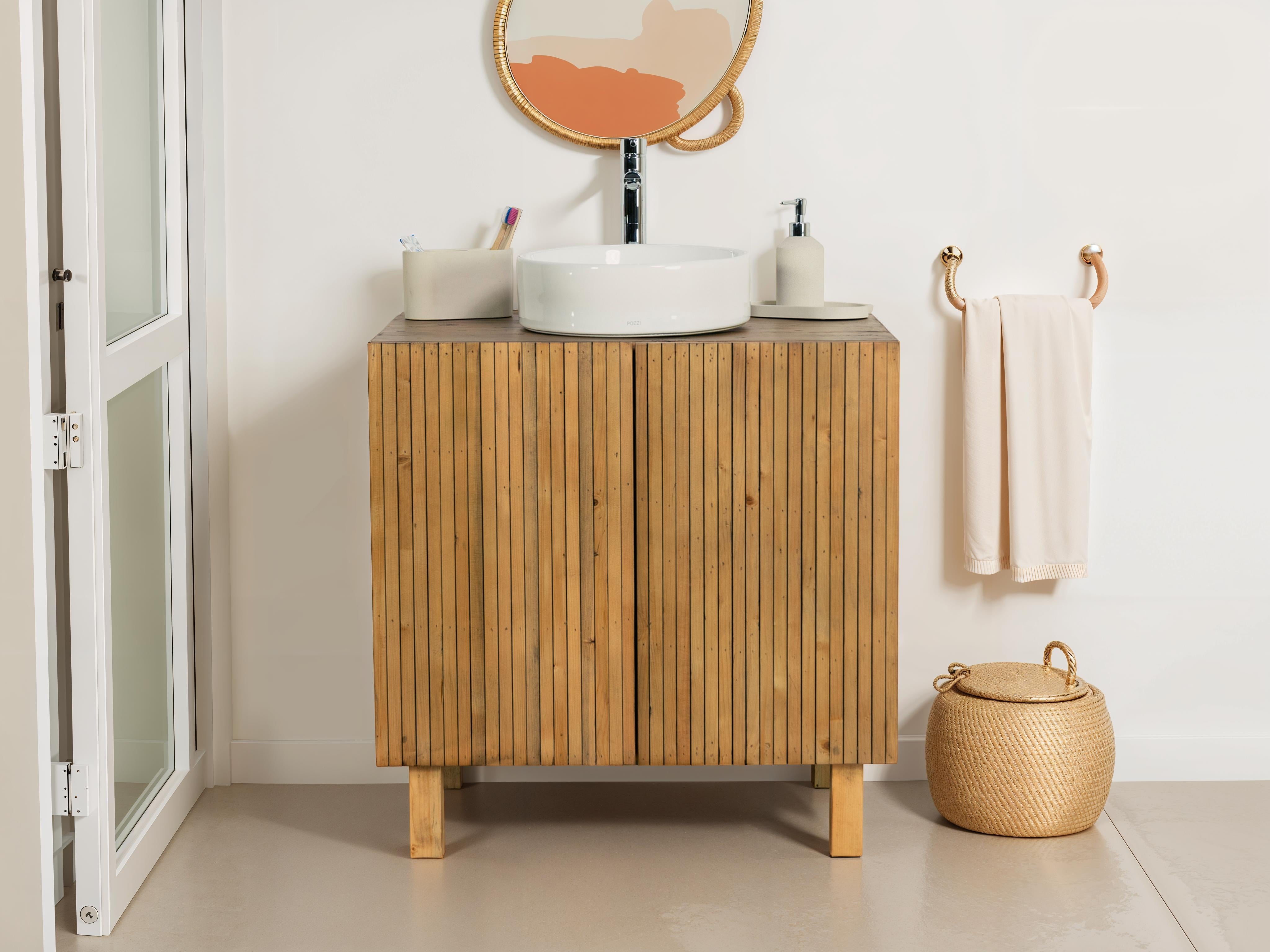
Our Pyramid collection features strong A-frame lines that pair industrial strength with rustic warmth, a genuinely different texture, and is a good option if the room can carry a more architectural presence rather than a purely soft one.
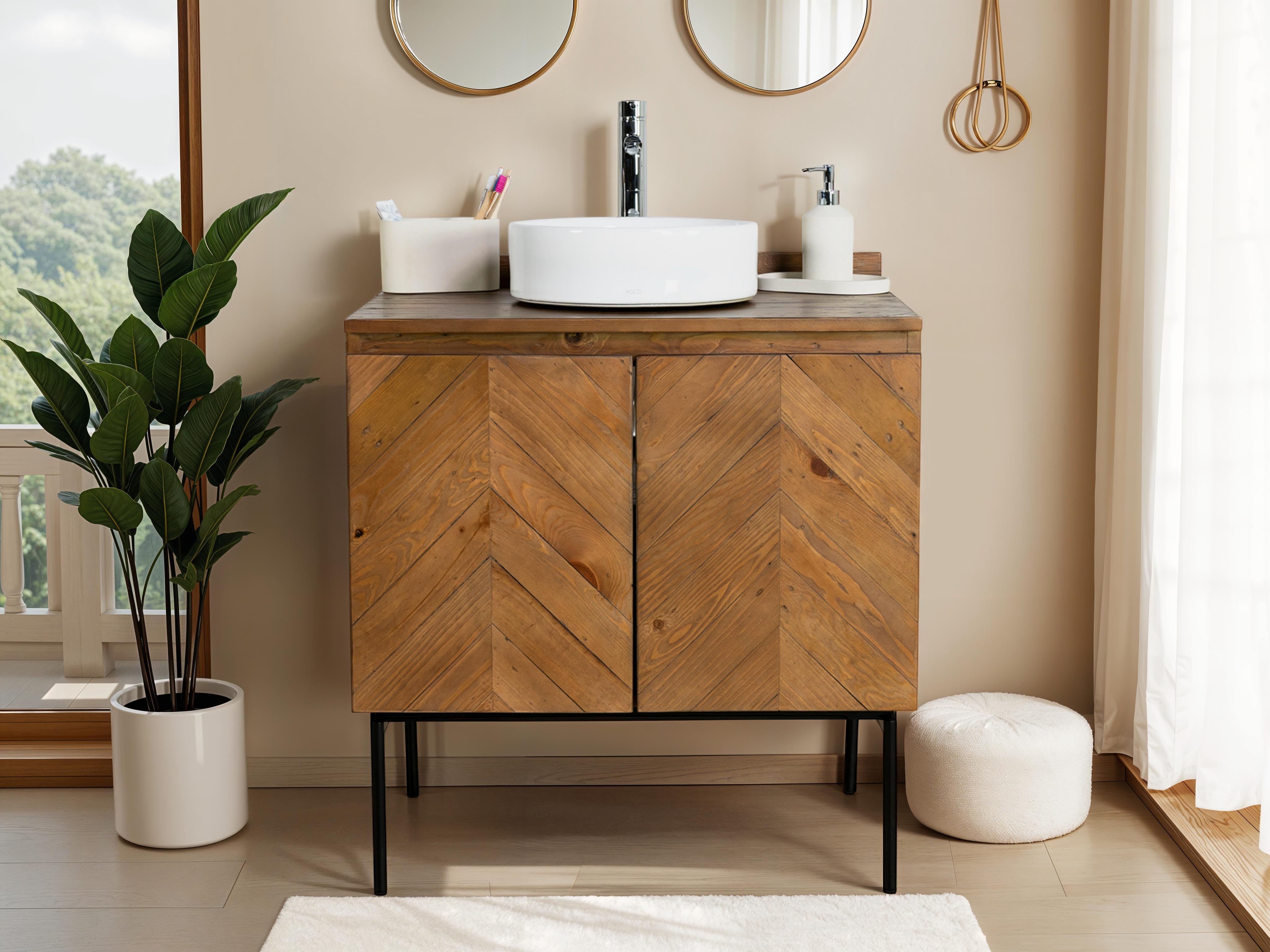
The Provence collection leans into a more refined, French country character, suited to a scheme aiming for elegance over rugged charm - the kind of piece that works just as well in a considered dining room as it does in a rustic interior design living room setting.
These pieces also sit within our wider rustic furniture collection, which brings the Montreal, Provence and Pyramid ranges together alongside a few others, useful if you'd rather browse the whole look in one place before picking pieces individually.
Styling a Rustic Luxury Interior
Choosing the right furniture is most of the work, but a few styling habits make the difference between a room that looks intentional and one that looks like it's still deciding what it wants to be.
Let one piece do the talking. Build the room around a single dining table, sideboard or bed frame with strong grain, and keep everything else around it quieter. Two competing statement pieces tend to cancel each other out.
Keep lighting simple and considered. A single well-chosen pendant or lamp does more for the mood than several smaller fittings, and gives the timber underneath it room to be the focus.
Bring in soft, natural texture. Linen and wool sit comfortably against reclaimed wood, softening the grain without competing with it.
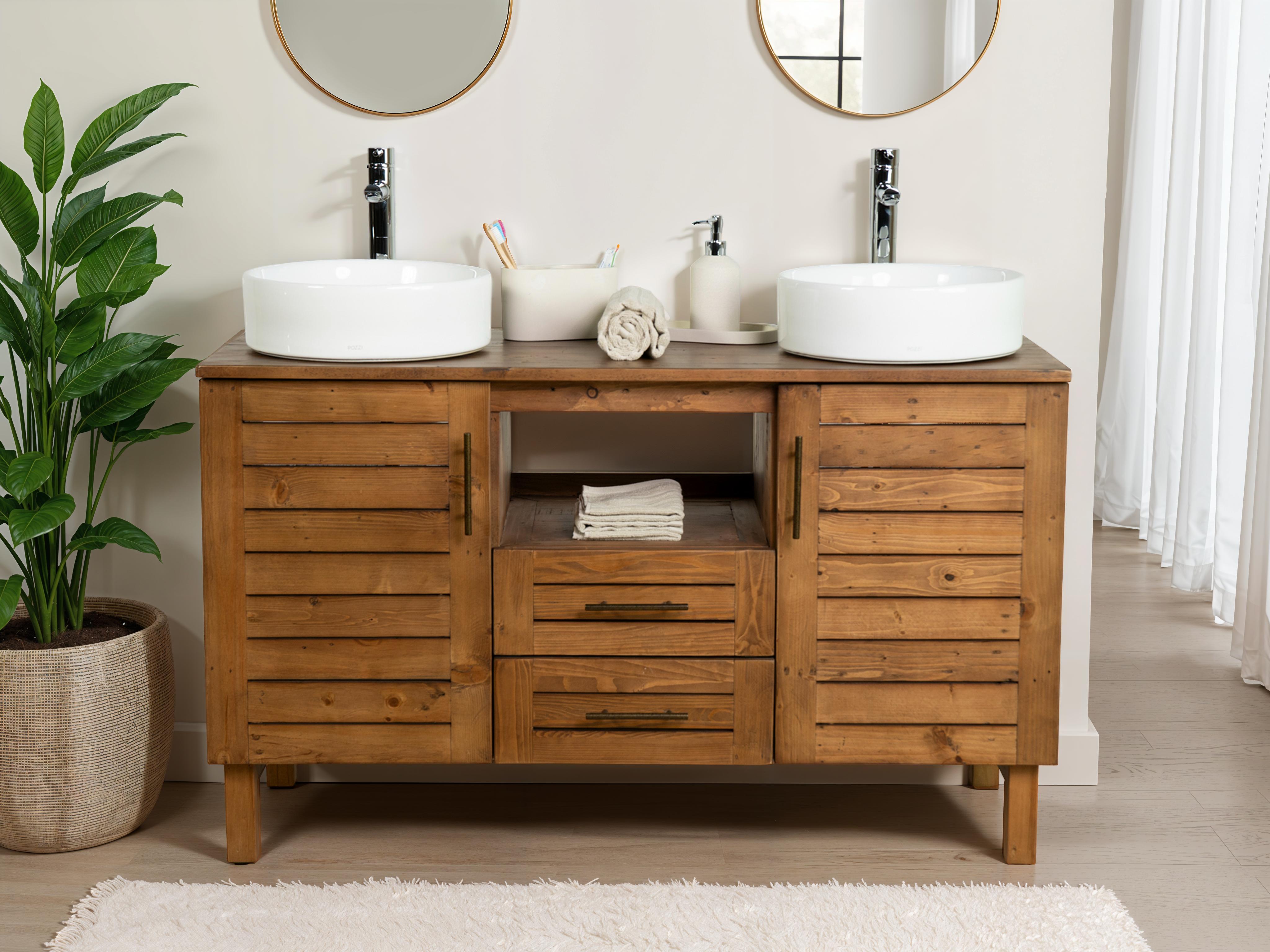
Repeat one metal finish throughout the room. Whether it's the hardware on a Montreal sideboard or the frame of a bolder piece, keeping metal tones consistent helps a characterful room feel cohesive.
If you prefer a stronger heritage look, our Montreal collection takes a heritage approach, with antique-style hardware and traditional panel detailing that reads as considered rather than purely functional - a natural fit for a piece meant to anchor a room rather than blend into it.

Colour in a Rustic Luxury Interior
Rustic luxury interiors tend to avoid stark colour contrast, even while leaning hard into textural contrast. Think clay, walnut, oat and deep charcoal rather than sharp black and white. Against these tones, solid timber does most of the visual work on its own, which means the rest of the room can stay fairly restrained without feeling bare.
One thing worth saying plainly: the aim isn't to match every wood tone in the room. A reclaimed dining table paired with a darker sideboard, or a lighter bedside table against a richer bed frame, tends to look collected rather than mismatched. A room where every timber tone matches exactly can end up looking like it was all bought on the same afternoon. A room with a slight mix of tones looks like it was built up over time, which is closer to how most homes actually come together anyway.
Why Reclaimed Wood Furniture Holds Its Value Over Time
Sustainability and durability are true of reclaimed furniture, but they aren't really why anyone chooses a piece for a room they've put real thought into. What's actually being protected is something quieter: not having to refurbish in five years because a trend moved on, and a house that starts to feel like it was built up piece by piece rather than bought in one visit.
That's the appeal underneath rustic luxury specifically. It rewards furniture chosen for its own sake, not for how well it photographs this season. A solid piece can be sanded back and refinished if it ever shows real wear, which means the room you're building now isn't really temporary. It's the start of a collection that gets added to, not swapped out.

Balancing Rustic and Luxury in One Room
The easiest way to get rustic luxury wrong is to tip too far in either direction. Too rustic, and a room can start to feel unfinished rather than intentional. Too polished, and the warmth that makes the style work in the first place disappears entirely.
A few things tend to keep the balance in check. Let one or two pieces carry the raw texture and grain, rather than layering it into every surface. Keep hardware and accessories simple where the wood itself is already doing the visual work. And resist the urge to distress or age anything further. Reclaimed timber has already earned its character honestly. It doesn't need help looking like it has.
Frequently Asked Questions on Rustic Luxury Interiors
What's the difference between rustic luxury and standard rustic decor?
Standard rustic decor leans into raw, unpolished texture on its own. Rustic luxury keeps that same texture but pairs it with more careful styling and restraint, so the room feels considered rather than weathered.
Does rustic luxury only work with reclaimed wood?
Reclaimed wood is one of the most natural ways to bring genuine texture into the look, since new timber tends to look too uniform by comparison. It isn't the only material that works, but it does most of the heavy lifting.
Can rustic luxury work in a small room?
Yes. One well-chosen anchor piece, like a sideboard or a console table with real grain, tends to do more for a small space than several smaller rustic touches spread around it.
Is rustic luxury a passing trend?
It reads more as an evolution of rustic and farmhouse style than a short-lived look, since it's built around materials chosen for longevity rather than a specific season.
Do all the wood tones in a room need to match?
No. A slight mix of tones, a darker sideboard against a lighter table for example, tends to look collected rather than mismatched. Rooms where everything matches exactly can end up looking like they were furnished in a single visit.
Is reclaimed wood furniture good quality?
Yes. Reclaimed timber has typically already been naturally seasoned over decades, which makes it more stable and durable than freshly milled wood. It can also be sanded and restored if it shows wear, unlike composite or veneered furniture.
How do I stop a rustic luxury room from looking too rustic?
Keep finishes and accessories simple where the wood is already doing the visual work, and avoid layering raw texture into every corner. One or two considered pieces usually say more than several scattered ones.
Explore the full rustic furniture collection to see how the Mayflower, Montreal, Provence and Pyramid ranges each bring their own character to the rustic luxury look.

Leave a comment
This site is protected by hCaptcha and the hCaptcha Privacy Policy and Terms of Service apply.