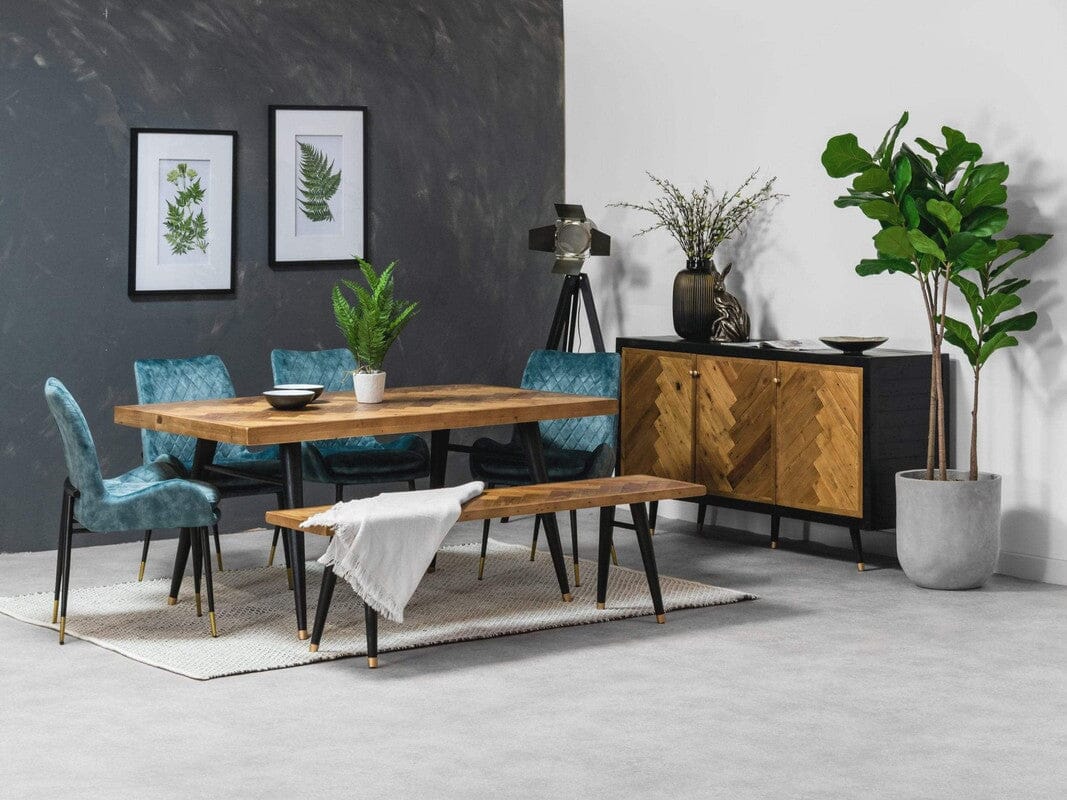
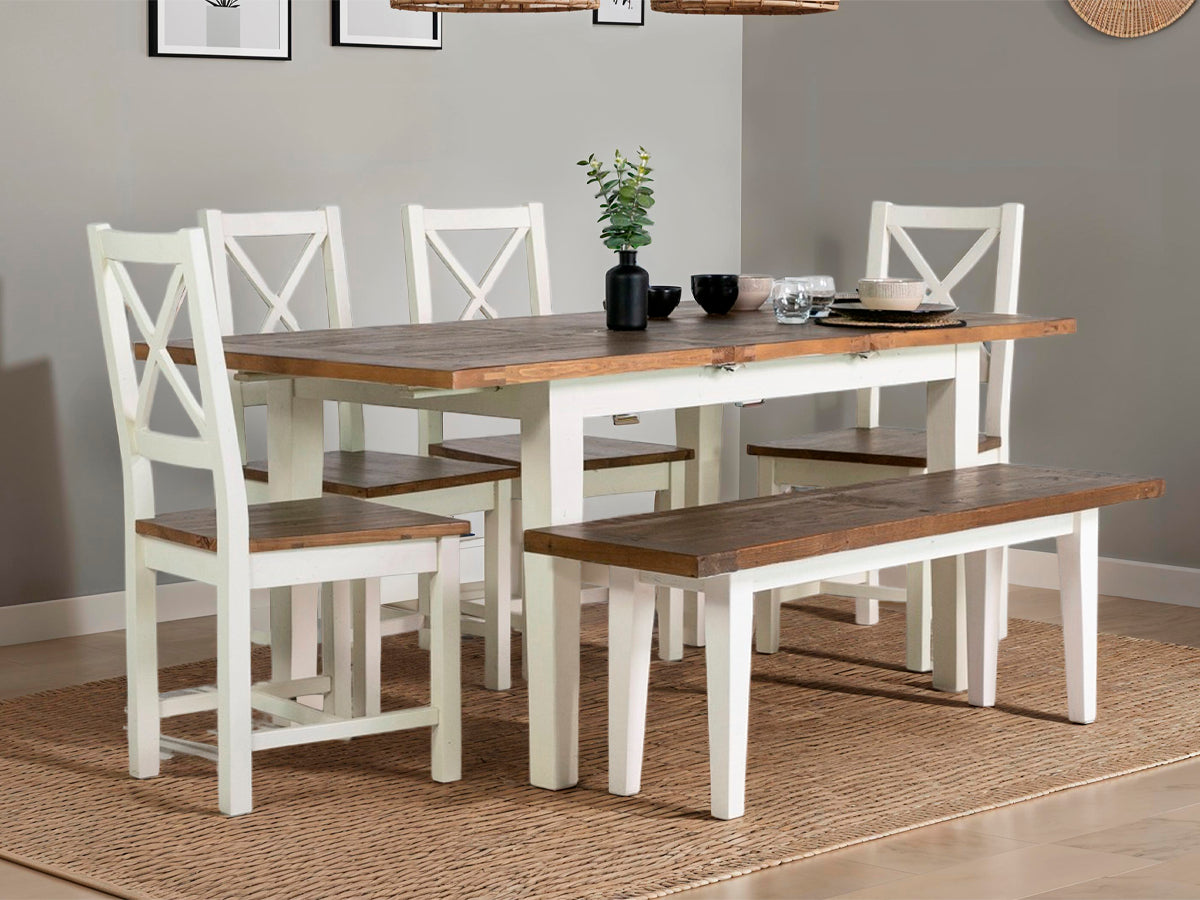
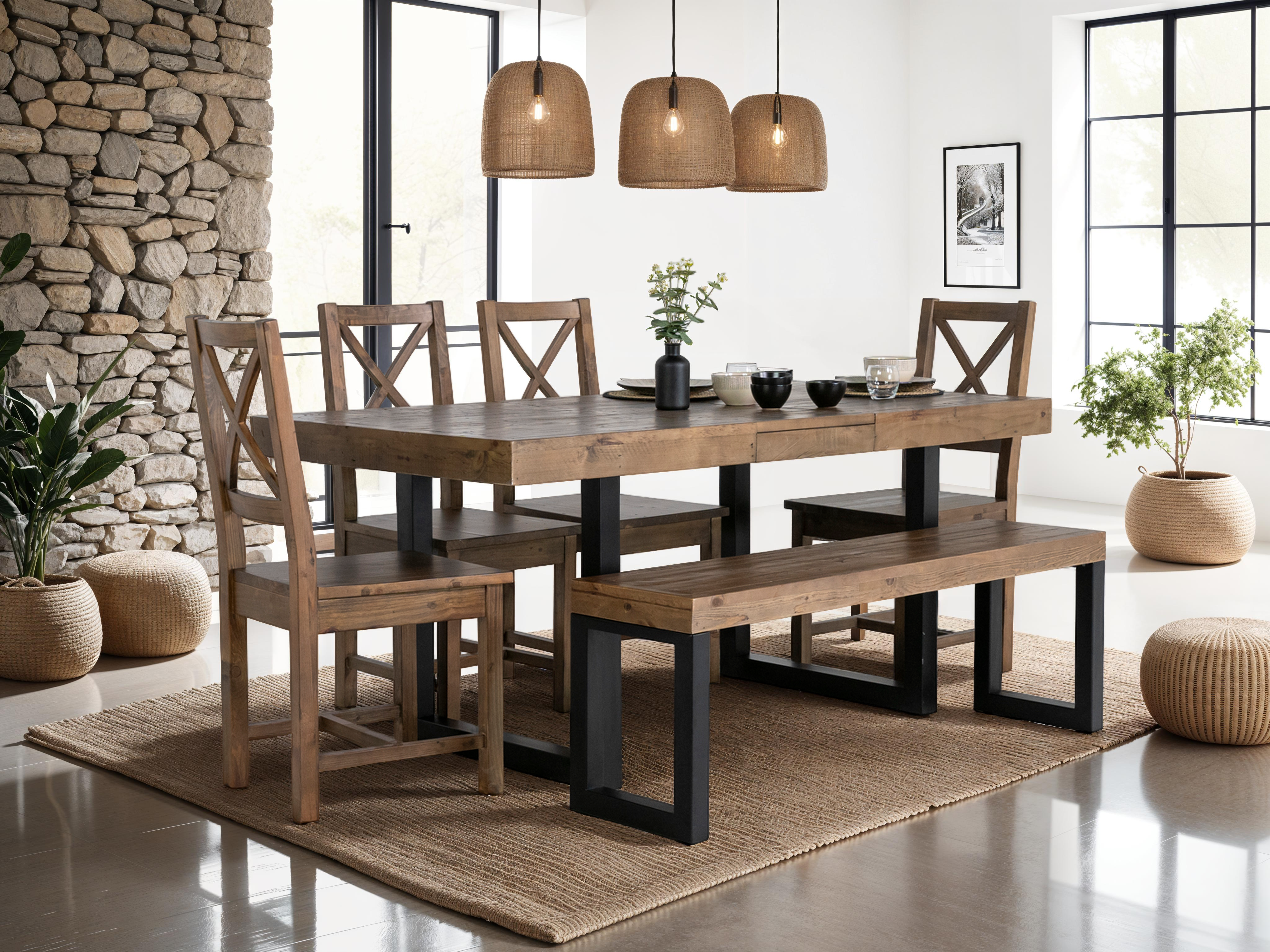
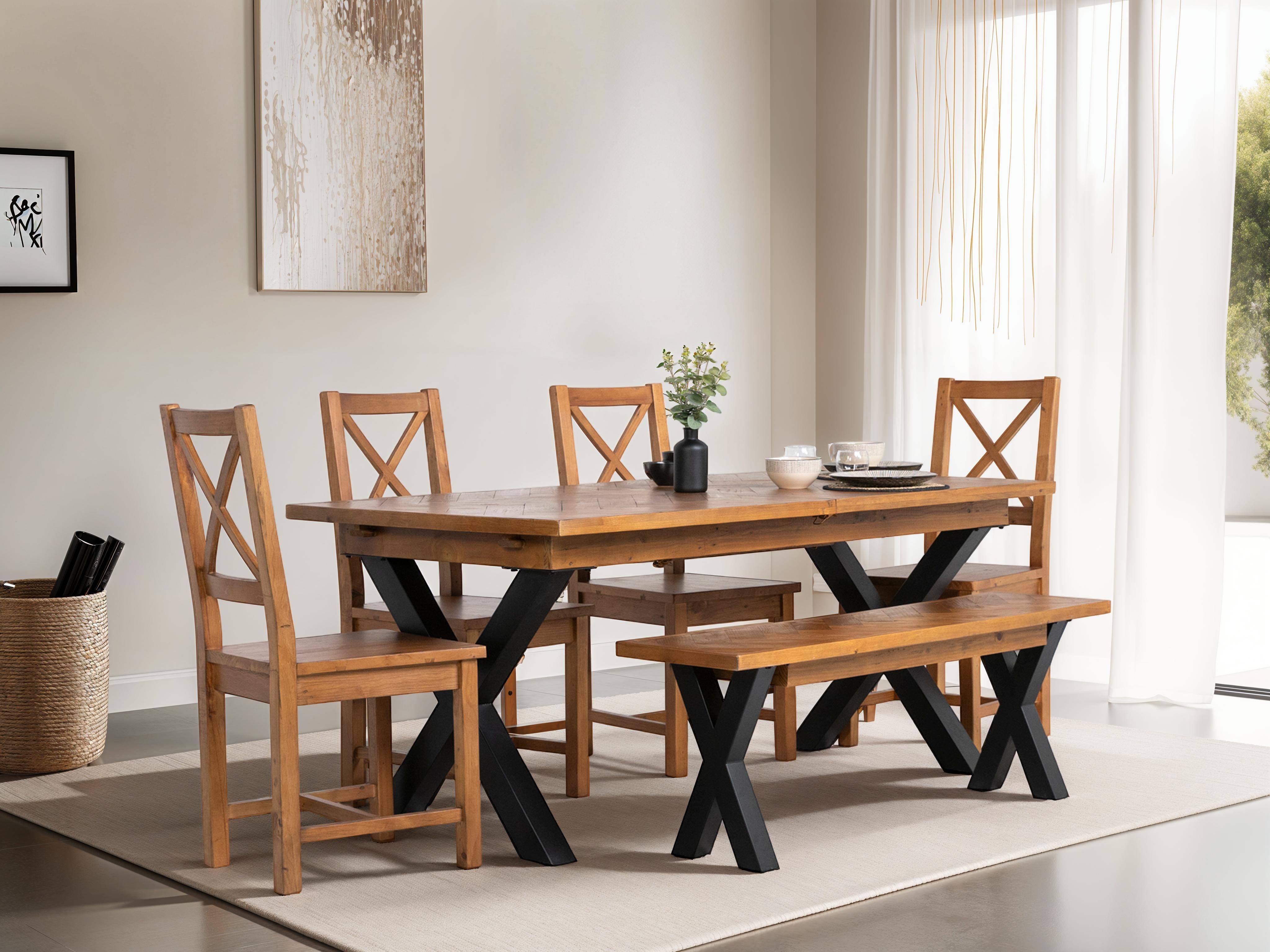
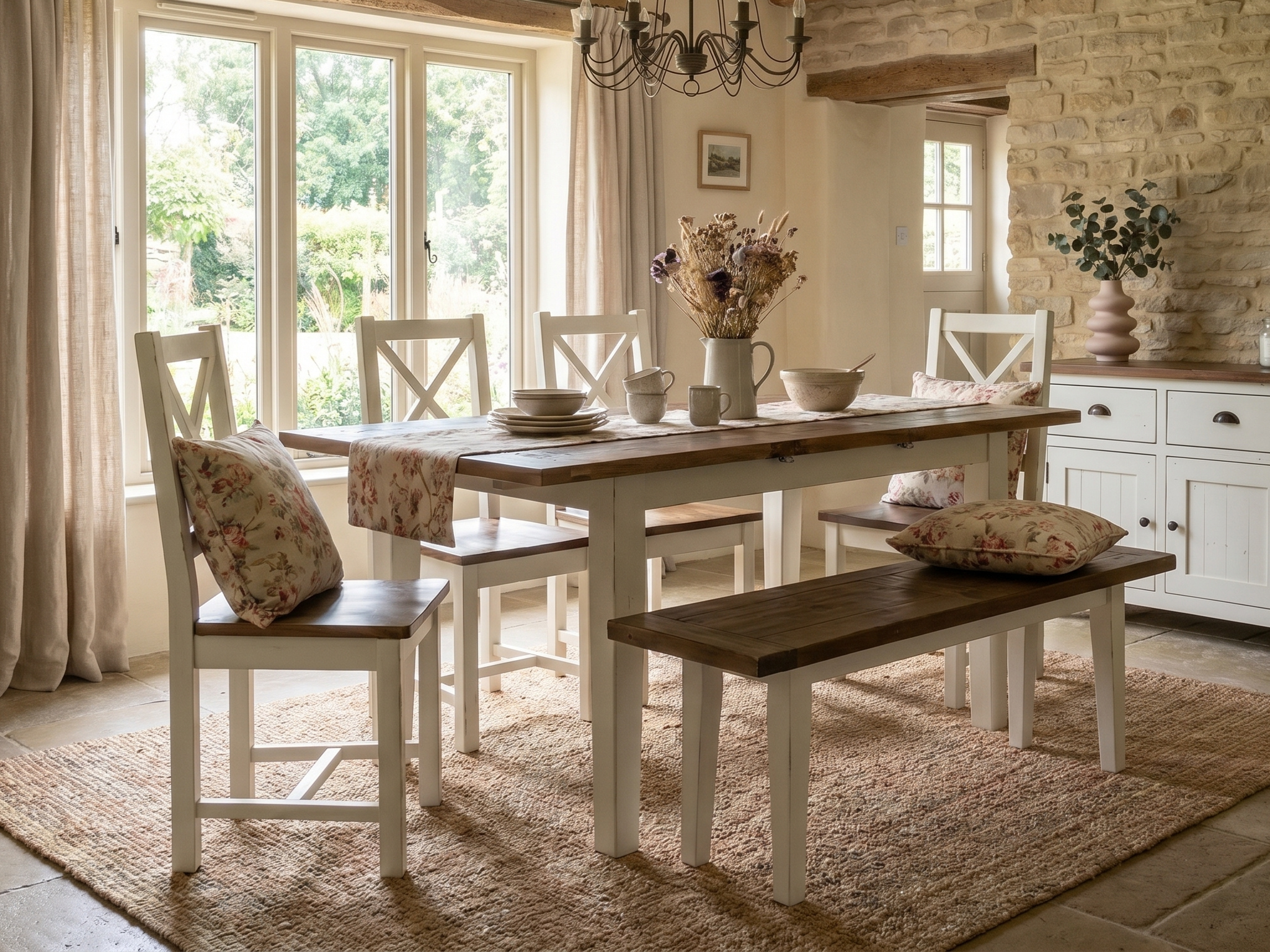
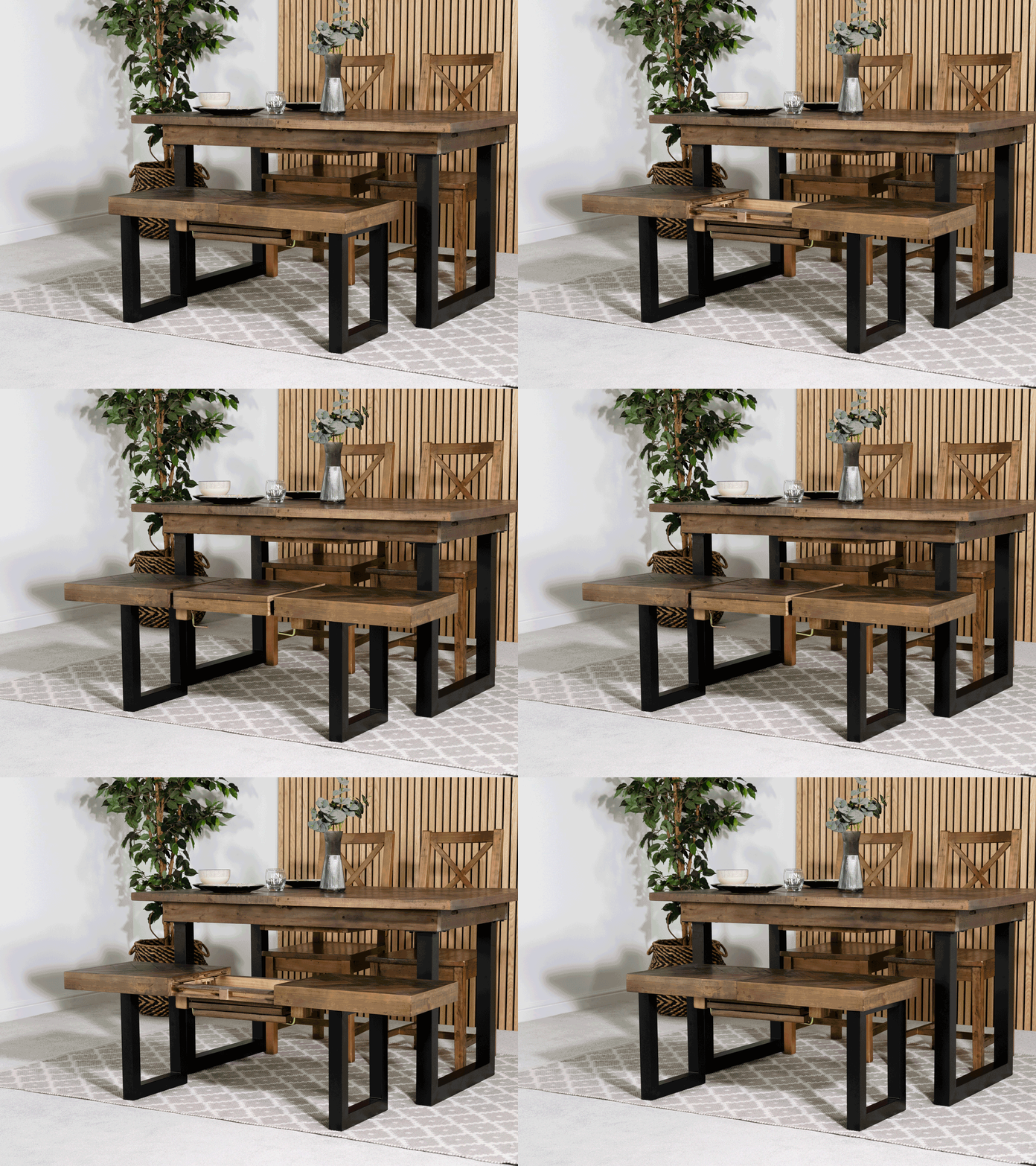


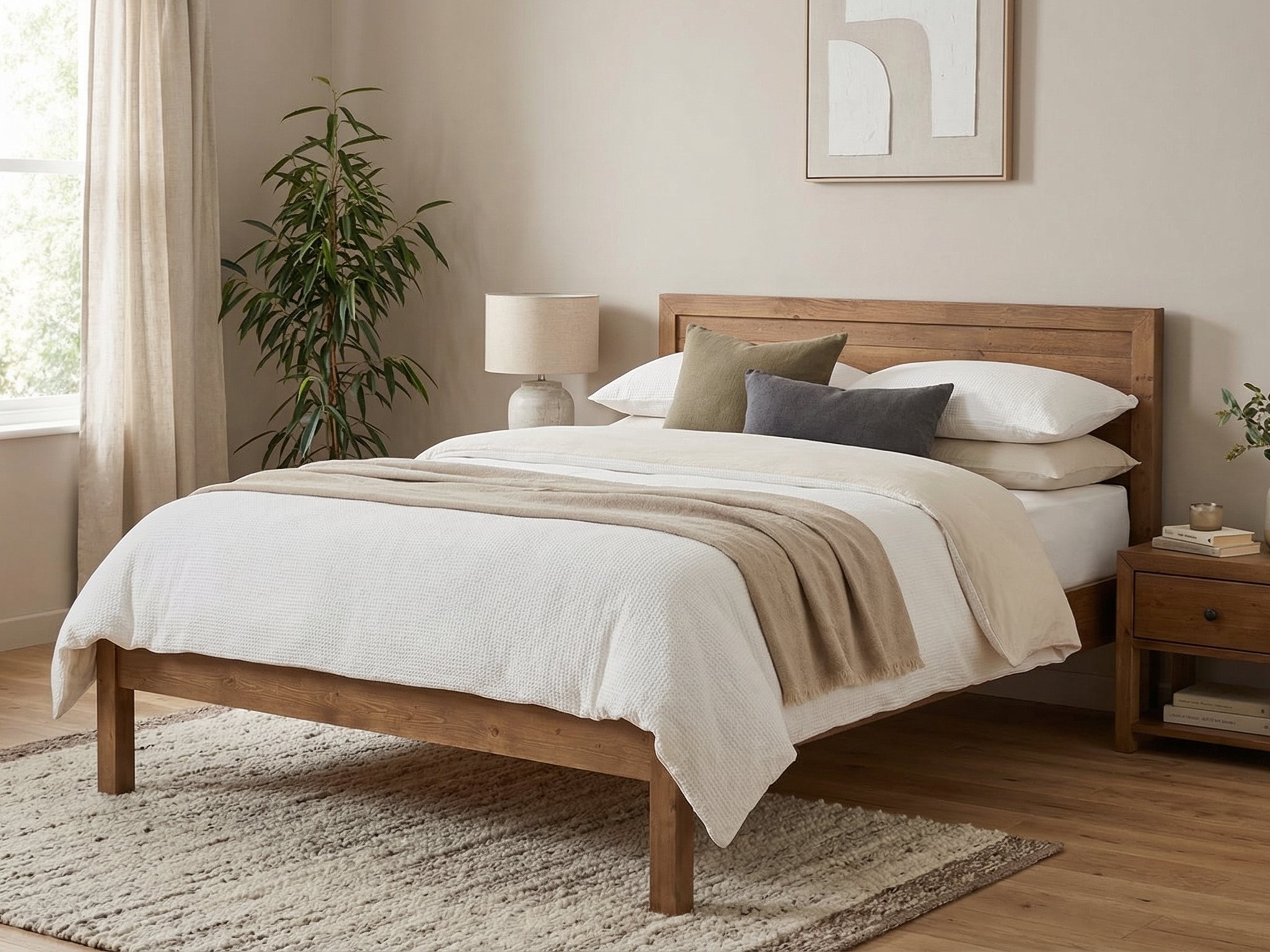



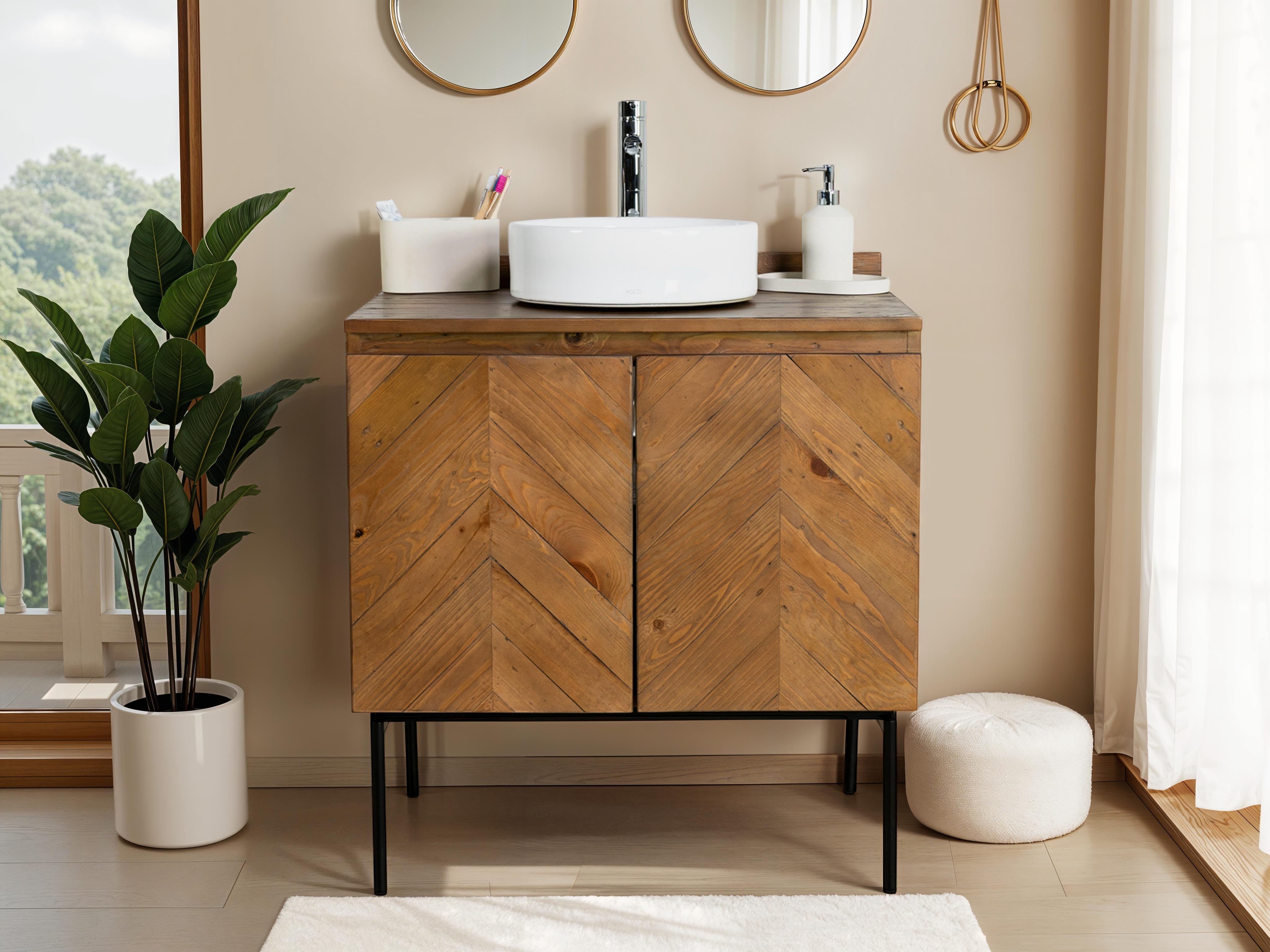
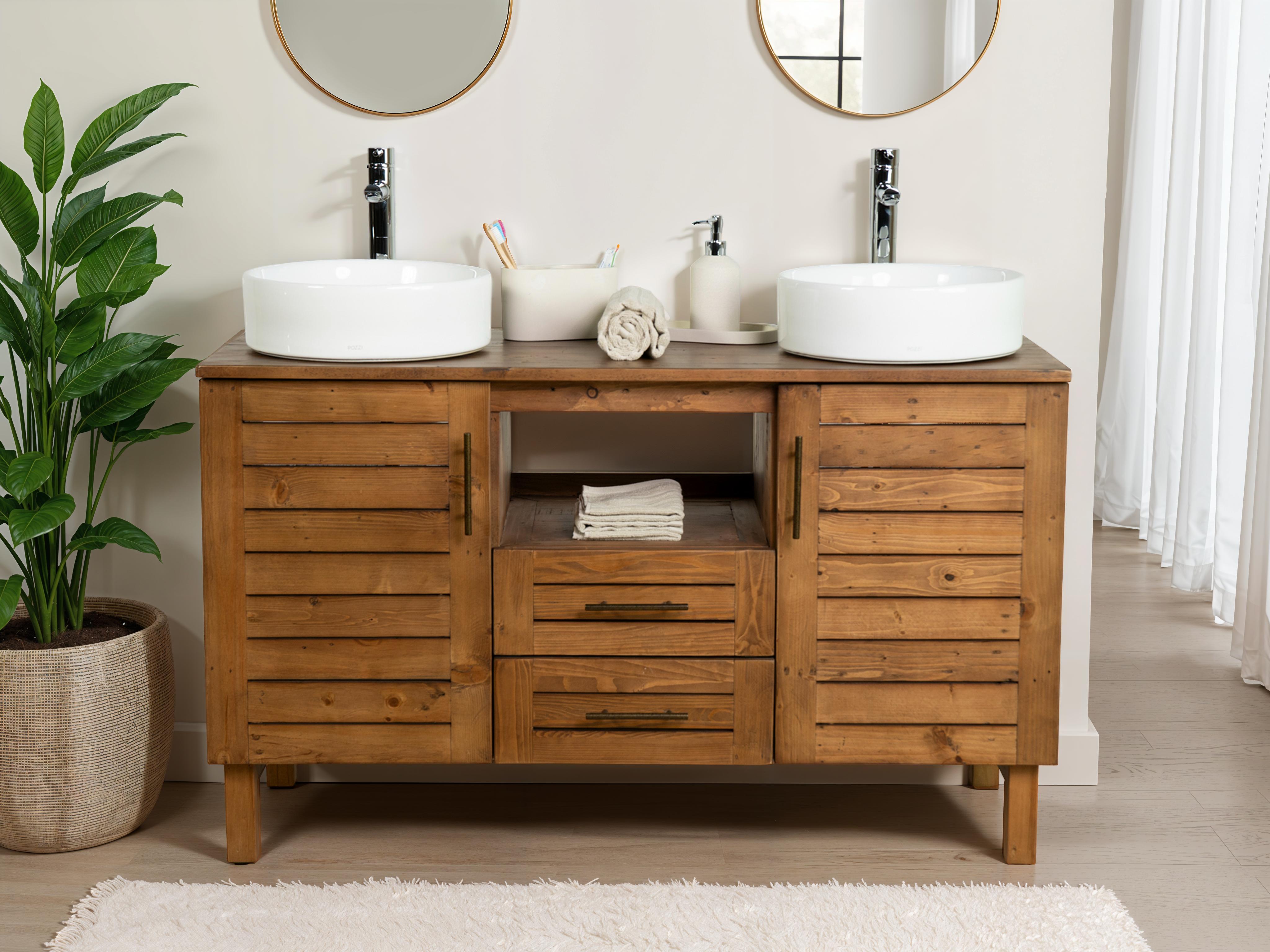
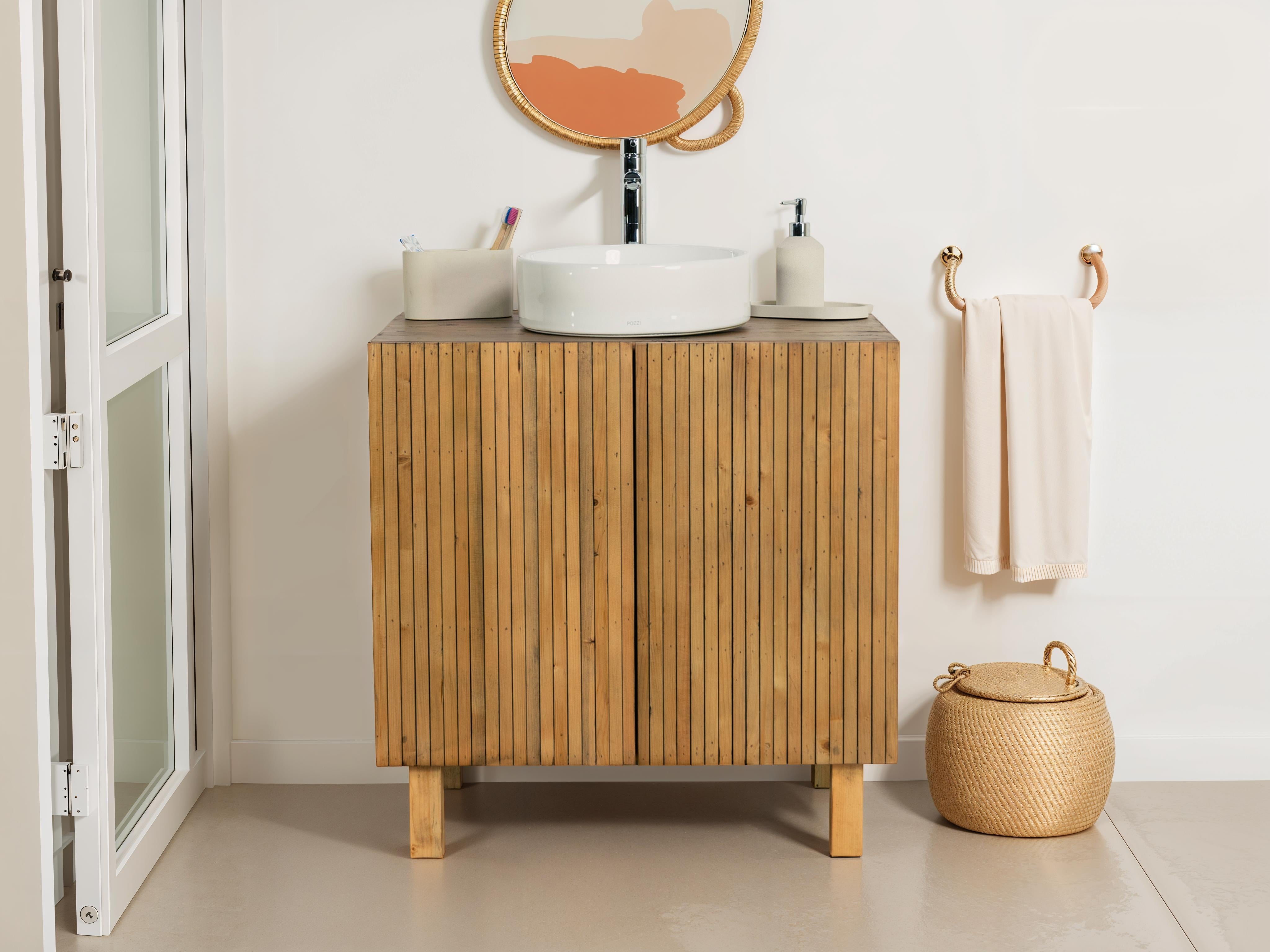
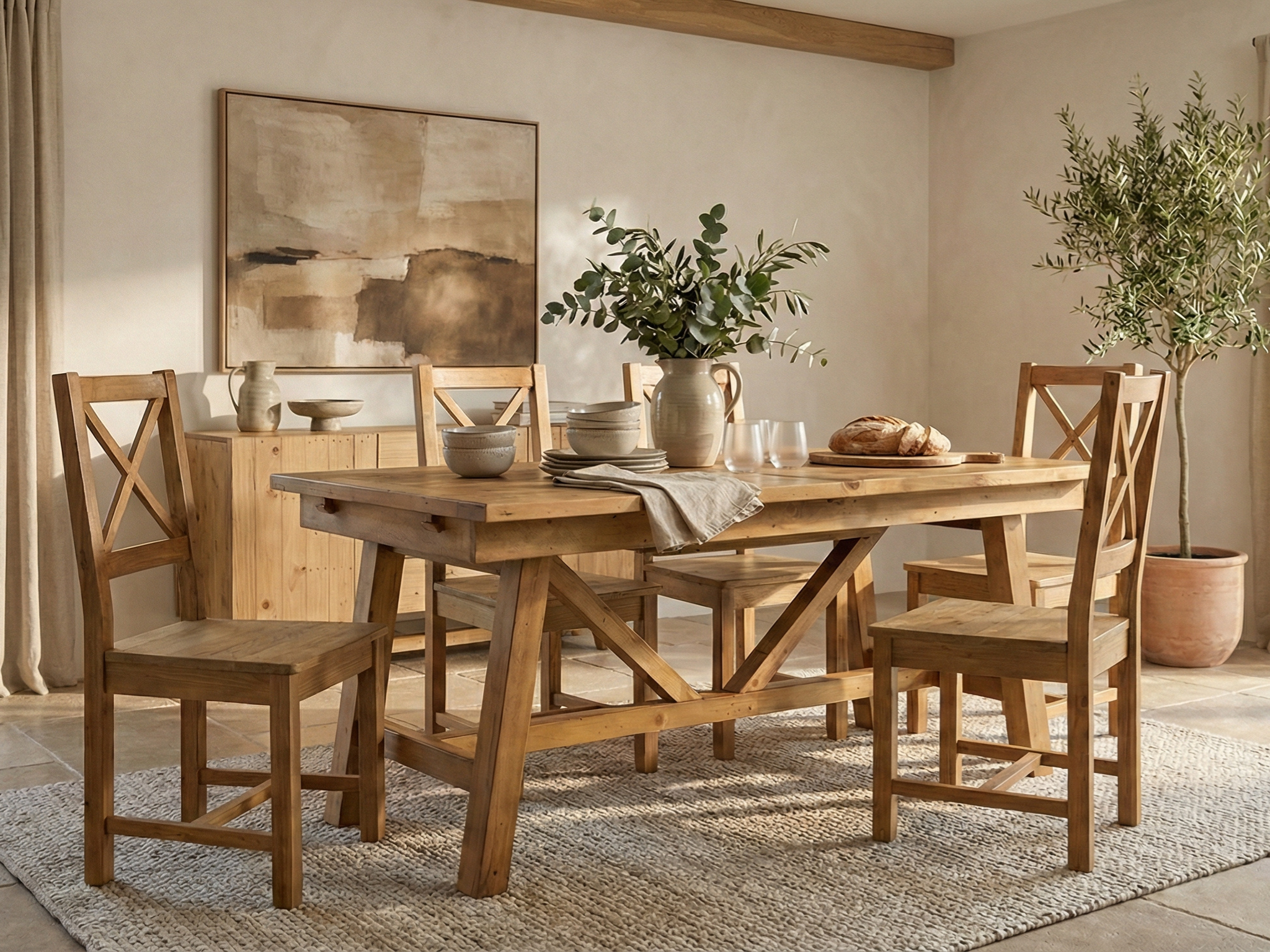

A new table starts with a living tree being cut down — ending its work as a carbon sink. Choosing a Reclaim Nation piece means that demand is never created, so the standing forest keeps absorbing carbon.
Lower your carbon footprint.
Feel good furniture
27%Lowercarbon vs a non-reclaimed dining table1
50%Lowercarbon vs virgin synthetic fabric3,4
2,100LLowerwater use per kg vs virgin cotton6
When we say a Reclaim Nation piece is kinder to the planet, we owe you the working — the method, the sources, and the figures we’re willing to stand behind.
See how we measure
How we got here
We show our working.
Sustainability claims are easy to make and hard to trust. Rather than print a round number and hope, Reclaim Nation builds every figure the same way — from published life-cycle assessments, quoted at the cautious end, and compared like for like.
-
We start from life-cycle assessments
Every figure traces back to a published life-cycle assessment (LCA) — the standard method for measuring a material’s footprint from raw resource to finished product, rather than a single eye-catching stat.
-
We compare cradle-to-gate, like for like
We measure the same boundary on both sides — extraction through to a finished material leaving the workshop gate — and compare a reclaimed or recycled piece against the non-reclaimed or virgin alternative a customer would otherwise buy.
-
We quote the conservative end
Where studies give a range, we lead with the lower, safer number. If the cautious figure already makes the case, we don’t need the optimistic one. The bigger savings are noted, but never the headline.
-
We separate what we can’t fairly claim
Metal legs, fixings and transport vary piece to piece and sit on both sides of the comparison, so we leave them out of the headline saving rather than dress the numbers up. The sources are listed at the foot of this page.
Comparison one
Reclaimed wood vs new wood.
A Reclaim Nation table earns its lower footprint four ways at once — before a single figure is counted.
No tree felled
Carbon stays locked
Timber is roughly half carbon by dry weight, drawn down over the tree’s life. Keeping it in service as furniture keeps that carbon stored for decades more.
Heavy steps skipped
Reclaimed wood skips the most energy-hungry early stages — felling fresh timber, initial milling and the transport that comes with it — because the material has already lived a first life.
Diverted from landfill
Salvaged wood left to rot releases methane, a greenhouse gas around 25× more potent than CO₂. Reuse keeps it out of the ground.
How much lower the carbon footprint runs
Cradle-to-gate, based on a hardwood life-cycle assessment1,2
The reference assessment puts reclaimed hardwood at about 175 kg CO₂e per cubic metre, against 240 kg for new hardwood and 1,030 kg in the landfill scenario.1 That makes around a quarter the safe figure against a non-reclaimed solid-wood table — and considerably more against the chipboard furniture most sub-£400 tables actually are.2 Most of our pieces are reclaimed pine, a softwood; we quote the hardwood figure because it’s the most rigorously documented full assessment, and studies of reclaimed softwood show the same pattern — if anything a larger saving — so 27% is a conservative benchmark across our range.8
Comparison two
Recycled fabrics vs virgin fabrics.
The same logic runs through Reclaim Nation soft furnishings. Two recycled fibres do most of the work — and each saves in a different way.
Recycled vs virgin synthetic fabric
Spun from reclaimed bottles & textile waste, not fresh petroleum (rPET)3,4,5
Recycled synthetic fabric skips crude-oil extraction and primary polymerisation entirely. Life-cycle studies put the carbon saving at roughly 30–50% per kilogram, rising towards 70% for mechanically recycled fibre4,5 — and its production water footprint drops by around two-thirds.3
Recycled vs virgin cotton
Spun from offcuts & worn textiles, where water is the headline6,7
Virgin cotton is famously thirsty — up to 10,000 litres of water per kilogram of fibre.7 Recycled cotton sidesteps the growing, ginning and much of the dyeing, saving in the region of 2,100 litres of water and over 1.5 kg of CO₂e per kilogram6 and scoring 92 out of 100 on the Fashion Sustainability Index.7 It’s the same logic as our Kantha collection — layered, upcycled cotton given a second life.
What we won’t claim
Honesty is part of the craft.
A figure is only worth as much as the caveats around it. So here is the small print, in plain terms.
- The exact saving depends on what you’d otherwise have bought, plus the energy mix and transport distances behind each piece — so we quote ranges and conservative figures, not false precision.
- Reclaimed and recycled are lower-impact, not zero-impact. Recycled synthetic fabric is still a plastic fibre; recycled cotton still needs energy to process.
- Most of our pieces are reclaimed pine, a softwood. Our headline 27% comes from a hardwood life-cycle assessment — the most complete study available — used as a conservative proxy; reclaimed softwood shows the same direction, or a greater saving.
- Our headline wood saving covers the timber only. Metal frames and fixings sit on both sides of the comparison, so folding them in would flatter the number unfairly.
- Where a study spans a wide range, we lead with its lower bound. If a cautious figure already makes the case, we don’t reach for the generous one.
Sources
References
- Life-cycle assessment of hardwood flooring (reclaimed 175 vs new 240 vs landfill 1,030 kg CO₂e/m³), summarised by Frank Pouwer Reclaimed Wood.
- Industry life-cycle commentary on reclaimed timber’s carbon dimensions and composite-board emissions (Smithers of Stamford; Reclaimed World).
- Qian, Ji, Xu & Wang (2021), “Carbon footprint and water footprint assessment of virgin and recycled polyester textiles” — water footprint 5.98 vs 1.90 m³/100kg.
- Textile Exchange / Sustainable Apparel Coalition Higg MSI — mechanically recycled synthetic fibre ~70% lower GHG per kg.
- World Collective / Textile Exchange LCA synthesis — recycled synthetic fabric ~30–50% lower GHG emissions per kg.
- Recover™ LCA Spain, verified by EcoReview (2022) — recycled cotton saves ~2,116 L water and ~1.73 kg CO₂e per kg.
- Fashion Sustainability Index (recycled cotton 92/100); Hedgehog comparative LCA (recycled cotton ~92% lower land use, ~97% lower marine eutrophication); water-scarcity studies cited by Everywhere Apparel.
- US Forest Service life-cycle analysis of recovering softwood framing lumber and hardwood flooring for reuse — making new softwood lumber uses roughly 15× the energy of reclaiming it, confirming the reclaimed-vs-new pattern holds for softwoods such as pine.
Figures are drawn from third-party life-cycle assessments and represent typical, cautious estimates. Individual pieces will vary.